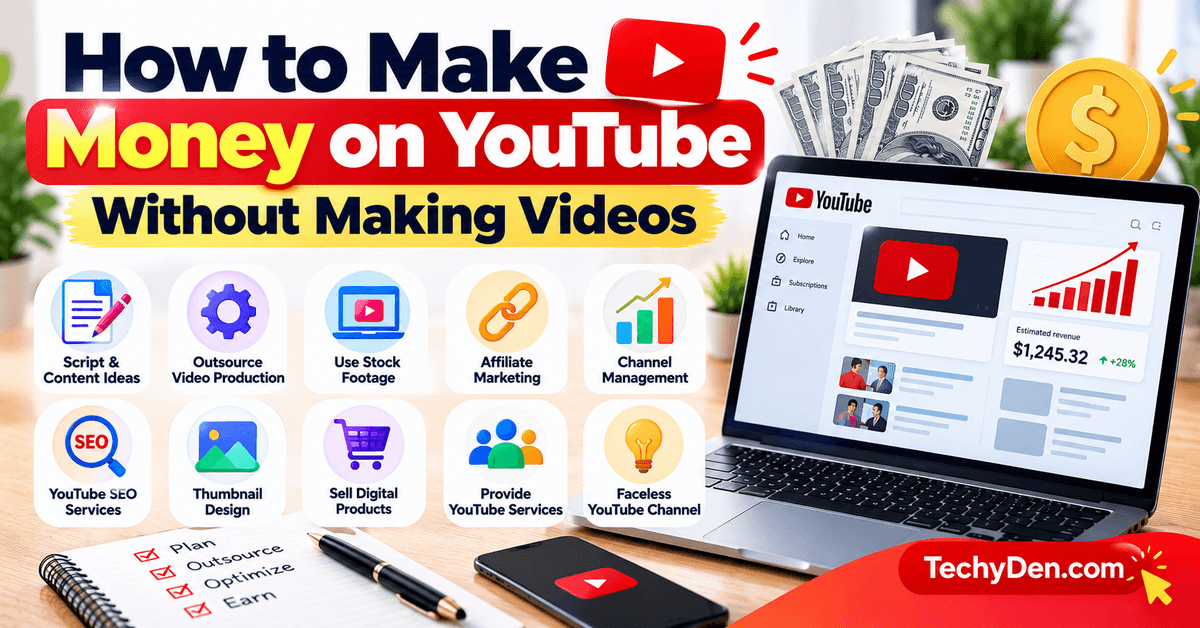
Making money on YouTube does not always require showing your face, recording yourself, or owning expensive video equipment.
You can build a faceless YouTube channel, use licensed visual assets, outsource production, promote products through affiliate marketing, or earn money by providing services to other YouTube creators.
However, there is an important distinction: earning money directly from YouTube generally requires publishing eligible content, while earning money through YouTube-related services may not require you to upload videos to your own channel.
Building an online business requires practical online business strategies for attracting visitors and converting them into customers.
If you want to learn how to make money on YouTube without making videos, this guide explains practical methods, monetization options, useful tools, and common mistakes to avoid.
Can You Make Money on YouTube Without Making Videos?
Yes, you can earn money through YouTube without personally recording or appearing in videos. However, your options depend on what you mean by not making videos.
There are three main approaches:
- Faceless YouTube channels: Publish videos without showing your face, using original scripts, narration, screen recordings, animations, or licensed visuals.
- Outsourced YouTube channels: Hire freelancers or use production services to create videos while you manage the channel, research topics, and handle monetization.
- YouTube-related services: Earn money by managing channels, optimizing videos for search, editing content for other creators, or providing thumbnail design services without running your own video channel.
You can also promote products through affiliate links or use YouTube as a way to attract customers to your website and services. These methods still require an appropriate audience or another way to reach potential customers.
The key is to choose a method that fits your skills, budget, and willingness to manage a business.
10 Ways to Make Money on YouTube Without Making Videos
Here are ten methods to explore if you want to earn money on YouTube without recording traditional videos yourself.
1. Start a Faceless YouTube Channel
A faceless YouTube channel publishes content without showing the creator’s face. Instead of appearing on camera, you can use screen recordings, animations, original graphics, narrated presentations, demonstrations, or licensed stock footage.
Popular faceless channel topics include:
- Technology tutorials and software guides
- Educational explanations
- Personal finance education
- History and documentary-style storytelling
- Productivity and self-improvement
- Book summaries with original analysis
- Software comparisons and tutorials
- Science and general knowledge
For example, a technology channel could publish a tutorial demonstrating how to use a Windows feature.
You could record your computer screen, explain the steps through narration, and edit the recording into a useful tutorial.
You can create the content yourself without appearing on camera or hire a freelancer to help with production.
How you can earn money: YouTube advertising revenue, affiliate commissions, sponsorships, and sales of your own digital products.
Best for: Beginners who want to build a long-term YouTube business without appearing on camera.
2. Outsource Video Production to Freelancers
If you have a budget but do not want to produce videos yourself, consider hiring freelancers.
You can outsource different parts of the production process, including:
- Topic research
- Scriptwriting
- Voice-over recording
- Video editing
- Animation
- Thumbnail design
- Uploading and video optimization
Your responsibility is to manage the channel, select suitable topics, maintain quality standards, and review the finished content before publication.
For example, you could run a software tutorial channel by hiring a writer to prepare scripts, an editor to produce the videos, and a designer to create thumbnails.
However, outsourcing does not guarantee profit. You need to control production costs and ensure that your content provides genuine value to viewers.
How you can earn money: Advertising revenue, affiliate marketing, sponsorships, and other eligible monetization features.
Best for: Entrepreneurs who have a budget and want to build a channel without handling video production personally.
3. Use Licensed Stock Footage and Visual Assets
Stock footage can help you create documentaries, educational explainers, travel presentations, and other narrated videos without filming your own scenes.
You can source visual assets from stock media libraries, create an original script, add narration, and edit the materials into a coherent video.
Possible content ideas include:
- Nature and wildlife explainers
- Geography and travel education
- Science documentaries
- Historical timelines
- Business and industry explainers
- Educational presentations
Always review the licensing terms before using stock footage, photographs, music, or other assets. A license to use an asset does not automatically make a video eligible for YouTube monetization.
Simply downloading stock footage and combining it with background music may offer little original value. Add meaningful commentary, research, storytelling, analysis, or education to make the finished video useful and distinctive.
How you can earn money: Advertising revenue if the channel qualifies, sponsorships, and relevant affiliate links.
Best for: Creators who prefer research, writing, and editing over filming.
4. Create Educational Videos Using Screen Recordings
Screen-recorded tutorials are a practical option for people who want to create useful content without recording themselves on camera.
You can demonstrate software features, website settings, mobile applications, computer troubleshooting steps, or online tools.
For example, a tutorial might explain how to enable Hibernate in Windows 11, configure a WordPress plugin, or use an SEO research tool.
You can capture the screen, add a voice-over or clear on-screen explanations, and edit the recording to remove unnecessary steps.
Useful tools include OBS Studio for screen recording, Canva for graphics, and video editing software for assembling the final tutorial.
The most important factor is usefulness. Your video should answer a specific question and demonstrate the solution accurately.
If you plan to outsource scripts or prepare educational content, our guide to the best AI writing tools for bloggers can help you explore tools for brainstorming, drafting, and editing written content.
How you can earn money: YouTube ads, software affiliate programs, sponsored tutorials, and consulting services.
Best for: Technology bloggers, software users, educators, and people with practical technical knowledge.
5. Create Original Animations and Explainer Videos
Animated videos can explain complicated subjects without requiring a camera or live-action footage.
You can create animated explainers about science, technology, business, history, productivity, or general education.
For example, you could explain how search engines work using diagrams and motion graphics. A science channel could use original illustrations to explain biological processes or scientific concepts.
You can produce animations using presentation software, motion graphics tools, animation platforms, or freelance services.
If you use AI tools, treat them as assistants rather than automatic content factories. Research the subject, check factual accuracy, develop an original script, and ensure that each video offers meaningful educational or entertainment value.
How you can earn money: Advertising revenue, sponsorships, educational product sales, and affiliate marketing.
Best for: People who enjoy explaining ideas but do not want to appear on camera.
6. Earn Affiliate Commissions Through YouTube
Affiliate marketing allows you to earn commissions when people purchase products through your tracked links.
You do not necessarily need to create product videos yourself to participate in affiliate marketing. You can promote relevant products through a website, blog, newsletter, or other channels and use YouTube as one part of your broader marketing strategy.
If you want to use YouTube directly, you could publish original tutorials, product comparisons, narrated demonstrations, or other useful content that helps viewers make purchasing decisions.
Potential affiliate categories include
- Web hosting services
- SEO software
- AI writing tools
- Website themes and plugins
- Productivity software
- Online learning platforms
- Computer accessories
For example, a tutorial about setting up a WordPress website could naturally recommend a hosting service through an affiliate link in the description, provided the recommendation is relevant and clearly disclosed.
Do not assume you can place links on other creators’ videos or earn commissions from someone else’s content without authorization. You need your own permitted promotional channel or an eligible affiliate arrangement.
How you can earn money: Commissions on qualifying purchases or other actions defined by the affiliate program.
Best for: Bloggers, website owners, and affiliate marketers who already have an audience.
7. Manage YouTube Channels for Other Creators
Many creators need help managing their channels but do not have enough time to handle every task.
You can offer channel management services without operating a personal video channel or recording videos yourself.
Your responsibilities may include:
- Researching content topics
- Planning an upload calendar
- Writing video titles and descriptions
- Conducting keyword research
- Organizing video playlists
- Monitoring analytics
- Coordinating editors and designers
- Improving channel organization
You can find potential clients through professional networks, freelance marketplaces, creator communities, and direct outreach.
Start by learning YouTube Studio, understanding audience retention and click-through rates, and developing a portfolio that demonstrates your skills.
Never promise guaranteed views, subscribers, or revenue. Explain the services you provide and measure progress using meaningful performance indicators.
How you can earn money: Monthly retainers, project fees, or agreed service packages.
Best for: People with organizational, marketing, research, or communication skills.
8. Offer YouTube SEO Services
YouTube SEO involves optimizing videos and channels so that viewers can discover relevant content through search and recommendations.
You can provide this service without producing videos. Instead, you help creators improve the discoverability and presentation of their existing content.
Typical services include:
- Keyword and topic research
- Video title optimization
- Description writing
- Chapter and timestamp planning
- Playlist organization
- Competitor research
- Content gap analysis
- Analytics reporting
For example, a creator might publish useful software tutorials but struggle to attract search traffic. You could research relevant queries, improve titles and descriptions, and recommend additional topics based on audience demand.
Remember that metadata optimization cannot guarantee rankings or views. YouTube considers multiple factors, including viewer satisfaction and engagement.
How you can earn money: Freelance fees, monthly SEO packages, channel audits, and consulting.
Best for: SEO professionals, bloggers, and digital marketers.
9. Design Thumbnails and Other Channel Graphics
Video thumbnails influence how viewers perceive a video before deciding whether to watch it. Creators often hire designers to develop attractive, readable thumbnails that accurately represent their content.
You can offer thumbnail design without creating or editing videos.
Other services may include:
- Channel banners
- Profile images
- End-screen graphics
- Video title cards
- Branded presentation slides
- Social media graphics for creators
You can use design software to prepare a portfolio of sample thumbnails for different niches, such as technology, education, gaming, and business.
Avoid misleading imagery or exaggerated claims that do not match the video. Effective thumbnails should attract the right audience while accurately representing the content.
How you can earn money: Per-thumbnail fees, monthly design packages, or larger channel branding projects.
Best for: Graphic designers and people who enjoy visual communication.
10. Sell Digital Products to YouTube Creators
You can also earn money by selling products that help YouTubers work more efficiently.
Examples include:
- Video planning templates
- Content calendar spreadsheets
- Thumbnail templates
- Channel audit checklists
- Scriptwriting templates
- SEO research worksheets
- Creator business guides
- Social media content planners
You can sell these resources through your website or a digital product platform. You do not need to publish videos on your own channel, although YouTube tutorials can help you attract potential customers if you choose to use the platform for promotion.
For example, an SEO specialist could create a downloadable YouTube keyword research worksheet and sell it to small creators who want to organize their content strategy.
Create original resources, explain what buyers receive, and price products according to their usefulness and target audience.
How you can earn money: Direct product sales, bundles, and related consulting services.
Best for: Bloggers, marketers, designers, and people who can create useful resources for other creators.
How to Make Money on YouTube Without Uploading Videos at All
If you do not want to publish any videos on your own channel, focus on businesses and services connected to YouTube rather than relying on YouTube advertising revenue.
Here are three options to consider.
- Provide Services to YouTubers: Offer services such as SEO optimization, channel management, thumbnail design, scriptwriting, or analytics reporting. You earn money from clients rather than advertising on your own channel.
- Build a Website About YouTube Tools and Resources: Create a website that publishes tutorials, software reviews, creator tips, and educational resources. You may earn money through affiliate marketing, display advertising, sponsorships, or digital product sales, depending on the website’s traffic and eligibility.
- Sell Products to Video Creators: Develop templates, checklists, design assets, or educational resources that help creators plan and manage their channels. You can promote these products through a website, email marketing, or professional communities.
These approaches may suit people who prefer writing, design, research, or client work over video production.
Can You Earn YouTube Ad Revenue Without Uploading Videos?
Generally, no. YouTube advertising revenue is associated with eligible content published on a channel that has been accepted into the YouTube Partner Program.
If you never upload videos, Shorts, or other eligible video content, you should not expect to earn advertising revenue from your own channel.
You can still earn money from a business related to YouTube, such as providing SEO services to creators or selling digital products. However, that income comes from your customers or other platforms, not from ads on a video channel you do not operate.
If your goal is to earn money directly through YouTube, consider faceless videos or outsourced production instead.
YouTube Monetization Requirements You Should Know
Before planning to earn money through YouTube ads, understand the platform’s eligibility requirements and monetization policies.
The standard advertising-revenue eligibility route currently requires:
- 1,000 subscribers
- Either 4,000 valid public watch hours from long-form videos during the previous 12 months, or 10 million valid public Shorts views during the previous 90 days
- Compliance with YouTube’s monetization policies and other program requirements
Meeting these thresholds does not guarantee acceptance. YouTube reviews the channel before approving monetization.
Some eligible creators may have access to certain fan-funding features at lower thresholds in supported countries. Those features have separate eligibility conditions and do not automatically provide full advertising revenue access.
Check the official YouTube Partner Program eligibility requirements before applying, because requirements and available features can change.
Understand the Reused Content Policy
One of the biggest mistakes beginners make is assuming that they can download videos from other creators, combine clips, add music, and earn advertising revenue.
YouTube’s monetization policies distinguish original, valuable content from reused or mass-produced material that offers little meaningful contribution.
Simply reposting other people’s videos, compiling clips with minimal commentary, or publishing repetitive slideshows can make a channel ineligible for monetization.
Using AI tools, stock footage, templates, or freelancers does not automatically prevent monetization. However, the finished content should demonstrate meaningful creative, educational, or entertainment value.
Read the official YouTube channel monetization policies before building a faceless or outsourced channel.
Best Tools for Earning Money Through YouTube Without Making Videos
You do not need every tool on the market. Start with a small set that supports your chosen business model.
| Tool | What you can use it for |
|---|---|
| Canva | Thumbnails, channel graphics, presentations, and digital products |
| OBS Studio | Screen recording and software demonstrations |
| DaVinci Resolve | Video editing and post-production |
| YouTube Studio | Channel management, analytics, and monetization settings |
| Google Trends | Exploring topic interest and search trends |
| Keyword research tools | Discovering potential video topics and search queries |
| Freelance marketplaces | Finding editors, designers, and scriptwriters |
| Digital product platforms | Selling templates, guides, and downloadable resources |
Check the licensing terms of any stock footage, music, images, AI-generated assets, or software you use commercially. Free to download does not always mean free for every commercial purpose.
AI-powered tools can simplify research, content planning, graphic design, and other tasks. Explore our guide to the best AI tools for bloggers to discover tools that can support your content creation workflow.
How to Start Making Money on YouTube Without Making Videos
If you are a beginner, follow these steps to choose a realistic path and avoid unnecessary expenses.
Step 1: Choose Your Business Model
Decide whether you want to operate a faceless channel, outsource video production, provide services to creators, or sell digital products.
Choose one main method first rather than trying everything at once.
Step 2: Select a Niche
Choose a subject you understand or are willing to research thoroughly. Technology, software tutorials, education, business, productivity, and digital marketing can support several of the methods described in this guide.
Evaluate audience demand, competition, and potential ways to earn money before committing to a niche.
Step 3: Research Your Audience
Look for questions people ask, recurring problems, and gaps in existing content or services.
You can review search suggestions, competitor channels, audience comments, and keyword research data. Use this research to develop useful topics or services instead of copying other creators.
Step 4: Start With a Small Budget
If you choose channel management or SEO services, begin with the tools you already have. If you choose a faceless channel, test a manageable production workflow before hiring a large team.
Avoid spending heavily on equipment, expensive subscriptions, or outsourcing before you understand your business model.
Step 5: Create a Portfolio or Publish Original Content
For service-based work, prepare sample audits, thumbnail designs, content plans, or keyword research reports.
For a faceless channel, publish original content that solves specific problems and follows YouTube’s policies.
Make sure you have the rights to use every asset in your work.
Step 6: Choose a Monetization Method
Select a method that matches your audience and content. Options include advertising revenue for eligible channels, affiliate marketing, sponsorships, client services, and digital product sales.
Do not rely on advertising revenue alone, particularly when you are starting from zero.
Step 7: Measure Results and Improve
For channels, track relevant metrics such as impressions, click-through rate, watch time, audience retention, and returning viewers.
For services, track client inquiries, conversions, customer satisfaction, and repeat business. For digital products, monitor product page visits, sales, refunds, and customer feedback.
Use the results to improve your strategy rather than assuming that more uploads or more tools will automatically lead to higher income.
When researching topics and planning content, you can use these AI prompts for bloggers to organize ideas, develop outlines, and streamline your content workflow.
Common Mistakes to Avoid
- Reuploading Other People’s Videos: Downloading content from YouTube, TikTok, Instagram, or other platforms and uploading it to your channel can create copyright and monetization problems. Permission alone does not necessarily make reused content eligible for YouTube monetization.
- Publishing Mass-Produced AI Content: AI can help with research, scripting, editing, and visual creation. However, repetitive, generic videos with little original value may fail YouTube’s monetization standards. Use AI to support meaningful work, not to publish large numbers of nearly identical videos.
- Expecting Instant Income: YouTube-related businesses take time to develop. A new channel may need to build an audience, while a service provider needs clients and a credible portfolio. Treat early results as a learning process rather than assuming that income will arrive immediately.
- Ignoring Licensing and Copyright: Make sure you have the necessary rights to use music, footage, images, graphics, and other third-party materials. Keep records of licenses and review their terms carefully.
- Spending Too Much Before Testing Demand: Do not hire a full production team or buy expensive software before validating your idea. Start with a manageable project, assess the results, and increase spending only when there is a clear business reason.
Frequently Asked Questions on How to Make Money on YouTube Without Making Videos
How can I make money on YouTube without making videos?
You can earn money without personally producing videos by managing channels for other creators, offering YouTube SEO services, designing thumbnails, or selling digital products to creators. If you want income directly from YouTube advertising, you generally need to publish eligible content on a monetized channel.
Can I earn money on YouTube without showing my face?
Yes. You can create a faceless YouTube channel using screen recordings, animations, narrated presentations, original graphics, and licensed footage. Your videos must still offer meaningful value and comply with YouTube’s monetization, copyright, and community policies. Showing your face is not a general requirement for joining the YouTube Partner Program.
Can I earn money on YouTube without uploading videos?
You generally cannot earn advertising revenue from your own channel without publishing eligible content. However, you can earn money from YouTube-related services, including channel management, thumbnail design, SEO, and consulting. You can also sell products to creators through your website or another platform without operating a video channel yourself.
Can I monetize a faceless YouTube channel?
Yes. A faceless channel can qualify for monetization if it meets YouTube’s eligibility requirements and follows its policies. The important factors include originality, viewer value, and compliance with copyright and advertiser-friendly guidelines. Simply compiling other people’s clips or publishing repetitive, low-value content may prevent monetization.
Can I use AI to make money on YouTube?
Yes. AI tools can assist with research, scripting, graphics, editing, and other production tasks. However, using AI does not guarantee monetization. Your finished content should offer original, useful, or entertaining value rather than relying on generic, repetitive output. Review YouTube’s current policies and any applicable disclosure requirements before publishing.
How much money can beginners make on YouTube without making videos?
There is no fixed amount that beginners can expect to earn. Income depends on the business model, audience, niche, client demand, production expenses, and monetization eligibility. Channel services may generate client fees, while affiliate marketing and advertising depend on qualified activity and results. Some beginners earn nothing while they build their skills and audience.
Is it possible to make passive income from YouTube without recording videos?
It is possible to build income streams that require less day-to-day involvement, such as a well-managed faceless channel, affiliate content, or digital products. However, these businesses still require research, maintenance, promotion, and occasional updates. Passive income is not guaranteed, and outsourcing production does not remove your responsibility for quality and compliance.
What is the easiest way to make money from YouTube without making videos?
For someone who does not want to produce videos, offering a specific service such as thumbnail design, channel SEO, or content planning may be a practical starting point. You can build a portfolio and approach potential clients without waiting to qualify for advertising revenue. The best choice depends on your existing skills and access to customers.
Can I make money by uploading other people’s videos?
You should not assume that you can monetize other people’s videos simply by downloading and uploading them. Copyright rules and YouTube’s reused content policies can apply even when you have permission to use material. If you use third-party content, ensure you have the necessary rights and add meaningful original commentary, analysis, or creative value where appropriate.
Do I need money to start a faceless YouTube channel?
You can start with a small budget by using available recording and editing tools, creating original scripts, and producing simple tutorials or presentations. Expenses may increase if you purchase stock assets or hire freelancers. Start with a manageable workflow, verify licensing requirements, and invest more only when your results justify the cost.
Final Thoughts
Learning how to make money on YouTube without making videos starts with choosing the right business model. You do not have to appear on camera or personally handle every production task to build a YouTube-related income stream.
If you want to operate a channel, consider faceless tutorials, original educational explainers, or outsourced production. If you prefer to avoid video publishing altogether, explore channel management, YouTube SEO, thumbnail design, consulting, or digital products for creators.
Start with your existing skills, research your target audience, and test one approach before investing heavily. Most importantly, avoid shortcuts based on copied videos or mass-produced content. Sustainable results depend on providing genuine value, following the rules, and improving your work over time.