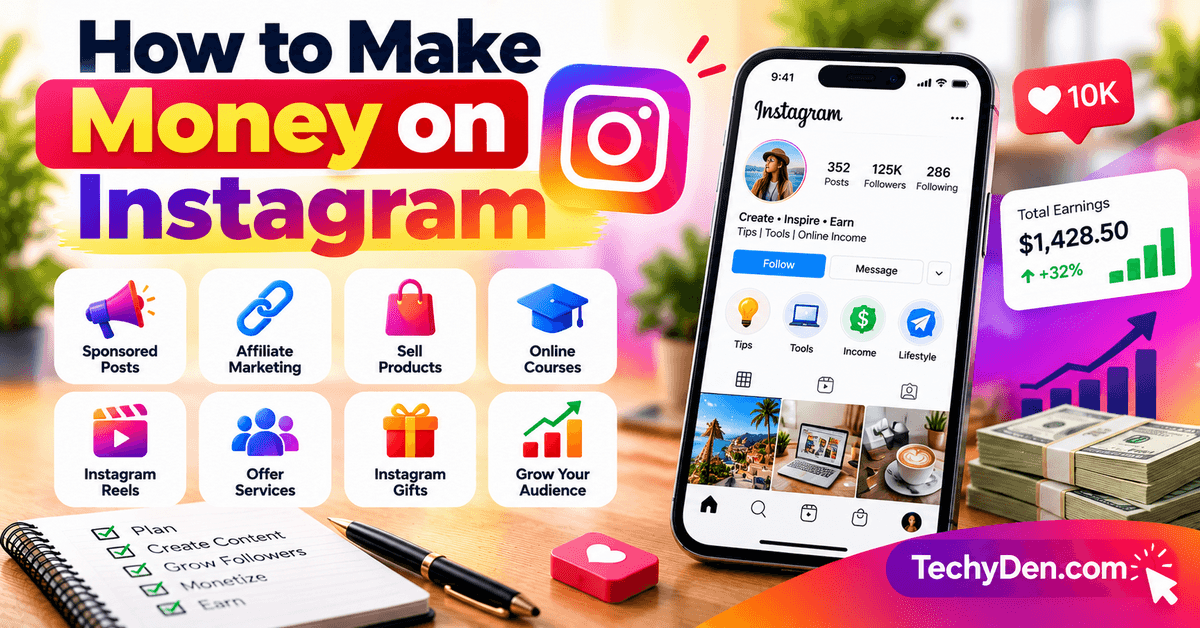
Instagram is more than a social media platform for sharing photos and videos. It has become a valuable channel for creators, bloggers, freelancers, entrepreneurs, and businesses that want to reach customers and generate income online.
You can make money on Instagram by promoting products, collaborating with brands, selling digital downloads, offering services, creating sponsored content, and using eligible Instagram monetization features. You can also use Instagram to drive traffic to your website, blog, or online store.
The good news is that you do not necessarily need millions of followers to start earning. A smaller account with an engaged, clearly defined audience can be valuable to brands and potential customers.
A strong brand identity can make your Instagram profile and other online channels look more professional.
In this guide, you will discover how to make money on Instagram in 2026, the best income opportunities for beginners, how to grow an audience, and practical steps to turn your Instagram account into a business.
Can You Make Money on Instagram?
Yes, you can make money on Instagram through several income streams. Some methods involve getting paid by brands or customers, while others use Instagram’s eligible creator monetization features.
Here are the main ways to earn money:
- Affiliate marketing
- Sponsored posts and brand partnerships
- Selling physical products
- Selling digital products
- Offering freelance services
- Instagram Gifts and other eligible monetization features
- Paid subscriptions for exclusive content
- Promoting an online course or membership
- Driving traffic to a monetized blog
- Creating content for brands
- Selling photography, artwork, and design resources
- Providing consulting and coaching services
Your earning potential depends on your audience, niche, engagement, content quality, monetization method, and ability to convert attention into sales.
Instagram does not guarantee income simply because you have followers. You need a clear strategy that connects your content with a product, service, brand partnership, or eligible monetization opportunity.
15 Ways to Make Money on Instagram
1. Earn Money Through Affiliate Marketing
Affiliate marketing is one of the most accessible ways to make money on Instagram without creating your own products.
You promote a company’s product or service using a special affiliate link. When someone completes a qualifying purchase or action through your link, you may earn a commission.
For example, if you publish content about technology, you could recommend web hosting services, SEO software, AI tools, website themes, or useful computer accessories.
Affiliate marketing is one way to earn online by recommending products and services that match your audience’s interests. You can also explore these best ways to make money with ChatGPT for additional online income ideas.
If your account focuses on fitness, you might promote workout equipment or relevant digital training resources. A cooking account could recommend kitchen tools or recipe books.
To get started:
- Choose an affiliate niche that matches your audience.
- Join suitable affiliate programs.
- Select products you understand and can recommend honestly.
- Create useful Reels, Stories, carousels, and product demonstrations.
- Direct interested followers to your affiliate links.
- Track clicks, conversions, and commissions.
You can place links in supported profile link areas, Stories, or other permitted locations, depending on the features available to your account.
Always disclose affiliate relationships clearly. Instagram’s branded content rules may require the Paid Partnership label for content featuring affiliate links, and local advertising disclosure requirements may also apply.
Best for: Bloggers, product reviewers, technology creators, educators, and niche content publishers.
2. Get Paid for Sponsored Posts
Sponsored posts are among the most recognized ways creators earn money on Instagram.
A brand pays you to create content that introduces or promotes its product, service, or campaign. Depending on the agreement, you may publish a Reel, Story, carousel, photo post, or a combination of formats.
For example, a technology brand might pay a creator to demonstrate a software product. A skincare company could sponsor a product-focused post, while a travel business might work with a creator to showcase a destination.
You do not need a huge following to approach brands. Smaller creators can be attractive when their audience is relevant, engaged, and likely to be interested in the product.
To attract sponsorships:
- Choose a clear niche.
- Publish consistent, high-quality content.
- Build an engaged audience.
- Create sample brand collaborations or product reviews.
- Prepare a media kit with audience demographics and performance data.
- Contact relevant brands with a specific proposal.
Your rate should reflect the work involved, audience relevance, production requirements, usage rights, exclusivity, and the campaign’s expected reach.
When a post involves a paid or otherwise qualifying brand relationship, use Instagram’s applicable disclosure tools and follow advertising rules. Review Instagram’s branded content guidance before publishing sponsored content.
Best for: Influencers, niche creators, photographers, and businesses with an established audience.
3. Sell Your Own Products on Instagram
If you have products to sell, Instagram can help you showcase them, communicate with potential customers, and generate sales.
You can promote physical products such as:
- Clothing and accessories
- Handmade crafts
- Beauty products
- Home decor
- Artwork
- Books and stationery
- Specialty food products, where legally permitted
Create content that demonstrates how your products work, highlights their benefits, answers common questions, and shows how customers can use them.
For example, a small clothing business could publish outfit ideas, product close-ups, styling tips, and customer testimonials.
Depending on your country, account, and current platform eligibility, you may have access to shopping or product-tagging features. Otherwise, you can direct customers to your website or online store through supported links.
Make sure your product descriptions, prices, delivery details, refund policies, and customer support information are accurate.
Best for: Entrepreneurs, small businesses, handmade product sellers, and online store owners.
4. Sell Digital Products
Digital products are attractive because you can sell downloadable or online resources without shipping physical inventory.
Examples include:
- eBooks and guides
- Printable planners
- Social media templates
- Budget spreadsheets
- Online courses
- Digital artwork
- Website templates
- Photography presets
- Checklists and workbooks
- Business resources
Suppose you run an Instagram account about blogging and SEO. You could create an eBook about keyword research, a content calendar template, or a downloadable website launch checklist.
Use Instagram to share practical tips related to the product, demonstrate what buyers receive, and direct interested followers to a product page.
Digital products can be sold through your own website or a suitable third-party platform. Choose a checkout and delivery system that supports your product type and target market.
Remember that creating a product does not guarantee sales. Research your audience’s needs, develop something genuinely useful, and test demand before investing heavily.
Best for: Bloggers, designers, educators, marketers, coaches, and creators with specialized knowledge.
5. Offer Freelance Services
You can earn money on Instagram by using your profile as a portfolio and attracting clients for your professional services.
This method can work even if you have a relatively small following. Your skills, examples of previous work, and ability to reach potential customers may matter more than follower count.
Popular services include:
- Graphic design
- Social media management
- Content writing
- SEO consulting
- Website design
- Video editing
- Photography
- Copywriting
- Virtual assistance
- Digital marketing
For example, a freelance designer can publish design examples and before-and-after projects. A blogger can share SEO tips and content samples to attract clients who need website content.
To get started, optimize your profile, publish examples of your work, describe your services clearly, and make it easy for potential clients to contact you.
You can also use Instagram to build professional relationships and direct interested customers to a portfolio or service page.
Best for: Freelancers, consultants, designers, writers, and digital marketing professionals.
6. Earn Money With Instagram Reels
Instagram Reels can help you reach people who do not already follow your account. Short, useful videos can introduce your content to new audiences and support several monetization strategies.
You can use Reels to:
- Demonstrate products
- Share educational tips
- Publish tutorials
- Review software and tools
- Show behind-the-scenes work
- Promote affiliate products
- Showcase client projects
- Introduce your services
- Drive traffic to a website or product page
For example, a technology creator could publish short tutorials explaining useful smartphone features. A marketing creator could share quick SEO tips and direct viewers to a detailed guide or consultation service.
Reels do not automatically generate money for every creator. Their value often comes from attracting the right audience and directing that attention toward a monetization opportunity.
Instagram may offer specific monetization features to eligible creators, but availability and requirements vary. Check the Professional Dashboard to see which options are available to your account.
For more ideas on generating content topics and structuring posts, check out these AI prompts for bloggers and adapt the prompts for your Instagram audience.
Best for: Creators who can explain ideas visually, demonstrate products, or publish short educational content.
7. Earn Money Through Instagram Gifts
Instagram Gifts allow eligible creators to receive virtual gifts from supporters on qualifying content, subject to the feature’s availability and requirements.
This can give creators another way to earn from an engaged community without selling a product directly to every viewer.
To explore this option:
- Switch to a professional account if required.
- Review your Professional Dashboard.
- Check whether Gifts are available to you.
- Complete the required monetization and payout setup.
- Publish original content that your audience enjoys.
- Follow Instagram’s monetization policies.
Eligibility may depend on factors such as account status, location, age, content compliance, and other current requirements.
Do not assume that every account can enable Gifts or that every Reel qualifies. Check the current settings and requirements displayed by Instagram.
Best for: Creators who have an engaged audience and regularly publish original content.
8. Offer Paid Subscriptions
Instagram Subscriptions may allow eligible creators to charge followers for access to exclusive content and subscriber benefits.
Depending on the features available to your account, you could offer subscriber-only posts, Stories, Reels, live sessions, or other exclusive experiences.
Possible subscription ideas include:
- Advanced educational tutorials
- Exclusive industry insights
- Premium photography content
- Behind-the-scenes updates
- Specialized learning resources
- Members-only discussions
- Regular Q&A sessions
For example, a creator who teaches digital marketing could share free tips publicly while offering subscribers more detailed lessons and practical resources.
Before launching a subscription, identify what your audience would consistently pay for. A subscription works best when you can provide ongoing value rather than a one-time benefit.
Check the Professional Dashboard for eligibility, available features, pricing options, and payout requirements.
Best for: Educators, specialists, established creators, and communities with recurring information needs.
9. Become a Brand Ambassador
Brand ambassadors usually develop longer-term relationships with companies instead of completing only one sponsored post.
A brand might work with an ambassador over several weeks or months to showcase products, participate in campaigns, or introduce the company to a relevant audience.
For example, a technology creator might regularly demonstrate a software company’s features. A fitness creator could collaborate with a sportswear brand, while a food creator might work with a kitchen equipment company.
To become a brand ambassador:
- Build a clear and consistent content niche.
- Identify brands that match your audience.
- Demonstrate genuine interest in their products.
- Publish high-quality content.
- Prepare a concise portfolio or media kit.
- Pitch a long-term collaboration with clear deliverables.
Read the agreement carefully. Pay attention to payment, deadlines, content ownership, usage rights, exclusivity, and termination terms.
A long-term partnership can provide more predictable work, but compensation and campaign requirements vary.
Best for: Creators with a recognizable niche, consistent content, and a strong fit with particular brands.
10. Become an Instagram UGC Creator
User-generated content, commonly called UGC, refers to content created to showcase a brand’s products or services. Some companies hire creators to produce this content for the brand’s own marketing channels.
Unlike traditional influencer marketing, UGC work does not always require you to publish the content to a large personal audience.
For example, a brand might pay you to produce a product demonstration, unboxing video, testimonial-style clip, or short tutorial for its website or social media campaigns.
To begin:
- Choose a product category you understand.
- Create a small portfolio of sample videos or photographs.
- Practice clear product demonstrations and storytelling.
- Contact suitable brands or join legitimate creator marketplaces.
- Agree on deliverables, deadlines, payment, and usage rights.
- Deliver the work according to the contract.
Be transparent about whether samples are independently created or commissioned. Do not present fabricated testimonials as genuine customer experiences.
Also, clarify whether a brand can use your content in paid advertisements and for how long, as advertising usage may require additional compensation.
AI tools can help you brainstorm Instagram content ideas, draft captions, and organize your publishing schedule. Explore these best AI tools for bloggers to discover tools that can support your content workflow.
Best for: New creators who enjoy producing product content but do not yet have a large following.
11. Sell Online Courses and Coaching
If you have expertise in a subject, Instagram can help you attract students or clients for courses, coaching, and consulting.
Potential topics include:
- Blogging and SEO
- Photography
- Graphic design
- Fitness instruction
- Language learning
- Career development
- Business skills
- Digital marketing
- Software training
Start by identifying a specific problem your audience wants to solve. Then create educational content that demonstrates your knowledge and helps people make progress.
For example, a blogging coach could publish tips about keyword research, website setup, and content planning, then invite interested followers to explore a structured course or coaching service.
You can sell through your website or a suitable course platform. Instagram serves as a discovery and communication channel, while the course platform handles the learning experience and payment process.
Avoid exaggerated income claims or guarantees. Clearly explain what your course covers, who it is for, and what students can reasonably expect to learn.
Best for: Teachers, consultants, experienced professionals, and subject-matter experts.
12. Drive Traffic to Your Blog and Earn Advertising Revenue
Instagram can help bloggers attract visitors to their websites. Once visitors reach a monetized blog, the website may generate income through advertising, affiliate marketing, sponsored content, or product sales.
For example, a technology blogger could publish a Reel showing a quick Windows tip and direct interested users to a detailed tutorial on the website.
A food blogger could share a recipe preview and direct followers to the complete recipe. An education account could publish a short lesson and link to a longer guide.
To use Instagram effectively for blog traffic:
- Share useful excerpts from your articles.
- Create Reels that answer specific questions.
- Use carousels to explain key points.
- Add a relevant website link to your profile.
- Use Stories and other supported linking features.
- Make sure the linked page delivers what the post promises.
- Track website visits and conversions.
Do not expect every follower to visit your website. Focus on attracting people who genuinely want the additional information.
Best for: Bloggers, publishers, affiliate marketers, and website owners.
13. Sell Photography, Artwork, and Design Resources
Instagram is a visual platform, making it a useful place to showcase creative work and attract potential buyers.
Depending on your skills, you can sell:
- Photography prints
- Digital illustrations
- Logos and branding packages
- Social media templates
- Lightroom presets
- Stock photography licenses
- Digital backgrounds
- Custom artwork
- Website graphics
Build a portfolio that demonstrates your style and the types of projects you can deliver.
Use captions to explain your process, describe the product, and provide ordering information. You can also share behind-the-scenes content to help prospective customers understand the value of your work.
If you sell digital assets, explain the licensing terms clearly. Buyers should understand whether they can use the assets personally, commercially, or in specific projects.
Best for: Photographers, illustrators, graphic designers, and other visual creators.
14. Become an Instagram Social Media Manager
Businesses often need help planning content, managing their profiles, responding to customers, and reviewing performance.
If you understand Instagram’s content formats and audience behavior, you can offer social media management as a service.
Your responsibilities may include:
- Planning a content calendar
- Writing captions
- Designing posts and carousels
- Scheduling content
- Coordinating Reels production
- Monitoring engagement
- Responding to approved customer inquiries
- Preparing monthly reports
- Reviewing competitor content
You can demonstrate your skills through your own profile or by building sample content plans for a portfolio.
When approaching businesses, focus on a specific benefit, such as consistent content publishing or clearer brand communication. Avoid promising guaranteed followers, sales, or viral reach.
Agree on the scope of work, account access, reporting, payment, and approval procedures before starting.
Best for: Digital marketers, content creators, virtual assistants, and organized professionals.
15. Use Instagram’s Creator Marketplace for Brand Deals
Instagram’s Creator Marketplace is designed to help eligible creators and brands discover and collaborate with each other in supported markets.
Creators may be able to showcase their interests, provide portfolio information, and receive partnership opportunities through the platform’s available tools.
To explore it, check your Professional Dashboard or the relevant creator tools available to your account.
You can improve your chances of finding suitable collaborations by maintaining an accurate profile, publishing content within a clear niche, and demonstrating your audience’s interests.
Keep your media kit updated with relevant information, such as:
- Audience demographics
- Engagement trends
- Average content reach
- Relevant previous campaigns
- Content formats you produce
- Your collaboration rates and deliverables
Marketplace availability and functionality can vary by country, account, and platform rollout. You can also approach relevant brands directly if marketplace access is unavailable.
Eligible creators can explore the Instagram Creator Marketplace to learn how brands and creators can connect for potential partnerships.
Best for: Creators seeking structured brand partnerships and eligible accounts looking for collaboration opportunities.
How Many Followers Do You Need to Make Money on Instagram?
There is no universal follower count that guarantees income on Instagram. Different monetization methods have different requirements, and some do not require a large audience.
The following table provides a general guide.
| Creator category | Approximate follower range | Potential income methods |
|---|---|---|
| Nano creator | 1,000–10,000 | Affiliate marketing, UGC, services |
| Micro creator | 10,000–50,000 | Sponsored posts, affiliate marketing, products |
| Mid-tier creator | 50,000–100,000 | Brand partnerships, courses, products |
| Large creator | 100,000–500,000 | Larger sponsorships, subscriptions, product sales |
| Mega creator | 500,000+ | Major brand campaigns, products, multiple revenue streams |
These ranges are informal industry categories, not Instagram’s official monetization thresholds. Definitions vary, and follower count alone does not determine earnings.
A creator with 3,000 followers in a specialized niche may attract relevant customers, while an account with a much larger but less engaged audience may struggle to generate sales.
Focus on reaching the right people, building trust, and offering something valuable.
How Much Money Can You Make on Instagram?
Instagram income varies widely. There is no standard payment rate for followers, likes, views, or sponsored posts that applies to every creator.
Your potential earnings depend on factors such as:
- Audience size and engagement
- Audience location and demographics
- Content niche
- Brand demand
- Content production requirements
- Product pricing and profit margins
- Affiliate commission rates
- Conversion rates
- The value of the service you offer
Here are simplified examples of how different income methods might work.
| Income method | Illustrative calculation | Gross income |
|---|---|---|
| Affiliate marketing | 20 sales × $10 commission | $200 |
| Digital products | 25 sales × $20 | $500 |
| Freelance services | 4 projects × $150 | $600 |
| Sponsored content | 2 campaigns × $250 | $500 |
These are hypothetical examples, not expected earnings or market-rate guarantees. They exclude relevant expenses, taxes, refunds, and other deductions.
For digital products, gross sales are not the same as profit. For affiliate marketing, commissions depend on qualifying transactions and program terms. Sponsorship fees depend on the agreement between the creator and the brand.
Start by choosing a monetization model and measuring its actual results.
How to Make Money on Instagram for Beginners
If you are new to Instagram monetization, you do not need to try all 15 methods at once. Start with a simple plan.
Step 1: Choose a Profitable Niche
Select a subject you understand and can create useful content about consistently.
Possible niches include technology, beauty, fitness, education, travel, food, photography, personal finance, and digital marketing.
Evaluate audience demand, competition, potential customers, and relevant products or services before committing.
Step 2: Switch to a Professional Account
Instagram offers professional account options, including Creator and Business accounts. These provide tools and insights that can help you manage your presence and understand content performance.
Choose the account type that suits your activities and check the available features in your region.
Step 3: Optimize Your Instagram Profile
Your profile should explain who you help, what you publish, and why people should follow you.
Improve these elements:
- Username and display name
- Profile photograph or brand logo
- Short, descriptive bio
- Clear value proposition
- Relevant profile link
- Contact options, where appropriate
- Highlights that answer common questions
For example, a technology blogger could describe the account as a source of practical Windows tutorials, AI tools, and software tips.
Step 4: Create Useful Content
Develop a content plan that balances educational, entertaining, promotional, and community-focused posts.
You can publish Reels, carousels, Stories, and photographs depending on your audience and goals.
Instead of promoting a product in every post, provide useful information that helps people understand your expertise and builds trust.
If you need help writing engaging captions and promotional content, explore these best AI writing tools for bloggers to streamline your writing workflow.
Step 5: Build an Engaged Audience
Respond to genuine comments, answer relevant questions, and create content based on audience needs.
Study which topics attract meaningful engagement, profile visits, link clicks, inquiries, and sales.
Avoid buying followers or using automated engagement services. Artificial activity does not provide a reliable foundation for a business and may violate platform rules.
Step 6: Choose One Monetization Method
Start with an approach that matches your skills.
- Have a blog? Try affiliate marketing or website traffic.
- Have professional skills? Offer freelance services.
- Enjoy creating products? Sell digital downloads.
- Have an engaged audience? Explore brand collaborations.
- Enjoy product demonstrations? Consider UGC creation.
Test one method, learn from the results, and expand when you understand what works.
Step 7: Track Your Results
Use Instagram Insights and relevant website or sales analytics to measure performance.
Track metrics such as reach, engagement, profile visits, link clicks, inquiries, conversions, and revenue.
A post with fewer likes may still generate valuable business inquiries. Focus on the metrics that match your income goal.
How to Grow Your Instagram Account and Increase Earnings
Audience growth can create more opportunities, but the objective is to attract people who care about your content.
Publish Consistently
Develop a realistic publishing schedule. Consistency helps you maintain a recognizable presence, but content quality should not be sacrificed to meet an arbitrary posting target.
Use Reels to Reach New Audiences
Reels can introduce your content to people who do not already follow you. Create clear openings, deliver useful information, and avoid misleading hooks.
Create Shareable Carousels
Carousels work well for step-by-step tutorials, checklists, comparisons, and educational content. Organize the information so readers can understand it quickly.
Use Relevant Keywords and Hashtags
Write descriptive captions that explain the topic naturally. Use relevant hashtags when they help categorize your content, but do not rely on hashtags alone for discovery.
Collaborate With Relevant Creators
Collaborations can introduce your content to an audience with similar interests. Choose partners based on relevance and audience fit rather than follower count alone.
Analyze Your Best Content
Review posts that generate meaningful reach, saves, shares, profile visits, and conversions. Use these insights to develop more content that meets your audience’s needs.
Build an Email List or Website Audience
Do not rely exclusively on one social media platform. A website or email list can help you maintain relationships with your audience and support multiple monetization methods.
Common Mistakes to Avoid When Making Money on Instagram
Buying Followers and Engagement
Fake followers do not create genuine customer relationships. They can distort your analytics and make it harder to understand what your real audience wants.
Build your audience through useful content and authentic interaction.
Promoting Too Many Products
Constant promotions can reduce trust, especially when products do not fit your audience’s interests.
Recommend products that are relevant and explain why they may be useful.
Ignoring Disclosure Requirements
If you receive payment, free products, or another benefit for promoting a brand, disclosure requirements may apply. Use Instagram’s appropriate paid partnership tools and follow relevant advertising laws.
Affiliate relationships should also be disclosed clearly.
Expecting Instant Income
Building an audience and developing a monetization strategy takes time. Your first posts may not generate sales, and your first brand pitches may not receive responses.
Treat early efforts as opportunities to learn and improve.
Copying Other Creators
Copying content can damage your reputation and may create copyright or platform-policy issues. Develop your own style and obtain the necessary rights for third-party material.
Ignoring Analytics
Follower growth alone does not show whether your account is generating income. Track inquiries, conversions, product sales, and other business outcomes.
Relying on a Single Income Source
Brand deals and affiliate commissions can fluctuate. Where appropriate, combine income streams that serve the same audience, such as sponsored content, services, and digital products.
Frequently Asked Questions About Making Money on Instagram
How can I make money on Instagram?
You can make money on Instagram through affiliate marketing, sponsored posts, selling products, offering freelance services, creating digital products, and working with brands. Eligible creators may also access monetization features such as Gifts or Subscriptions. The best method depends on your niche, audience, skills, location, and available account features.
How many followers do I need to make money on Instagram?
There is no single follower requirement for every income method. You can earn through freelance services, affiliate marketing, or product sales with a relatively small audience if you reach the right people. Instagram’s native monetization features and brand opportunities may have separate eligibility requirements, so check your account’s current settings.
Can I make money on Instagram with 1,000 followers?
Yes, it is possible to earn with 1,000 followers, although income is not guaranteed. You could promote relevant affiliate products, offer services, sell digital downloads, or create product content for brands. A small, engaged audience can be valuable when its interests closely match the products or services you offer.
How much does Instagram pay for 1,000 views?
Instagram does not have one universal payment rate for every 1,000 views. Earnings depend on the monetization feature, account eligibility, location, program terms, and other factors. Many creators earn primarily through brand deals, affiliate commissions, or product sales rather than receiving a fixed payment for every view.
Can I make money on Instagram without showing my face?
Yes, you can monetize an Instagram account without showing your face. You could publish educational carousels, product demonstrations, screen recordings, photography, illustrations, tutorials, or other original content. Income can come from affiliate marketing, digital products, website traffic, or services. Choose formats that suit your skills and audience.
How do beginners get paid on Instagram?
Beginners usually need to choose a monetization method and establish a way to receive payments. This could involve joining an affiliate program, finding freelance clients, selling a product, or agreeing to a sponsored campaign. Payments and eligibility depend on the relevant platform, business agreement, and applicable requirements.
Does Instagram pay for Reels?
Some eligible creators may have access to monetization features connected to Reels or other Instagram content. However, not every Reel earns money directly from Instagram. Many creators use Reels to attract customers, promote affiliate products, secure sponsorships, or sell services. Check your Professional Dashboard for features currently available to your account.
How can I get brand deals on Instagram?
Build a clear niche, publish quality content, and demonstrate that your audience is relevant to potential partners. Prepare a media kit with useful audience and performance information, then contact brands with a specific proposal. You can also explore Instagram’s Creator Marketplace if it is available to your account and location.
Can I make money on Instagram without selling products?
Yes. You can earn money by offering services, working on sponsored campaigns, creating UGC for brands, or using eligible creator monetization features. For example, designers can find clients through their portfolios, while social media managers can use Instagram to demonstrate their expertise and attract business inquiries.
Is Instagram a good platform for affiliate marketing?
Instagram can support affiliate marketing when your content reaches people who are interested in the products you recommend. Tutorials, honest product comparisons, demonstrations, and helpful guides can introduce products naturally. Choose relevant affiliate programs, disclose your relationship clearly, and track qualifying clicks and sales to understand your results.
What is the best niche for making money on Instagram?
There is no universally best niche. Technology, beauty, fitness, education, travel, food, photography, and digital marketing can all support monetization. Choose a subject that matches your skills and audience demand, then evaluate the products, services, or brand partnerships that could realistically serve that audience.
Can I make money on Instagram in India?
Yes, creators and businesses in India can earn through methods such as brand collaborations, affiliate marketing, product sales, freelance services, and digital products. Access to Instagram’s native monetization features can vary by account and current eligibility rules. Check your Professional Dashboard and ensure you meet applicable payment, tax, and disclosure requirements.
Final Thoughts
Learning how to make money on Instagram starts with understanding your audience and choosing a monetization method that fits your strengths. You do not need millions of followers or an expensive setup to begin exploring income opportunities.
If you are a beginner, consider affiliate marketing, freelance services, UGC creation, or digital products. If you already have an engaged audience, explore sponsored posts, longer-term brand partnerships, and any eligible Instagram monetization features.
Focus on publishing useful content, building trust, and measuring meaningful results. Avoid fake engagement, misleading promotions, and unrealistic income promises. Most importantly, do not depend entirely on follower count or a single platform feature.
With a clear niche, consistent effort, and a realistic business strategy, Instagram can become a valuable channel for growing an audience and generating income online.