Artificial intelligence is transforming how people use computers, and Microsoft is bringing more AI-powered capabilities to Windows. From intelligent search and AI-assisted writing to image editing and productivity tools, Windows 11 offers several features designed to help users work more efficiently.
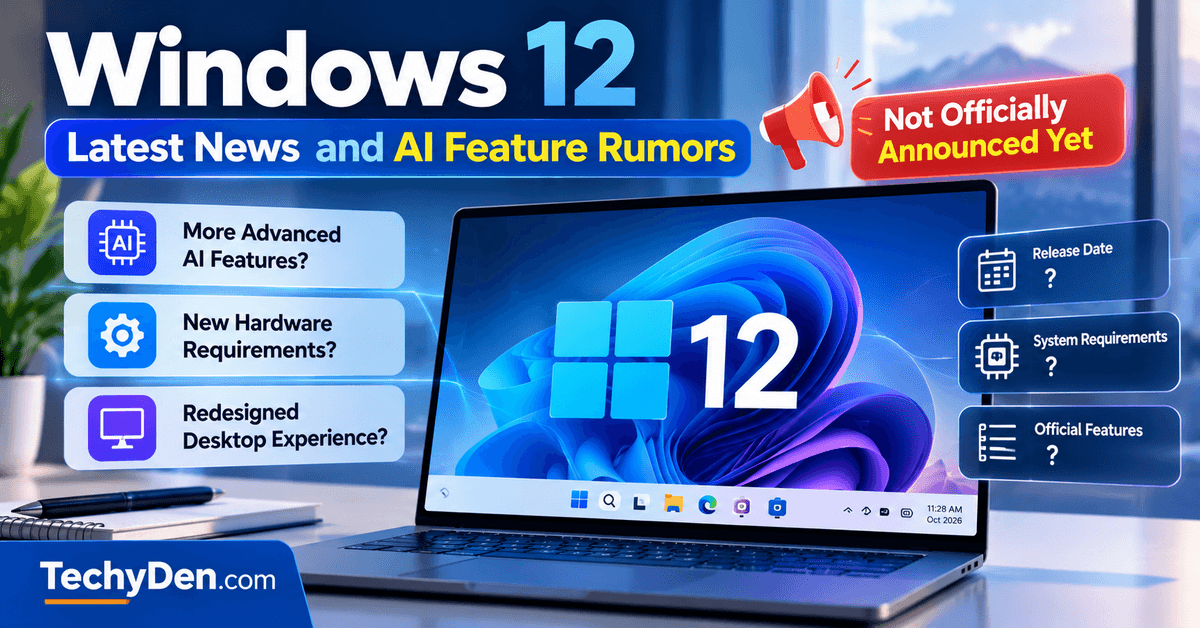
But what about Windows 12? Will Microsoft’s next operating system introduce more advanced AI capabilities, a redesigned interface, and deeper integration with AI assistants?
As of October 2026, Microsoft has not officially announced Windows 12 or confirmed its release date. Although rumors suggest that a future Windows release could introduce additional AI capabilities, these reports should not be treated as confirmed features.
In this guide, we’ll explore the AI-powered features available in Windows 11, explain which features require compatible hardware, examine Windows 12 rumors, and discuss what users should know about the future of AI in Windows.
What Are AI-Powered Features in Windows?
AI-powered features use artificial intelligence and machine learning to help computers understand information, recognize patterns, generate content, and assist with everyday tasks.
In Windows, these capabilities can help users search for files, summarize text, edit images, interact with AI assistants, and complete tasks more efficiently.
Microsoft offers AI experiences through Windows itself and applications such as Paint, Photos, and Microsoft Copilot. Some features run locally on compatible computers, while others rely on cloud-based services.
The availability of these capabilities depends on the Windows version, device hardware, application, region, language, and subscription.
AI-Powered Features in Windows 11
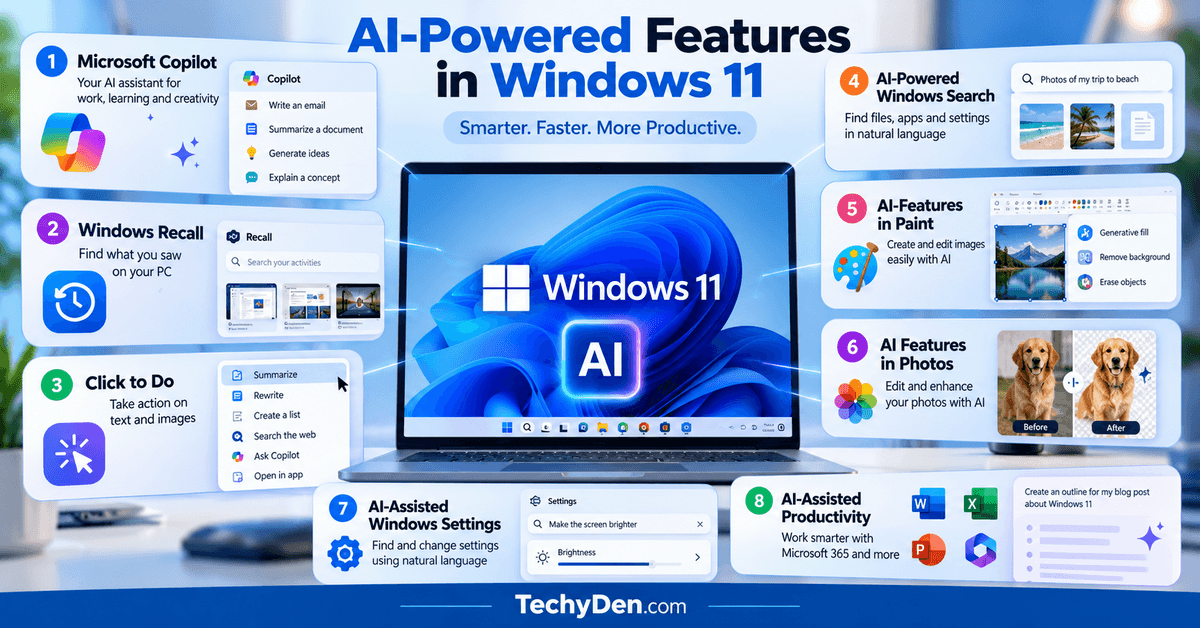
Windows 11 includes several AI-powered experiences, with additional capabilities available on compatible Copilot+ PCs.
Let’s examine the most useful features.
1. Microsoft Copilot
Microsoft Copilot is an AI assistant that helps users find information, generate ideas, summarize content, and complete productivity tasks.
Depending on the application and available subscription, users can ask Copilot to help with tasks such as:
- Writing emails, articles, and other content.
- Summarizing long documents.
- Generating ideas and outlines.
- Explaining technical concepts.
- Rewriting text in different styles.
- Answering questions and researching topics.
For students, professionals, bloggers, and content creators, Copilot can help speed up research and writing workflows.
However, Copilot’s availability and capabilities vary by product, account, region, and subscription. Users should verify important information rather than relying on AI-generated answers without checking them.
2. Windows Recall
Windows Recall is an AI-powered feature designed to help eligible users find previously viewed content on their computers.
It can save snapshots of supported on-screen activity, allowing users to search for information they remember seeing instead of manually reopening applications, documents, or websites.
For example, you might remember viewing a particular presentation or product page but forget its filename. Recall can help you search for that information using a description.
Important considerations include:
- Recall requires a compatible Copilot+ PC.
- Users must opt in to use the feature.
- Users can manage, pause, or disable snapshot collection.
- Saved snapshots can be managed through the feature’s settings.
- Security and privacy controls are provided to help protect stored information.
Recall is not available on every Windows 11 computer. Before purchasing a PC specifically for this feature, check Microsoft’s current hardware and availability requirements.
3. Click to Do
Click to Do helps users interact with text and images displayed on their screens.
Instead of manually copying information into another application, users can select supported content and access relevant actions.
Depending on the content and device, available actions may include:
- Summarizing selected text.
- Rewriting text.
- Creating a bulleted list.
- Searching for information online.
- Asking an AI assistant about selected content.
- Opening or editing images in supported applications.
For example, a student reading a long passage might use a supported summarization action to create a shorter version. A content creator could use available rewriting tools to refine selected text.
Some advanced text actions use Microsoft’s Phi Silica language model and run locally on compatible Copilot+ PCs.
Click to Do is particularly useful for people who regularly work with documents, research materials, and online information.
4. AI-Powered Windows Search
Windows Search helps users find applications, documents, settings, and other content on their computers.
On supported Copilot+ PCs, enhanced AI-powered search capabilities can make finding certain files easier by allowing users to describe what they are looking for in more natural language.
For example, instead of remembering the exact name of a photograph or document, a user may be able to describe its contents.
The available search capabilities depend on the Windows version, device, supported content types, and indexing configuration.
AI-enhanced search should not be confused with a universal feature available on every Windows 11 PC.
5. AI Features in Microsoft Paint
Microsoft Paint has evolved beyond a basic drawing application, with AI-assisted features available in supported versions.
Depending on the device and application version, users may be able to access features such as:
- AI-assisted image generation.
- Background removal.
- Layer-based editing.
- Image selection and editing tools.
- Other creative assistance features.
These capabilities can help users create simple graphics, prepare illustrations, and make basic image edits without opening a more complicated design application.
Some features require compatible hardware, while others have different availability requirements.
If you use Paint for image creation, check the features available in your installed version before assuming that every AI tool will be present.
6. AI-Powered Microsoft Photos
Microsoft Photos includes editing capabilities designed to help users improve their images.
Depending on the application version and device, supported features may include background removal, object removal, and other AI-assisted editing tools.
For example, a user preparing a product photograph may be able to remove an unwanted object or separate the subject from the background.
These tools can be useful for personal photography, online publishing, and basic graphic preparation.
However, advanced editing capabilities may have hardware or software requirements. Check the current Microsoft Photos documentation for the availability of individual features.
7. AI-Assisted Windows Settings
Microsoft has introduced AI-assisted settings experiences for compatible Copilot+ PCs.
These capabilities can help users find relevant Windows settings through natural-language instructions rather than navigating through multiple menus.
For example, a user might describe a problem with display settings or ask for help finding a particular configuration.
The system can then suggest relevant settings or actions when supported.
Availability depends on the Windows version, supported language, device configuration, and the particular setting involved.
Users should review suggested changes before applying them, especially when changing security, networking, or privacy settings.
8. AI-Assisted Productivity
AI can improve productivity across Windows applications, even when the feature is not built directly into the operating system.
Microsoft 365 applications and other compatible software offer AI-powered assistance for tasks such as drafting documents, summarizing information, organizing ideas, and analyzing content.
These capabilities can help users spend less time on repetitive tasks.
For example, a blogger could use AI assistance to develop article outlines, while an office worker might use supported tools to summarize a document before a meeting.
Some productivity features require a paid subscription or an eligible organizational account. Their availability should be checked separately from the standard Windows 11 feature set.
Do You Need a Copilot+ PC to Use Windows AI Features?
No. Not every AI feature requires a Copilot+ PC.
Windows 11 users can access certain AI services through compatible applications and cloud-based tools without owning a Copilot+ PC.
However, some advanced Windows AI features require specific hardware.
Copilot+ PCs are designed to support advanced on-device AI experiences and include a neural processing unit, or NPU, meeting Microsoft’s applicable performance requirements.
If your computer struggles with everyday tasks, try these troubleshooting steps before upgrading your hardware. Our guide on how to fix Windows 11 slow performance can help you identify potential performance problems.
The following table summarizes the distinction.
| Capability | Standard Windows 11 PC | Compatible Copilot+ PC |
|---|---|---|
| Microsoft Copilot through supported applications | Available, subject to product requirements | Available, subject to product requirements |
| Cloud-based AI services | Available with compatible applications and internet access | Available with compatible applications and internet access |
| Windows Recall | Not supported | Supported on eligible devices |
| Click to Do | Advanced Copilot+ experiences may be unavailable | Available on supported configurations |
| Advanced on-device AI processing | Depends on hardware | Designed for supported on-device AI workloads |
| AI-assisted image editing | Depends on the application and hardware | Additional supported experiences may be available |
| AI-enhanced file search | Depends on the device and Windows version | Additional supported capabilities may be available |
A Copilot+ PC does not automatically include every AI service or paid application subscription. Individual features may have separate requirements.
Before buying a computer, verify the exact specifications and features listed for that model.
Windows 12: Latest News and AI Feature Rumors
Windows 12 has generated considerable interest among Windows users, technology enthusiasts, and PC buyers.
Many users want to know whether Microsoft’s next operating system will introduce more advanced AI capabilities, new hardware requirements, or a redesigned desktop experience.
However, it is important to distinguish confirmed developments from speculation.
As of October 2026, Microsoft has not officially announced Windows 12, its release date, or its system requirements.
Consequently, there is no confirmed Windows 12 feature list.
Microsoft continues to improve Windows 11 through feature updates and security fixes. Read our guide to Windows 11 26H2 features and updates to learn about the latest improvements, installation process, and known issues.
Will Windows 12 Have More Advanced AI Features?
Future Windows releases could introduce additional AI capabilities, but Microsoft has not confirmed which features, if any, will be exclusive to Windows 12.
Several areas are worth watching.
1. More Advanced AI Assistance
Future Windows versions could offer more contextual AI assistance across applications and system tools.
Such improvements might help users complete everyday tasks, understand information, or work more efficiently.
However, the specific capabilities and their availability remain unconfirmed for Windows 12.
2. Improved Natural-Language Search
AI-powered search is an area of ongoing development in modern operating systems.
Future Windows releases could make it easier to find documents, images, and settings using descriptive language rather than exact filenames.
Microsoft has already introduced enhanced search experiences for compatible Windows 11 devices, but there is no official confirmation of how these capabilities will evolve in Windows 12.
3. Greater Task Automation
AI assistants may become more capable of helping users perform repetitive tasks.
Possible applications include organizing information, assisting with workflows, and helping users navigate complex tasks.
These are potential directions for future AI development, not confirmed Windows 12 features.
4. More On-Device AI Processing
Microsoft is developing Windows experiences that use local AI processing on compatible hardware.
Future devices may support increasingly capable AI models through NPUs and other hardware components.
Local processing can offer benefits such as reduced dependence on cloud connectivity for supported tasks. However, privacy and security depend on the design and implementation of each feature.
Windows 12’s hardware requirements have not been announced, so it is too early to say whether a future release will require an NPU.
5. A Possible User Interface Redesign
Technology publications and concept designers have circulated ideas for a redesigned Windows interface.
These concepts sometimes feature a floating taskbar, updated visual effects, or different desktop layouts.
However, concept images and third-party reports do not establish what Microsoft will release.
There is currently no confirmed Windows 12 interface design.
Windows 12 Release Date: What Do We Know?
Microsoft has not officially announced a Windows 12 release date.
Although some online reports have speculated about a possible launch in 2026 or later, these dates should not be presented as confirmed information.
Microsoft continues to publish Windows 11 updates, including feature improvements and security fixes.
The most reliable way to follow future developments is to check Microsoft’s official announcements and Windows release documentation.
Until Microsoft makes an official announcement, any specific Windows 12 launch date remains unconfirmed.
Windows 11 vs. Windows 12: What’s the Difference?
Windows 11 is an established operating system with published features, hardware requirements, and support information.
Windows 12, by contrast, has not been officially announced as of October 2026.
This means users cannot yet make a reliable, feature-by-feature comparison between the two operating systems.
| Feature | Windows 11 | Windows 12 |
|---|---|---|
| Official status | Available | Not officially announced |
| AI assistant experiences | Available through supported Windows features and applications | Unconfirmed |
| Recall | Available on eligible Copilot+ PCs | Unconfirmed |
| Click to Do | Available on supported configurations | Unconfirmed |
| AI-powered search | Available capabilities vary by device | Unconfirmed |
| System requirements | Published by Microsoft | Not announced |
| User interface | Established and regularly updated | Not announced |
| Release date | Available, with ongoing updates | Not announced |
| Upgrade eligibility | Depends on the current device and Windows version | Cannot be determined |
For now, Windows 11 is the practical option for users who need a supported Windows operating system with established features.
How to Check for the Latest Windows 11 Updates
If you want to experience the latest Windows improvements, keep your PC updated.
Follow these steps:
- Open the Start menu.
- Select Settings.
- Choose Windows Update.
- Select Check for updates.
- Install the updates offered for your device.
- Restart your computer if Windows requests it.
You can also visit Microsoft’s Windows 11 download page for official installation and upgrade information.
Keep in mind that feature updates are not necessarily offered to every device at the same time. Compatibility checks, staged rollouts, and known issues can affect availability.
If you want to manage your computer’s power consumption more effectively, follow our step-by-step guide on how to enable Hibernate in Windows 11.
If a feature is missing after an update, check Microsoft’s documentation to determine whether your device meets its requirements.
Should You Upgrade to a Copilot+ PC for AI Features?
Whether you should buy a Copilot+ PC depends on how you use your computer.
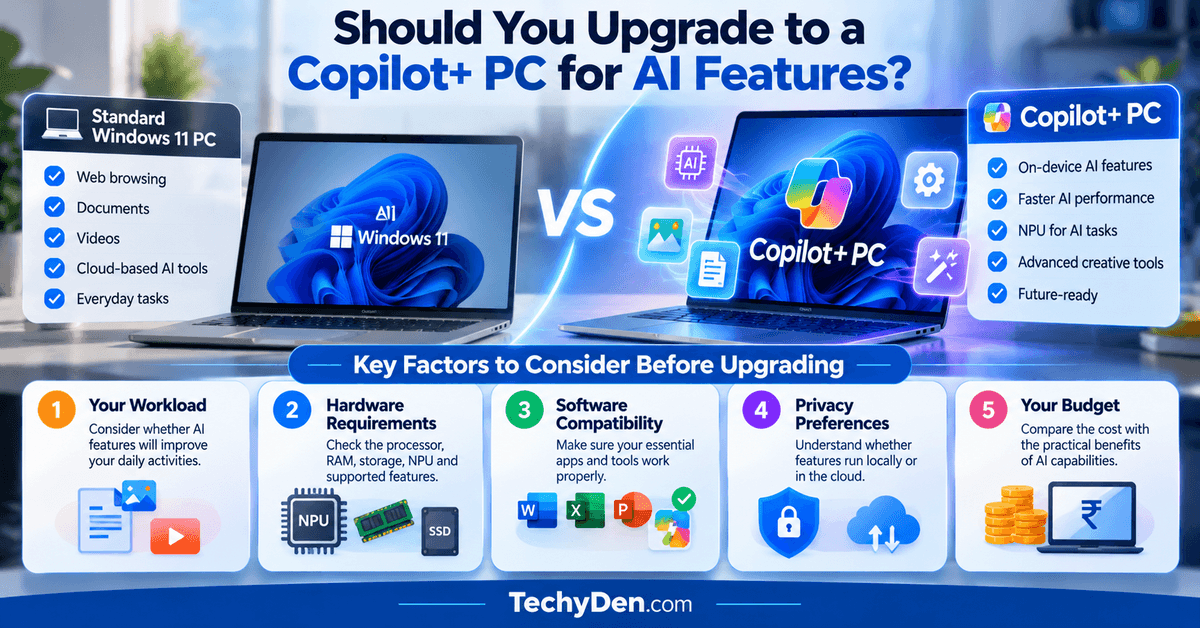
If you primarily browse the web, write documents, watch videos, or use cloud-based AI assistants, a standard Windows 11 PC may be sufficient.
However, a Copilot+ PC may be worth considering if you want to use supported on-device AI features.
Before making a purchase, consider the following factors.
- Your Workload: Think about whether AI features will improve your daily activities. People who regularly edit images, process documents, or use compatible AI applications may benefit more than those who perform basic tasks.
- Hardware Requirements: Check the processor, RAM, storage, NPU specifications, and supported features of the particular computer. Do not assume that every computer marketed as an AI PC supports every Copilot+ experience.
- Software Compatibility: Confirm that your essential applications, peripherals, and professional tools work with the computer you plan to buy.
- Privacy Preferences: Understand whether a feature processes information locally or through a cloud service. Review the relevant privacy settings before enabling AI tools that interact with your files or screen activity.
- Your Budget: Compare the cost of a compatible computer with the practical benefits of its AI capabilities.
You do not need to purchase new hardware simply because Windows AI features are receiving attention. Choose a device based on your actual needs.
Before purchasing a new computer to improve your experience, consider optimizing your existing system with our guide on how to improve Windows 11 performance.
Frequently Asked Questions
Is Windows 12 officially released?
No, Microsoft has not officially announced Windows 12 as of October 2026. The company has not confirmed its release date, system requirements, or feature list. Although rumors about a new Windows operating system continue to circulate, users should rely on Microsoft’s official announcements rather than treating speculative reports as confirmed information.
When will Windows 12 be released?
Microsoft has not announced an official Windows 12 release date. Claims suggesting a specific launch month or year remain unconfirmed. Microsoft continues to update Windows 11 with security fixes and feature improvements. For reliable information about future Windows releases, follow the official Windows Blog and Microsoft’s Windows release health documentation.
What are the AI-powered features in Windows 11?
Windows 11 offers several AI-powered experiences, including Microsoft Copilot, Recall, Click to Do, enhanced search capabilities, and AI-assisted tools in applications such as Paint and Photos. Availability varies by device, Windows version, application, region, and subscription. Some advanced features require a compatible Copilot+ PC with dedicated AI hardware.
Will Windows 12 have more advanced AI features?
Windows 12 could potentially introduce additional AI capabilities, but Microsoft has not confirmed any Windows 12-specific features. Improved AI assistance, natural-language search, task automation, and on-device processing are possibilities discussed in technology reporting. These should be treated as speculation until Microsoft officially announces the operating system and its capabilities.
What is a Copilot+ PC?
A Copilot+ PC is a Windows computer designed to support advanced AI experiences using a capable neural processing unit (NPU). These computers meet Microsoft’s hardware requirements for Copilot+ features, including eligible versions of Recall and Click to Do. Not every AI-capable computer qualifies as a Copilot+ PC, so check the specifications before purchasing.
Do I need a Copilot+ PC to use Windows AI features?
No, you do not need a Copilot+ PC to use every Windows AI feature. Many AI services are available through compatible applications and cloud-based tools on standard Windows 11 computers. However, certain advanced experiences, including Windows Recall, require compatible Copilot+ hardware. Check the requirements of each feature before deciding whether to upgrade.
What is Windows Recall, and how does it work?
Windows Recall is an AI-powered feature that helps eligible users find previously viewed content through searchable snapshots of their computer activity. Users can search for information they remember seeing instead of manually reopening applications or websites. Recall requires a compatible Copilot+ PC and user opt-in, and users can manage or disable snapshot collection.
What is Click to Do in Windows 11?
Click to Do helps users interact with supported text and images displayed on their screens. Depending on the device and available actions, users may be able to summarize or rewrite text, create lists, search online, or open content in compatible applications. Its advanced capabilities depend on the Windows version, hardware, language, and region.
Does Windows 11 have AI-powered search?
Yes, Windows 11 includes search capabilities, with enhanced AI-powered experiences available on supported devices. On compatible Copilot+ PCs, certain search features allow users to find content using descriptive language rather than remembering exact filenames. Availability depends on the Windows version, device hardware, indexed content, and supported file types.
Will Windows 12 require an NPU?
Microsoft has not announced Windows 12 system requirements, so it is not possible to confirm whether an NPU will be mandatory. Some existing Windows 11 AI features require compatible hardware with an NPU, while other AI services work through cloud-based applications. Wait for official specifications before making hardware decisions based on Windows 12 rumors.
Will Windows 12 be free for Windows 11 users?
Microsoft has not announced Windows 12 pricing or upgrade eligibility. Therefore, it is too early to confirm whether existing Windows 11 users will receive a free upgrade. Users should wait for official information about licensing, supported devices, and upgrade options before making purchasing decisions based on Windows 12 rumors.
Should I buy a Copilot+ PC or wait for Windows 12?
If you need a computer now, you do not need to wait solely for Windows 12 because its release date is unconfirmed. Choose a PC based on your workload, budget, software compatibility, and desired AI capabilities. A Copilot+ PC may be worthwhile if you specifically need its supported on-device AI features.
Can Windows 11 AI features work without an internet connection?
Some AI features can perform supported tasks locally on compatible hardware, while other features depend on cloud services and an internet connection. Offline availability varies by application, model, and task. Before relying on an AI feature without internet access, check its requirements and test the functionality on your particular Windows device.
How can I get the latest AI features in Windows 11?
To get the latest available Windows features, open Settings, select Windows Update, and choose Check for updates. Install the updates offered for your device and update relevant applications through their supported update channels. Some AI features require compatible hardware, a supported region or language, or additional account and subscription requirements.
Where can I find official Windows 12 news?
The best places to check for official Windows announcements are the Windows Blog and Microsoft’s Windows release health documentation. These sources provide information about Windows updates, new features, known issues, and release developments. Because Windows 12 remains unannounced as of October 2026, treat third-party release dates and feature lists as unconfirmed.
Final Verdict
Artificial intelligence is becoming an increasingly important part of Windows, and Windows 11 already provides useful AI-powered experiences through Copilot, Recall, Click to Do, enhanced search, and supported creative applications.
However, the availability of individual features depends on the device, Windows version, application, region, and subscription. Some advanced capabilities require a compatible Copilot+ PC.
Windows 12 remains unconfirmed as of October 2026. Although users can speculate about more advanced AI assistance, improved automation, and future interface changes, none of these possibilities should be presented as official Windows 12 features.
For now, keep your Windows 11 computer updated, verify hardware requirements before purchasing a new PC, and follow Microsoft’s official announcements for reliable information about future Windows releases.