13 Best PayPal Alternatives for Freelancers, Businesses, and International Payments
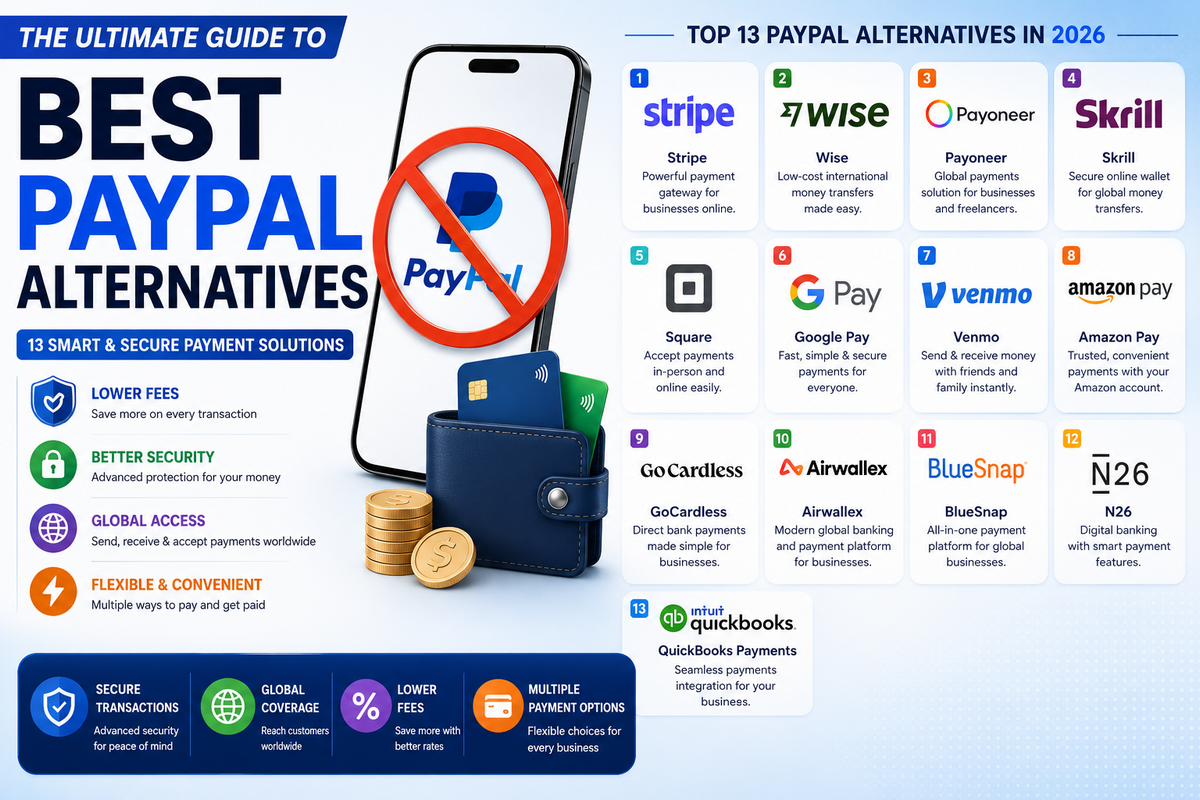
PayPal has been one of the most popular ways to send and receive money online for years, but it is not always the best fit for every user.
Many people now search for PayPal alternatives, companies like PayPal, and services like PayPal because they want lower fees, better international support, or tools that work better for freelancers and businesses.
For freelancers, sellers, and creators, the right payment platform can make a real difference in how quickly they get paid and how much they keep.
That is why so many users compare PayPal alternatives for freelancers, PayPal alternatives for businesses, and PayPal alternatives for international payments before choosing a platform.
This guide covers the most useful PayPal competitors and shows which ones are best for business payments, art commissions, international transfers, and personal use.
It also answers common questions like how old do you have to be to have PayPal and what options exist for users under 18.

Quick comparison of PayPal alternatives
| Platform | Best for | Notable feature |
|---|---|---|
| Stripe | Businesses and developers | Strong checkout tools |
| Wise | International transfers | Low-cost cross-border payments |
| Payoneer | Freelancers and global payouts | Multi-currency receiving accounts |
| Skrill | Personal and business use | Fast digital wallet payments |
| Square | Small businesses | Point-of-sale and online payments |
| Venmo | Personal transfers | Easy mobile payments |
| Google Pay | Personal use | Simple wallet-based payments |
Why people look for alternatives to PayPal
Many users search for PayPal alternatives because PayPal can be expensive for international payments, especially when cross-border fees and currency conversion are involved.
PayPal itself states that international personal payments and purchase payments can include cross-border fees, and fees may vary by location and funding method.
For freelancers and creators, the main goal is usually to get paid faster and keep more of each transaction. That is why searches like PayPal alternatives for freelancers, payment methods other than PayPal, and freelancer payment method are so common.
Businesses also compare PayPal competitors when they need better checkout tools, subscriptions, invoicing, or more flexible payment methods.
Stripe, for example, positions itself as a full payments platform for online and in-person payments, while Payoneer focuses on global accounts for freelancers and marketplace sellers.
Quick Comparison of PayPal Competitors
If you want a fast overview, the best companies like PayPal depend on what you need most: low-cost international transfers, business checkout, or freelancer payouts.
A strong alternative to PayPal should be simple to use, trustworthy, and fit your payment use case.
| Platform | Best for | Main strength |
|---|---|---|
| Stripe | Businesses | Flexible checkout, subscriptions, and payment tools |
| Wise | International transfers | Lower-cost cross-border payments |
| Payoneer | Freelancers and marketplaces | Global receiving and payout tools |
| Skrill | Personal and online payments | Digital wallet-style transfers |
| Square | Small businesses | POS and online payment support |
Best Options by Use Case
- Best PayPal alternatives for freelancers: For freelancers, Payoneer and Wise are two of the strongest PayPal alternatives for freelancers because they focus on global payments and easy client collections. Payoneer is built around freelance businesses and marketplace payouts, which makes it a practical payment platform for freelancers.
- Best PayPal alternatives for business: For businesses, Stripe is one of the best paypal business alternatives because it supports online checkout, subscriptions, and in-person payments in one system. That makes it a strong PayPal competitor for stores, SaaS businesses, and service brands.
- Best PayPal alternatives for international payments: If your main concern is cross-border fees, Wise is often one of the strongest international alternatives to PayPal. PayPal supports international transfers too, but its fee structure can be more complex and may include cross-border charges.
- Age and Under-18 Questions: PayPal generally requires users to be at least 18 years old, so queries like how old do you have to be to have PayPal and PayPal under 18 are important to address early. If you are writing for teens or younger users, it helps to include a short section on age rules and safer alternatives.
For users under 18, the safest approach is usually a parent- or guardian-managed payment option, depending on local laws and the platform’s terms. That makes PayPal alternatives for minors and apps like PayPal for under 18 useful search targets for this article.
Best PayPal Alternatives for Smart Payments
PayPal is one of the most popular ways to send and receive money online, but it is not always the best choice for every user.
Many people now look for PayPal alternatives because they want lower fees, better international support, easier freelancer payments, or business tools that fit their needs better.
In this guide, we will look at the best options and help you choose the right one for your situation.
1. Stripe
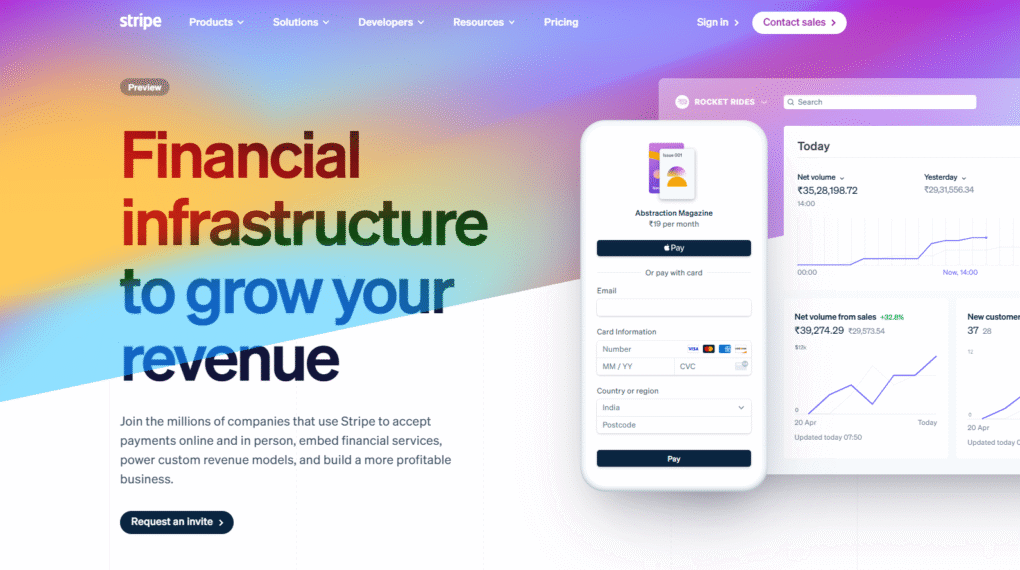
Stripe is one of the strongest PayPal alternatives for online businesses that need flexible payments, subscriptions, and developer-friendly tools. It works well for brands that want to accept cards, wallets, and local payment methods in one place.
Many businesses choose Stripe because it is built for scaling, automation, and checkout customization. If your audience includes SaaS owners, ecommerce sellers, or agencies, Stripe deserves a top spot in the article.
Properties of Stripe
- Supports online payments.
- Accepts recurring billing and subscriptions.
- Offers checkout customization.
- Supports multiple currencies.
- Works well for developers and SaaS businesses.
- Provides fraud and risk tools.
- Includes invoicing features.
- Suitable for global commerce.
Pros of Stripe
- Very flexible for business use.
- Strong documentation and integrations.
- Good for subscriptions and automation.
- Wide payment-method support.
- Scales well as a business grows.
Cons of Stripe
- Not ideal for beginners who want simplicity.
- Can feel technical for non-developers.
- Availability and features vary by country.
Best for
- SaaS companies.
- E-commerce stores.
- Agencies.
- Developers.
- Subscription-based businesses.
2. Wise
Best for Transparent International Transfers
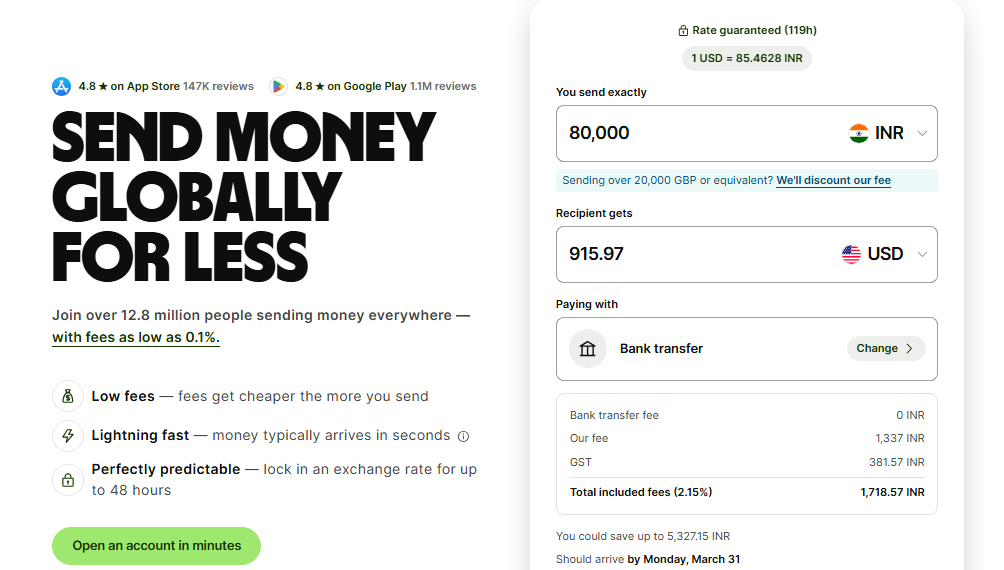
Wise is a popular alternative to PayPal for people who send or receive money internationally. It is especially useful for freelancers, remote workers, and businesses that want transparent exchange rates and lower cross-border costs.
Wise focuses on bank-to-bank transfers and multi-currency accounts, which makes it a practical choice for global payments. If your readers care most about avoiding hidden fees, Wise is a strong option.
Properties of Wise
- Multi-currency account support.
- Transparent exchange rates.
- International bank transfers.
- Local account details in some regions.
- Easy for freelancers and remote workers.
- Good for personal and business transfers.
- Strong cross-border payment focus.
- Simple account management.
Pros of Wise
- Usually cheaper for international transfers.
- Clear pricing and exchange rates.
- Great for cross-border payments.
- Good for receiving client payments.
- Easy to understand and use.
Cons of Wise
- Not built like a full checkout platform.
- Limited ecommerce features.
- Not ideal for advanced online stores.
Best for
- Freelancers.
- Remote workers.
- International money transfers.
- Small businesses paying overseas vendors.
3. Payoneer
Best for Freelancers and Global Businesses
Payoneer is one of the best PayPal competitors for freelancers, marketplace sellers, and global service providers. It is designed to help users get paid by clients and platforms across different countries.
Payoneer is especially useful if you work on international marketplaces or need multi-currency receiving accounts. For many creators and contractors, it is a better fit than PayPal for global earnings.
Properties of Payoneer
- Global receiving accounts.
- Multi-currency support.
- Marketplace payout support.
- Freelancer-focused payment tools.
- Withdraw to local bank accounts.
- Works with international clients.
- Useful for agencies and contractors.
- Supports business payments.
Pros of Payoneer
- Strong for global freelance work.
- Good marketplace support.
- Easy to receive international payments.
- Helpful for cross-border income.
- Widely used by online professionals.
Cons of Payoneer
- Fees can still be significant in some cases.
- Not as strong for consumer-style payments.
- Some features depend on region.
Best for
- Freelancers.
- Affiliate marketers.
- Marketplace sellers.
- Remote contractors.
- Global service providers.
4. Skrill
Best for Gaming, Forex, and Crypto Payments
Skrill is a digital wallet and an app similar to PayPal for people who want quick online transfers and easy wallet-based payments. It works for personal use, online purchases, and some business needs.
Skrill is often chosen by users who want a simple wallet experience with international reach. It is a useful addition to a list of services like PayPal.
Properties of Skrill
- Digital wallet payments.
- Online transfers.
- Supports multiple currencies.
- Works in many countries.
- Can be used for personal and business use.
- Fast account setup.
- Mobile-friendly platform.
- Supports card and bank-linked funding.
Pros of Skrill
- Easy to use.
- Good for quick transfers.
- Wallet-style convenience.
- Works internationally.
- Simple for online spending.
Cons of Skrill
- Not as strong for full business checkout.
- Fees can vary.
- Less powerful than business-focused platforms.
Best for
- Personal transfers.
- Online shoppers.
- Users who want a wallet-based alternative.
- Light business use.
5. Square
Best for Small and Retail Businesses

Square is a strong company like PayPal for small businesses that need both online and offline payment tools. It combines payment processing, point-of-sale tools, invoicing, and business management features.
Square is especially helpful for local sellers, service businesses, and retail stores. It is a practical PayPal alternative for users who want an all-in-one business setup.
Properties of Square
- Online and in-person payments.
- Point-of-sale system.
- Invoicing tools.
- Business dashboard.
- Card payment support.
- Inventory and sales features.
- Works well for retail and services.
- Built for small business operations.
Pros of Square
- Good all-in-one business solution.
- Easy for small businesses to adopt.
- Combines POS and online payments.
- Useful invoicing features.
- Strong for local sellers.
Cons of Square
- Not focused on international transfers.
- Less useful for freelancers needing global payouts.
- Availability depends on the country.
Best for
- Small businesses.
- Retail stores.
- Service providers.
- Local sellers.
6. Google Pay
Best for Quick and Secure Mobile Payments
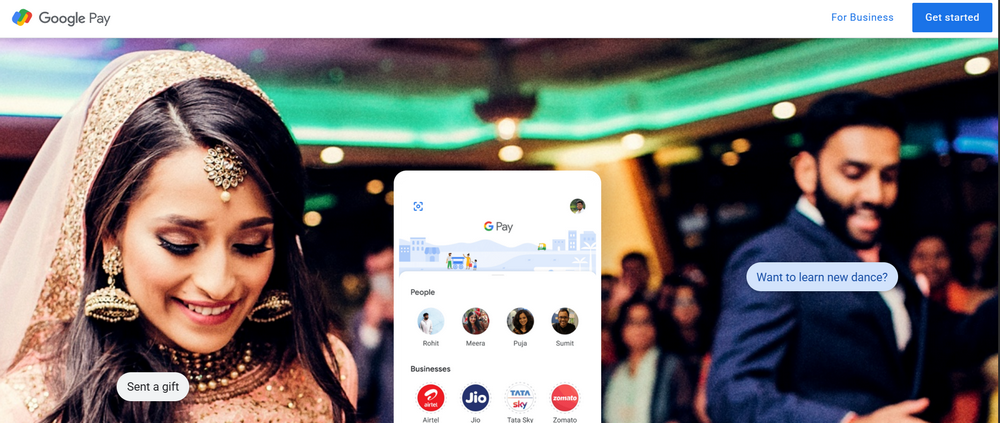
Google Pay is a simple payment method other than PayPal for users who mainly want quick personal payments and wallet-based convenience. It is not a full replacement for business payout platforms, but it works well for everyday transfers in supported regions.
For users searching for websites like PayPal or other services like PayPal, Google Pay is worth including as a lighter option.
Go to Google Pay ->
Properties of Google Pay
- Wallet-based payments.
- Fast peer-to-peer transfers in supported regions.
- Works with linked cards and bank accounts.
- Mobile-first experience.
- Secure account ecosystem.
- Good for everyday use.
- Easy setup.
- Widely recognized brand.
Pros of Google Pay
- Very easy to use.
- Good for personal payments.
- Strong mobile experience.
- Familiar for many users.
- Quick for everyday transfers.
Cons of Google Pay
- Not a full business payment system.
- Limited use for freelancers and sellers.
- Features vary by country.
Best for
- Personal use.
- Mobile payments.
- Users who want a simple wallet alternative.
7. Venmo
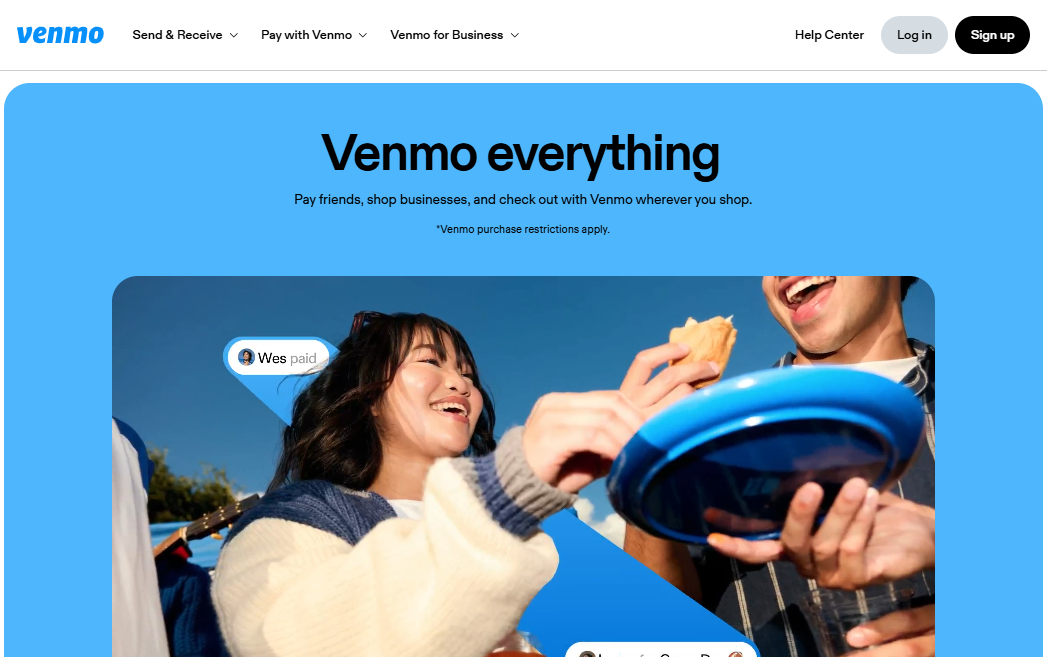
Venmo is a popular social payment app and another alternative to PayPal for personal transfers in supported regions.
It is best known for casual money sending between people, and it is often included when users search for PayPal similar sites or paypal like companies. Venmo is not meant for every business use case, but it is useful for simple personal transactions.
Properties of Venmo
- Peer-to-peer payments.
- Mobile app-based.
- Social payment features.
- Linked bank and card support.
- Easy transfer requests.
- Widely used in the US.
- Simple user experience.
- Good for casual payments.
Pros of Venmo
- Easy and familiar.
- Great for personal transfers.
- Fast to send and receive money.
- Strong mobile experience.
- Popular among younger users.
Cons of Venmo
- Limited international use.
- Not ideal for business payments.
- Region-specific availability.
Best for
- Personal transfers.
- Splitting bills.
- Casual money sending.
8. Amazon Pay
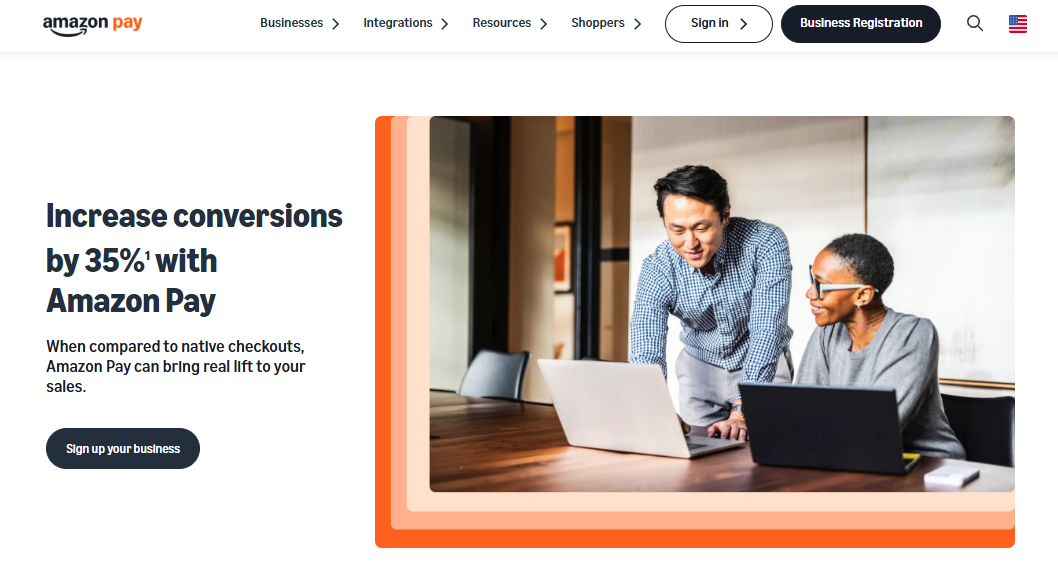
Amazon Pay is a trusted PayPal alternative for online stores that want to use customers’ existing Amazon account details for fast, secure checkout. It reduces cart abandonment by letting shoppers pay with saved Amazon payment methods and addresses.
It is best suited for ecommerce merchants who want a familiar, trusted checkout experience rather than freelancer payouts.
Many businesses add Amazon Pay alongside other PayPal competitors to increase checkout options.
Properties of Amazon Pay
- Uses existing Amazon account credentials.
- Fast, trusted checkout experience.
- Address and payment info auto-fill.
- Works on third-party ecommerce sites.
- Fraud protection through Amazon’s systems.
- Supports recurring payments in some setups.
- Available on major ecommerce platforms.
- Backed by Amazon’s brand trust.
Pros of Amazon Pay
- High buyer trust and familiarity.
- Reduces checkout friction.
- Strong fraud protection.
- Easy integration with ecommerce platforms.
- Good conversion rates for online stores.
Cons of Amazon Pay
- Requires customers to have an Amazon account.
- Limited outside major ecommerce use cases.
- Not built for freelancer or peer payments.
Best for
- Ecommerce stores.
- Online retailers.
- Merchants wanting trusted checkout options.
9. GoCardless
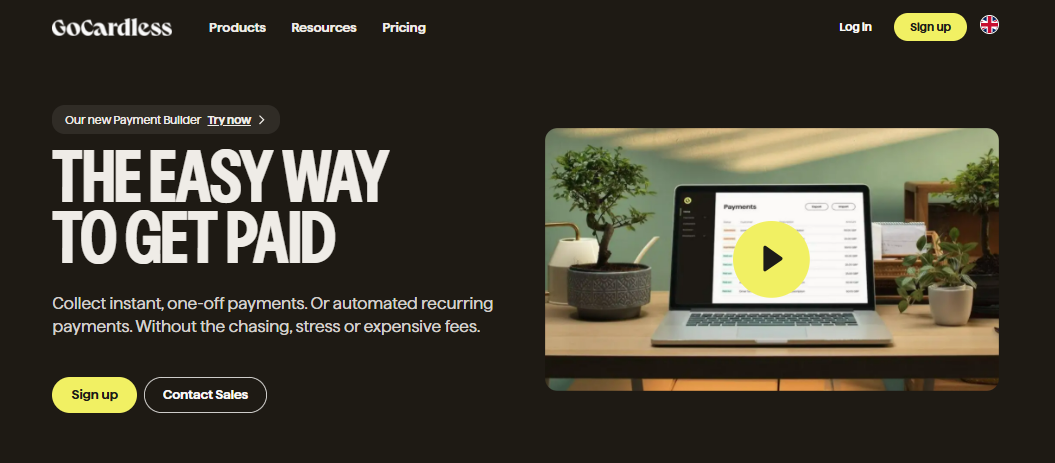
GoCardless is a specialized PayPal competitor built around recurring payments and direct bank debits rather than card transactions.
It is ideal for subscription businesses, agencies, and service providers who bill clients regularly.
Instead of card fees, GoCardless pulls payments directly from bank accounts, which can lower costs for recurring billing. It is less known for one-time payments but excels at ongoing collections.
Properties of GoCardless
- Direct debit and bank-to-bank payments.
- Built for recurring billing.
- Lower fees than card-based processors in many cases.
- Reduces failed payment rates.
- Integrates with accounting and invoicing tools.
- Supports multiple countries.
- Automated payment retries.
- Subscription management tools.
Pros of GoCardless
- Great for recurring revenue businesses.
- Lower processing costs for subscriptions.
- Reduces payment failures.
- Strong accounting integrations.
- Reliable for ongoing client billing.
Cons of GoCardless
- Not suited for one-time or peer payments.
- Less useful for freelancers with irregular income.
- Requires bank account setup from payers.
Best for
- Subscription businesses.
- Agencies with recurring clients.
- SaaS companies billing monthly or annually.
10. Airwallex
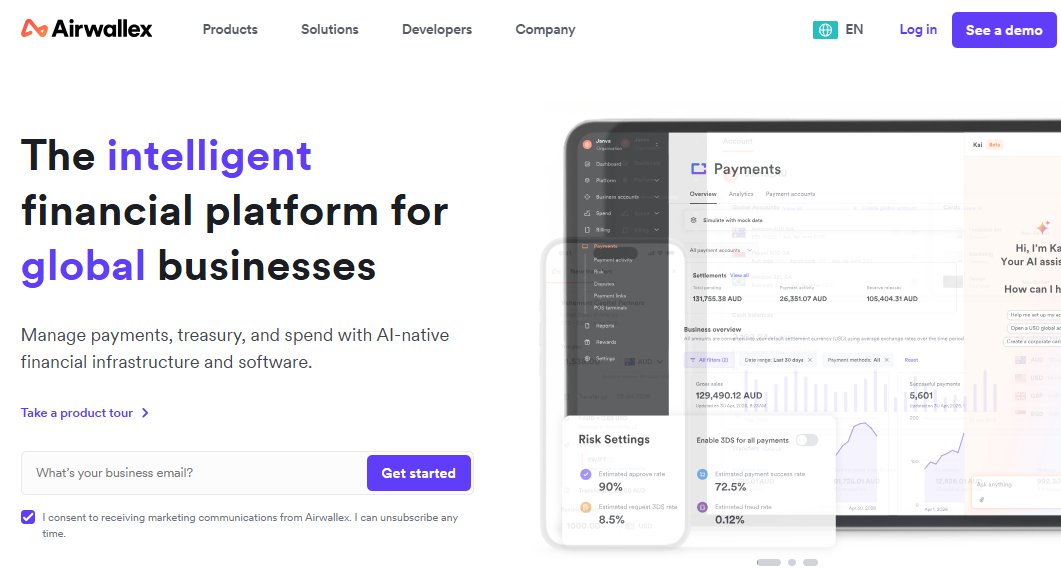
Airwallex is a fast-growing alternative to PayPal aimed at startups and businesses that need multi-currency accounts, global payouts, and modern financial infrastructure.
It combines payments, foreign exchange, and expense tools in one platform, making it attractive for companies scaling internationally.
It positions itself strongly against PayPal for startups that want lower FX costs and business-grade tools.
Properties of Airwallex
- Multi-currency business accounts.
- Global payout capabilities.
- Competitive foreign exchange rates.
- Expense management tools.
- API access for developers.
- Supports business cards.
- Built for scaling companies.
- International banking infrastructure.
Pros of Airwallex
- Strong for startups scaling globally.
- Competitive FX rates.
- Combines payments and expense tools.
- Good developer support.
- Modern, business-focused platform.
Cons of Airwallex
- More business-oriented than personal use.
- Onboarding may require business documentation.
- Less familiar brand than PayPal for consumers.
Best for
- Startups.
- Businesses with international operations.
- Companies needing multi-currency accounts.
11. BlueSnap
BlueSnap is a payment platform positioned as a PayPal competitor for businesses that need global payment acceptance and subscription billing in one system.
It supports multiple payment types, currencies, and fraud prevention tools, making it suitable for mid-sized to larger online businesses.
BlueSnap is less common for freelancers but strong for companies selling internationally.
Properties of BlueSnap
- Global payment acceptance.
- Subscription and recurring billing support.
- Multiple currency and payment-method options.
- Built-in fraud prevention.
- All-in-one payment orchestration.
- Supports marketplaces and platforms.
- Integrates with ecommerce systems.
- Business-focused reporting tools.
Pros of BlueSnap
- Strong international payment support.
- Good subscription billing tools.
- Built-in fraud protection.
- Suitable for larger online businesses.
- Flexible payment-method coverage.
Cons of BlueSnap
- Overkill for small freelancers or individuals.
- Setup can be more involved than simpler tools.
- Less brand recognition than PayPal.
Best for
- Mid-sized to large online businesses.
- Companies selling in multiple countries.
- Subscription and marketplace platforms.
12. N26
N26 is a digital bank often mentioned as an international alternative to PayPal, particularly for users in Europe who want a full banking experience alongside payment features.
It offers standard bank accounts with debit cards, transfers, and budgeting tools rather than a pure payment-processing focus.
It works well for freelancers and individuals who want a modern bank account that also handles everyday payments.
Properties of N26
- Full digital banking account.
- Debit card issuance.
- SEPA transfers within Europe.
- Budgeting and spending insights.
- Mobile-first banking experience.
- Multi-currency sub-accounts in some plans.
- Instant payment notifications.
- Available across many European countries.
Pros of N26
- Combines banking and payments in one app.
- Good for everyday spending and transfers.
- Strong mobile experience.
- Useful for freelancers based in Europe.
- Transparent fee structure.
Cons of N26
- Primarily focused on European users.
- Not a marketplace or checkout tool for businesses.
- Limited use outside supported regions.
Best for
- Freelancers and individuals in Europe.
- Users wanting banking plus payments.
- People who prefer a digital bank account.
13. QuickBooks Payments
QuickBooks Payments is a practical PayPal alternative for business owners who already use QuickBooks for accounting and want payments built into the same ecosystem.
It allows businesses to invoice clients and accept payments directly, with transactions syncing automatically to their books.
This makes it especially useful for small business owners who want fewer tools to manage.
Properties of QuickBooks Payments
- Integrated with QuickBooks accounting software.
- Invoice creation and payment collection.
- Automatic transaction syncing to books.
- Supports card and bank payments.
- ACH transfer support.
- Recurring invoicing options.
- Mobile invoicing app.
- Reporting tied to accounting data.
Pros of QuickBooks Payments
- Seamless accounting integration.
- Reduces manual bookkeeping work.
- Good for small business invoicing.
- Supports recurring billing.
- Simplifies financial reporting.
Cons of QuickBooks Payments
- Most useful only if already using QuickBooks.
- Less suited for freelancers without accounting needs.
- Limited international reach compared to specialized global platforms.
Best for
- Small business owners using QuickBooks.
- Service providers who invoice clients regularly.
- Businesses wanting integrated accounting and payments.
Quick comparison of PayPal competitors
This section helps readers scan the most relevant PayPal alternatives fast, especially if they are comparing PayPal competitors, services like PayPal, or companies like PayPal for business, freelancer, or international use. The best choice depends on whether the user needs checkout tools, lower transfer fees, or a simple wallet-style payment app.
| Platform | Best for | Why people choose it |
|---|---|---|
| Stripe | Businesses | Flexible checkout, subscriptions, and payment automation |
| Wise | International payments | Transparent rates and lower cross-border transfer costs |
| Payoneer | Freelancers | Global receiving accounts and marketplace payouts |
| Skrill | Personal use | Fast wallet-style payments |
| Square | Small businesses | POS, invoicing, and online payments |
| Amazon Pay | Ecommerce stores | Trusted Amazon-linked checkout |
| GoCardless | Recurring billing | Direct debit and subscription collections |
| Airwallex | Startups | Multi-currency accounts and global payouts |
| BlueSnap | Global businesses | International payment acceptance and billing |
| N26 | European users | Digital banking plus payments |
| QuickBooks Payments | Bookkeeping-focused businesses | Payments tied to accounting |
Best options by use case
If the reader is searching for PayPal alternatives for freelancers, Payoneer and Wise are the strongest options because they focus on international receiving, payouts, and lower-friction client payments. Payoneer specifically positions itself as a global account for freelance businesses and marketplace sellers.
For PayPal alternatives for business, Stripe, Square, QuickBooks Payments, and GoCardless are the most useful because they support invoices, subscriptions, checkout, or recurring billing. Stripe is especially strong for businesses that need a modern payments stack, while GoCardless is built around direct debit and recurring collections.
For PayPal alternatives international and alternative to PayPal for international payments, Wise and Airwallex are strong choices because they are built around cross-border money movement and multi-currency handling. PayPal itself also supports international transfers, but its fee structure can include cross-border charges and additional conversion costs.
Age and under-18 section
Readers asking how old you have to be to use PayPal or how old you have to be to have PayPal need a clear answer early in the article. PayPal’s user agreement states that users must be at least 18 years old, or the age of majority in their country or region, to open and use an account.
For searches like “”PayPal under 18,” “PayPal for minors,” and “PayPal alternatives for minors,” the article should explain that PayPal does not offer accounts for minors. Instead of trying to work around the rule, users under 18 should look for parent- or guardian-managed options, prepaid methods, or region-specific youth-friendly payment solutions.
Artist and commission section
Users searching for PayPal for art commissions, PayPal alternatives for artists, and art commission payment methods usually want low-fee, easy-to-send invoice options. Wise, Payoneer, and Stripe are the best platforms to mention here because they fit international clients, recurring creative work, and invoice-based payments better than casual wallet apps.
For artists, the best content angle is to explain that the right platform depends on whether the client is local or overseas, whether the payment is one-time or recurring, and how important transfer speed is. That makes this section more useful than a generic list of payment apps.
FAQs on Best PayPal Alternatives 2026
What are the best PayPal alternatives?
The best PayPal alternatives depend on what you need. Stripe is great for businesses, Wise works well for international transfers, and Payoneer is a strong choice for freelancers. Skrill, Square, and Amazon Pay can also be useful for different payment needs. The best option is the one that fits your fees, country, and payment type.
Which alternative to PayPal is best for freelancers?
Payoneer and Wise are two of the best options for freelancers. Payoneer works well for receiving payments from clients and marketplaces, while Wise is good for low-cost international transfers. If you send invoices often, Stripe may also be useful. The right choice depends on how clients pay you and where they are located.
What is better than PayPal for international payments?
Wise is often better than PayPal for international payments because it usually offers more transparent exchange rates and lower transfer costs. Payoneer is also a strong option for freelancers and businesses receiving money from abroad. For companies that need more advanced payment infrastructure, Airwallex is another strong alternative to consider.
Are there websites like PayPal for business?
Yes, there are many websites like PayPal for business use. Stripe, Square, QuickBooks Payments, GoCardless, and BlueSnap are all popular options. Stripe is best for online checkout and subscriptions, while Square works well for small businesses and retail stores. The best choice depends on whether you need invoicing, checkout, or recurring billing.
Can you use PayPal if you are under 18?
No, PayPal requires users to be 18 or older, or to have reached the age of majority in their country. If someone under 18 tries to open an account, it can cause account restrictions. For teens, the safer choice is usually a parent-managed option or another payment app that allows younger users in their region.
What are good PayPal alternatives for minors?
There are no direct PayPal accounts for minors, so the best option depends on local laws and app rules. In many cases, teens use parent-managed accounts, prepaid cards, or youth-friendly banking apps. It is important to check age requirements before signing up. The safest choice is a platform that clearly supports under-18 users legally.
Is PayPal good for art commissions?
PayPal is commonly used for art commissions because it is familiar and easy to send invoices with. However, it is not always the cheapest option, especially for international clients. Many artists also use Wise, Payoneer, or Stripe depending on payment size, country, and frequency. The best method is the one that protects both artist and client.
What payment methods other than PayPal are best for freelancers?
The best payment methods other than PayPal for freelancers are usually Wise, Payoneer, and Stripe. Wise is useful for international transfers, Payoneer works well for marketplace and client payments, and Stripe is strong for invoicing and business use. Freelancers should choose based on fees, withdrawal speed, and where their clients are based.
What companies are similar to PayPal?
Several companies are similar to PayPal, including Stripe, Wise, Payoneer, Skrill, Square, and Amazon Pay. These platforms all help users send, receive, or process money online, but each one serves a different purpose. Some are better for freelancers, some for ecommerce, and some for international business payments. The best one depends on your needs.
Which PayPal competitor is best for small businesses?
Stripe and Square are two of the best PayPal competitors for small businesses. Stripe is ideal for online payments, subscriptions, and checkout customization, while Square works well for retail stores and local service businesses. If you also need invoicing or accounting integration, QuickBooks Payments may be a better fit for your workflow.
What is the best PayPal alternative for international payments?
Wise is one of the best PayPal alternatives for international payments because it focuses on cross-border transfers with transparent pricing. Payoneer is also a strong choice for freelancers and businesses receiving money from abroad. For companies that need multi-currency accounts and global payouts, Airwallex is another useful option worth mentioning.
Why do people look for alternatives to PayPal?
People look for alternatives to PayPal because they want lower fees, better exchange rates, faster payouts, or more business tools. Some users also need platforms that work better for freelancers, international payments, or ecommerce. Others simply want a payment app that fits their country or business model more smoothly than PayPal does.
Conclusion on Best PayPal Competitors 2026
In the end, the best PayPal alternatives depend on how you plan to use them. Stripe is a strong company like PayPal for online businesses, Wise is a practical alternative to PayPal for international payments, and Payoneer is one of the best PayPal competitors for freelancers and creators.
If you are looking for services like PayPal, websites like PayPal, or other PayPal like companies, choose the platform that matches your fees, country, and payment needs.
For freelancers, the best freelancer payment method is usually one that supports easy invoicing, fast withdrawals, and low conversion costs.
That is why many people prefer PayPal alternatives for freelancers, PayPal alternatives for businesses, and PayPal alternatives for international options like Wise, Payoneer, and Stripe.

Artists who handle commissions can also benefit from PayPal alternatives for artists’ options and other art commission payment methods that make client payments simpler.
If you are wondering how old you have to be to use PayPal, the answer is generally 18, the age of majority in your country.
That means PayPal under 18 is not allowed, so teens should look for safe PayPal alternatives for minors or parent-managed payment options instead.
For most users, the right choice comes down to whether they need the best payment methods other than PayPal for business, personal use, or international work.