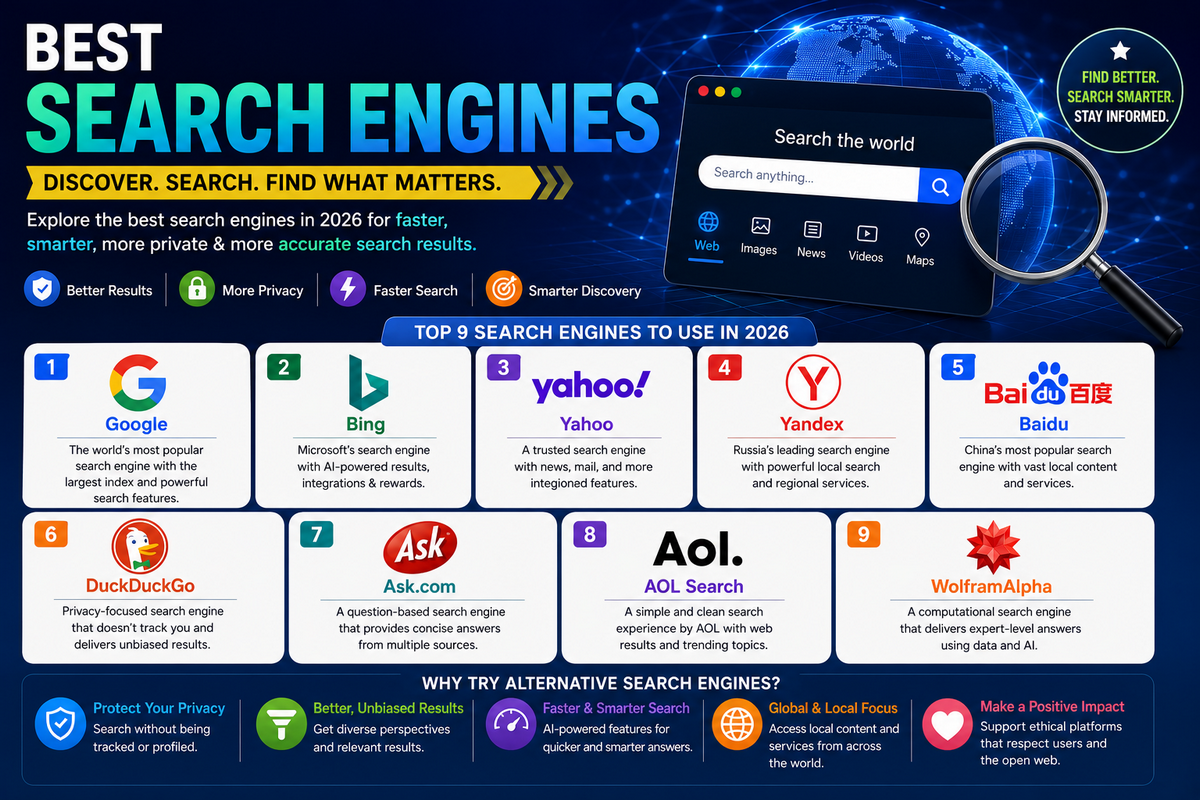
Google handles the overwhelming majority of global search traffic, roughly 90% of it, according to recent market share data—but “the biggest” and “the best for you” aren’t always the same thing.
Depending on what you’re searching for—privacy, raw computation, uncensored results, or region-specific relevance—a different search engine might genuinely serve you better.
In this guide, we cover the 9 most useful search engines in 2026 in depth, what each one does, its real strengths and weaknesses, who it’s actually built for, and why it earns a place on this list.

We’ll also touch on the newer wave of AI-powered and privacy-first alternatives (like Brave, Perplexity, and Startpage) that are increasingly showing up alongside these household names.
What Is a Search Engine, and How Does It Actually Work?
A search engine is software that indexes content across the web and returns the most relevant results for a given query. Under the hood, every major search engine relies on three core processes:
- Crawling: Automated bots (“spiders”) continuously scan the web, following links from page to page to discover new and updated content.
- Indexing: Discovered pages are analyzed and stored in a massive searchable database, categorized by content, keywords, and relevance signals.
- Ranking: When you search, the engine’s algorithm scores indexed pages against your query using hundreds of factors (relevance, authority, freshness, and user experience) and returns them in ranked order.
The 9 Best Search Engines in 2026
We break down each engine’s features, pros and cons, who it’s best for, and why it made this list.
1. Google
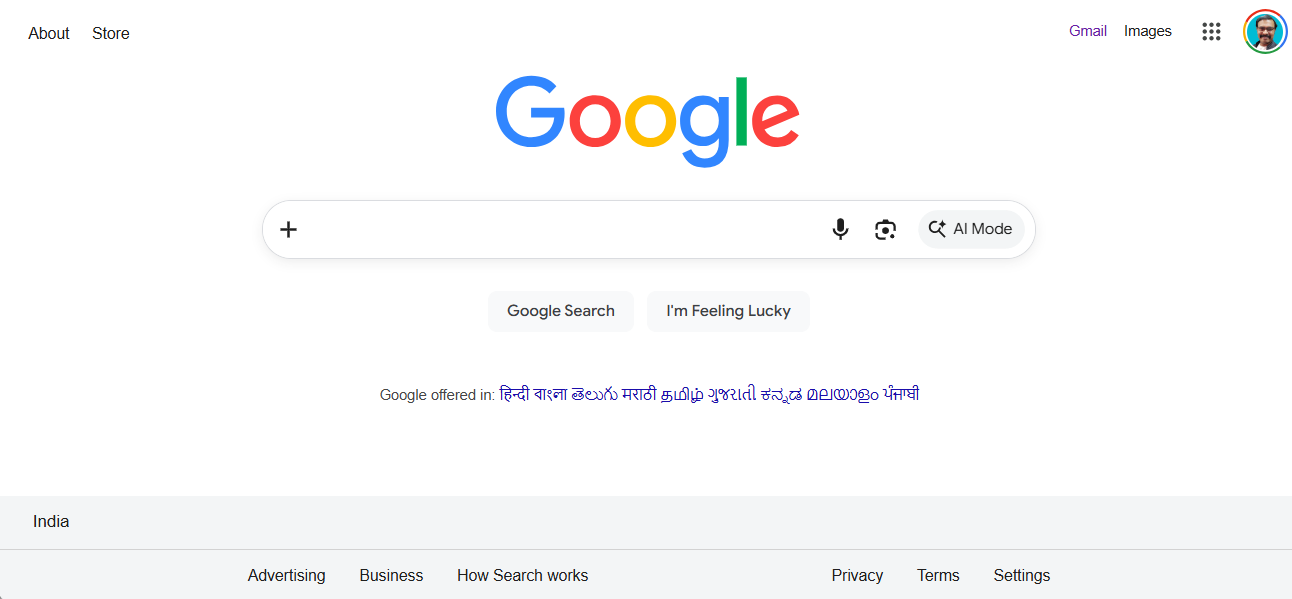
Google remains the default search engine for most of the world, and for good reason. Launched in 1998, it has spent over two decades refining the largest web index on the planet, backed by a ranking algorithm that continuously incorporates new signals from page experience to AI-generated overviews.
As of 2026, Google still commands roughly 90% of global search market share, a figure no competitor has come close to challenging.
For general-purpose search across shopping, local business, news, images, and everyday questions, it remains the most complete and capable option available.
Features of Google
- AI Overviews providing instant, synthesized answers directly on the results page
- The largest web index of any search engine, covering billions of pages
- Google Lens for visual and image-based search
- Deep integration with Maps, Shopping, Flights, and Knowledge Panels
- Voice search through Google Assistant and Gemini
- Personalized results based on search history and location (when enabled)
- Real-time updates for news, sports scores, and stock prices
- Google Discover for personalized content recommendations
- Extensive local business and review data via Google Business Profiles
- Continuous algorithm updates that adapt to spam, low-quality, and AI-generated content
Pros and Cons of Google
Pros:
- Largest, most comprehensive index of any search engine
- Fastest and most accurate results for the widest range of query types
- Deep ecosystem integration (Maps, Shopping, Workspace, Android)
- AI Overviews save time on straightforward informational queries
- Extremely strong local search and business listing data
Cons:
- Extensive personal data tracking and ad personalization
- AI Overviews reduce click-through to source websites (“zero-click search”)
- Search results increasingly mixed with ads and sponsored content
- Less transparent about ranking factors than smaller engines
- Can feel overwhelming or ad-heavy for simple lookups
Best for: General-purpose search across every category—shopping, local business, research, news, and everyday questions. This is one of the top and best search engines.
Why we recommend it: No other search engine matches Google’s combination of index size, speed, and feature depth. Even if you use a privacy-first engine as your daily driver, Google remains the benchmark every other engine on this list is measured against.
2. Bing

Microsoft’s Bing has spent the last few years closing much of the quality gap with Google, particularly since integrating Copilot directly into its results and chat experience.
Bing sits at a distant second in global market share (around 4-5%), but that number understates its actual reach—Bing’s index quietly powers results for both Yahoo and DuckDuckGo, meaning far more people interact with Bing’s data than realize it.
As the default search engine on Windows and Microsoft Edge, it also enjoys guaranteed exposure that competitors have to earn.
Features of Bing
- Copilot AI integration directly inside search results
- Bing Rewards program: earning points redeemable for gift cards and Microsoft products
- Strong image and video search with visual filters
- Deep integration with Windows, Edge, and Microsoft 365
- Bing Maps for local and business search
- Chat-based conversational search mode
- Bing Shopping with price comparison tools
- Translator built directly into search results
- Bing Webmaster Tools for site owners tracking indexing and performance
- Powers backend results for Yahoo, DuckDuckGo, and other secondary engines
Pros and Cons of Bing:
Pros:
- Strong AI-powered Copilot integration for conversational search
- Default on Windows and Edge, giving it consistent usage
- Rewards program adds tangible value for frequent users
- Solid image, video, and shopping search features
- Results quality has meaningfully improved in recent years
Cons:
- Still trails Google is noticeably more relevant for niche queries
- Smaller market share means less optimization incentive for some publishers
- The interface can feel cluttered with ads and promotional modules
- Regional and local search results are less comprehensive than Google’s
Best for: Windows and Edge users, and anyone who wants Copilot’s conversational AI built directly into search.
Why we recommend it: Bing is no longer just “the other search engine”—its Copilot integration and quiet role powering Yahoo and DuckDuckGo make it more influential than its market share number suggests and worth actively using rather than ignoring.
3. Yahoo
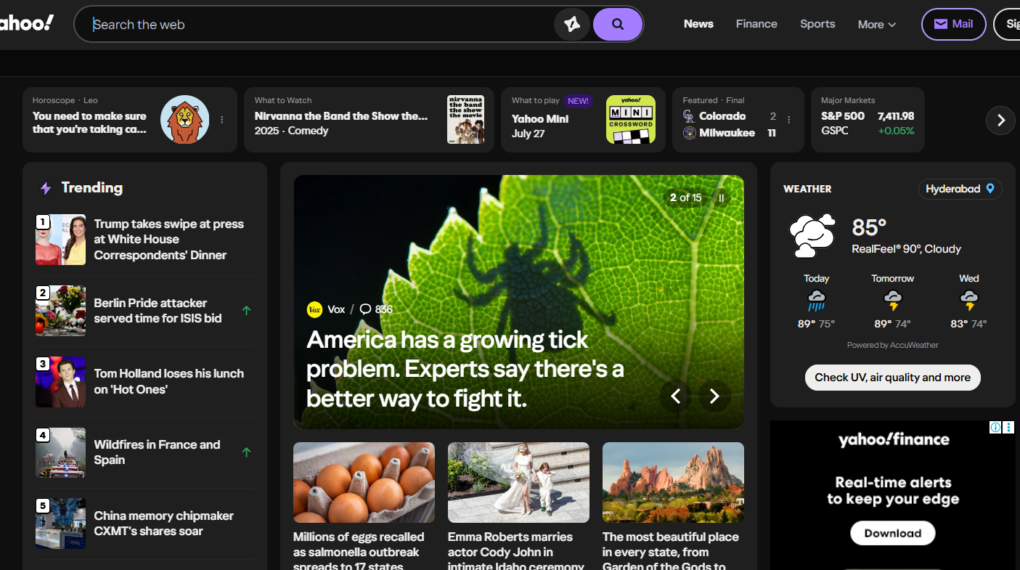
Yahoo Search runs on Bing’s index under the hood but layers its own homepage experience with news, finance, and entertainment content, holding onto a loyal user base built over decades.
In 2026, Yahoo introduced Scout, an AI-powered search feature designed to simplify complex, multi-part queries.
Yahoo still commands roughly 1-1.5% of global search share—modest, but a substantial audience of returning users who value its broader media ecosystem, especially Yahoo Finance and Yahoo Mail.
- Scout, Yahoo’s AI-powered search assistant for complex queries
- Deep integration with Yahoo Finance for stock and market data
- Yahoo News aggregation built directly into the homepage
- Yahoo Mail integration for logged-in users
- Sports scores and fantasy sports data prominently featured
- Powered by Bing’s index for core web results
- Customizable homepage with widgets and personalized content
- Image and video search inherited from Bing’s infrastructure
- Long-standing user base with strong brand loyalty
- Weather, horoscope, and lifestyle content integrated into search
Pros and Cons of Yahoo:
Pros:
- Strong all-in-one media ecosystem (news, finance, mail)
- Scout AI simplifies multi-step queries
- Familiar, nostalgic interface for long-time users
- Reliable core web results via Bing’s index
Cons:
- Not an independent index—relies entirely on Bing for core results
- The homepage can feel cluttered with unrelated content modules
- Smaller market share limits its influence on SEO strategy
- AI features lag behind Google and Bing’s more mature implementations
Best for: Users already embedded in Yahoo’s ecosystem—Yahoo Mail, Yahoo Finance, or long-time Yahoo homepage users.
Why we recommend it: If you already rely on Yahoo Finance or Mail, Scout’s AI search adds real convenience without requiring you to leave the ecosystem—even though the underlying web results come from Bing.
4. Yandex

Yandex is the dominant search engine across Russia and much of Eastern Europe, built specifically to understand Cyrillic-language content, regional slang, and local context far better than Google or Bing typically do.
Beyond search, Yandex operates its own maps, ride-hailing, and cloud services, functioning as a broader regional technology ecosystem rather than a single-purpose search tool. For anyone researching Russian-language content or the Russian market, Yandex isn’t optional—it’s the primary source.
Features of Yandex
- Superior relevance for Cyrillic and Russian-language queries
- Yandex Maps with detailed regional coverage
- Built-in translator optimized for Russian-to-English and reverse translation
- Image search with strong reverse-image-search capabilities
- Yandex. Zen content recommendation feed
- Regional business listings more comprehensive than Google’s in Russia
- Weather and traffic data tailored to Russian and CIS cities
- News aggregation focused on regional Russian-language sources
- Voice assistant (Alice) integrated into search
- Strong e-commerce and marketplace search integration
Pros and Cons of Yandex:
Pros:
- Unmatched relevance for Russian and Eastern European content
- Strong regional mapping and local business data
- Reliable translation tools built directly into search
- Comprehensive ecosystem beyond just search (maps, cloud, ride-hailing)
Cons:
- Much weaker relevance for English-language or global queries
- Limited usefulness outside its core regional markets
- Smaller advertiser and publisher ecosystem for non-Russian content
Best for: Researching Russian-language content or businesses and users operating in Russia and neighboring markets.
Why we recommend it: If Yandex isn’t your regional market, you likely won’t use it daily—but for the audience it does serve, no other engine on this list comes close to its regional accuracy.
5. Baidu
Baidu is China’s largest search engine and one of the most important platforms in the world for anyone doing business, marketing, or research related to the Chinese market—where Google’s search product has limited availability.
Baidu’s index and ranking algorithm are built specifically around Simplified Chinese content, government content regulations, and local user behavior, making it fundamentally different to optimize for than Western search engines.
Features of Baidu
- The dominant search engine for Simplified Chinese-language content
- Baidu Maps with detailed Chinese regional and business data
- Baidu Baike, a Wikipedia-style knowledge base integrated into results
- Strong e-commerce integration with Chinese online retailers
- Baidu Tieba, a forum and community platform tied into search results
- AI-powered Ernie Bot integration for conversational search
- Video search integration with Chinese streaming platforms
- Localized news aggregation from approved Chinese media sources
- Strong mobile-first search experience for China’s mobile-dominant user base
- Compliance with Chinese content regulations built into ranking behavior
Pros and Cons of Baidu
Pros:
- Essential and unmatched for Chinese-language search visibility
- Deep integration with Chinese e-commerce and local services
- Strong mobile search experience tailored to China’s user base
Cons:
- Content is subject to Chinese government regulation and filtering
- Very limited relevance or usefulness for non-Chinese queries
- SEO practices differ significantly from Google/Bing, requiring a separate strategy
Best for: Businesses and researchers targeting the Chinese market or Chinese-language content.
Why we recommend it: If reaching Chinese audiences matters to your business at all, Baidu isn’t a nice-to-have—it’s the primary discovery channel, since Google’s presence in mainland China is minimal.
6. DuckDuckGo
DuckDuckGo is the best-known privacy-first search engine, built on a simple promise: it doesn’t track your searches, store your IP address, or build an advertising profile on you.
Despite holding under 1% of global market share, it has one of the most loyal and fast-growing user bases of any engine on this list, driven by increasing public concern over data privacy.
Results are solid for general queries, aggregated from its own crawler plus partner sources, including Bing.
Properties of DuckDuckGo
- No tracking of search history or personal browsing data
- Bang commands letting you search directly within thousands of other sites
- Built-in tracker blocking in its browser extension and app
- Email protection feature that hides your real email from trackers
- No filter bubble—everyone sees the same results for the same query
- Lightweight, fast-loading interface with minimal ads
- Available as a standalone browser app for mobile and desktop
- Instant answers for quick facts without needing to click through
- Privacy-focused AI chat feature with no data retention
- Transparent about where result data is sourced from
Pros and Cons of DuckDuckGo
Pros:
- No personal data tracking or ad profiling
- Fast, clean, distraction-free interface
- Bang shortcuts add genuine everyday convenience
- Strong, fast-growing trust among privacy-conscious users
- Free browser extensions and mobile apps
Cons:
- Smaller independent index than Google or Bing for niche queries
- Local search results are noticeably weaker
- No personalization means less tailored results for ambiguous queries
- Some advanced features lag behind mainstream competitors
Best for: Privacy-conscious users who want solid everyday search results without being tracked.
Why we recommend it: DuckDuckGo proves privacy and usability aren’t mutually exclusive—for the vast majority of everyday searches, you genuinely won’t miss Google while gaining real protection from data tracking.
7. Ask.com

Ask.com (originally “Ask Jeeves”) built its identity around a question-and-answer search format, designed for users who prefer typing natural-language questions rather than keyword strings.
While its market share is now minimal, it retains a niche audience that values its straightforward Q&A-style results pages, and it continues to serve as a simplified entry point to search for less tech-savvy users.
NOTE: This page is an official farewell message from Ask.com (originally Ask Jeeves), announcing the shutdown of its search engine business on May 1, 2026, after 30 years in operation. Its parent company, IAC, discontinued the service to sharpen its overall business focus, leaving the page as a simple note of appreciation to the site’s users, engineers, and creators over the decades.
Properties of Ask.com
- Natural-language question-and-answer search format
- Simplified results pages designed for less technical users
- Category browsing for common topics (health, finance, general knowledge)
- Related-questions suggestions to refine a search
- Fact-based instant answers for common queries
- Ask.com’s own crawler supplemented by partner search data
- Lightweight, low-clutter interface
- Mobile-friendly search experience
- Community Q&A archive from its earlier iterations
- Simple, recognizable branding familiar to long-time internet users
Pros and Cons of Ask.com
Pros:
- Approachable, question-based format for non-technical users
- Simple, uncluttered results pages
- Good for quick factual lookups phrased as questions
Cons:
- Much smaller index than major competitors
- Result quality and freshness lag behind Google and Bing
- Limited advanced search features
- Declining relevance and usage over the past decade
Best for: Users who prefer typing full questions and want a simple, no-frills results format.
Why we recommend it: It won’t replace your primary search engine, but Ask.com’s The Q&A format still has a place for quick, casual lookups where you’d rather type a full sentence than keywords.
8. AOL Search
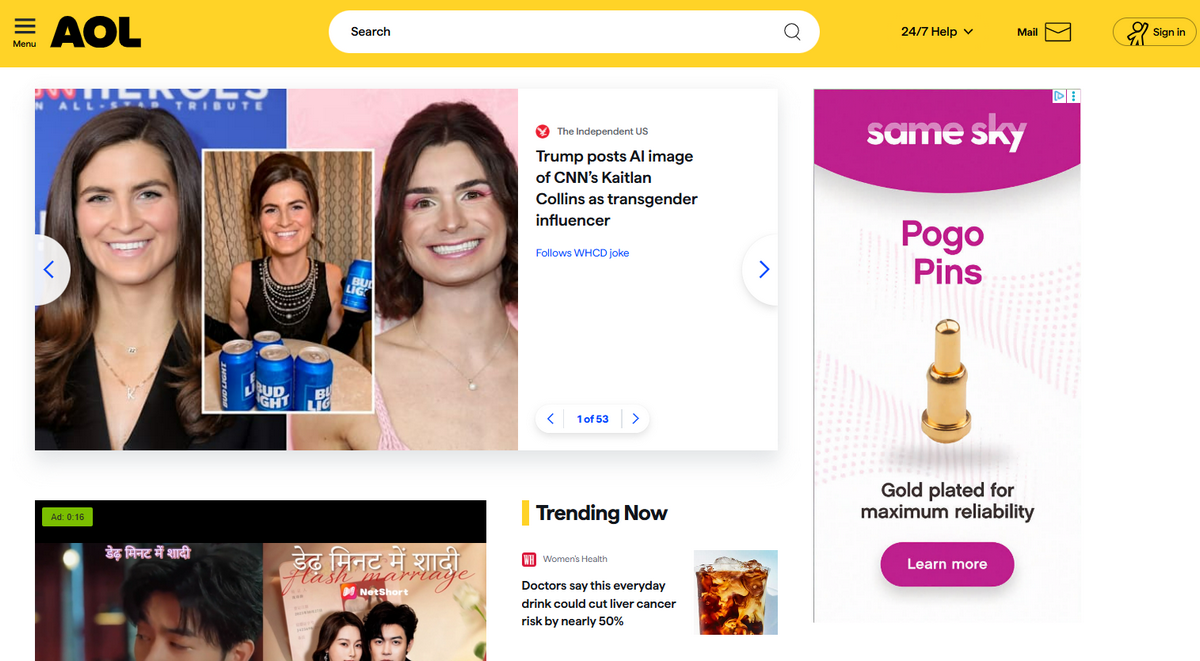
AOL Search is another Bing-powered engine, bundled into AOL’s broader media and email ecosystem much like Yahoo.
It retains a legacy user base—many of whom have used AOL Mail for decades—and functions primarily as a convenient default for users who never left the AOL ecosystem, rather than a destination search engine in its own right.
Features of AOL Search
- Powered by Bing’s index for core web results
- Integrated with AOL Mail and the AOL homepage
- News aggregation from AOL’s media partners
- Simple, familiar interface for long-time AOL users
- Weather and horoscope widgets on the homepage
- Video content integration from AOL’s media properties
- Basic image and video search inherited from Bing
- Minimal ad clutter compared to some competitors
- Accessible without requiring an AOL account for basic search
- Long operating history dating back to the early internet era
Pros and Cons of AOL Search
Pros:
- Reliable core results via Bing’s infrastructure
- Convenient for existing AOL Mail and homepage users
- Simple, low-friction interface
Cons:
- No independent index—entirely dependent on Bing
- Minimal innovation or unique features versus Bing directly
- Declining relevance outside its legacy user base
Best for: Existing AOL Mail users who want search built into their familiar homepage.
Why we recommend it: There’s little reason to choose AOL Search over Bing directly unless you’re already living inside the AOL ecosystem—but for that specific audience, it’s a frictionless default.
9. WolframAlpha
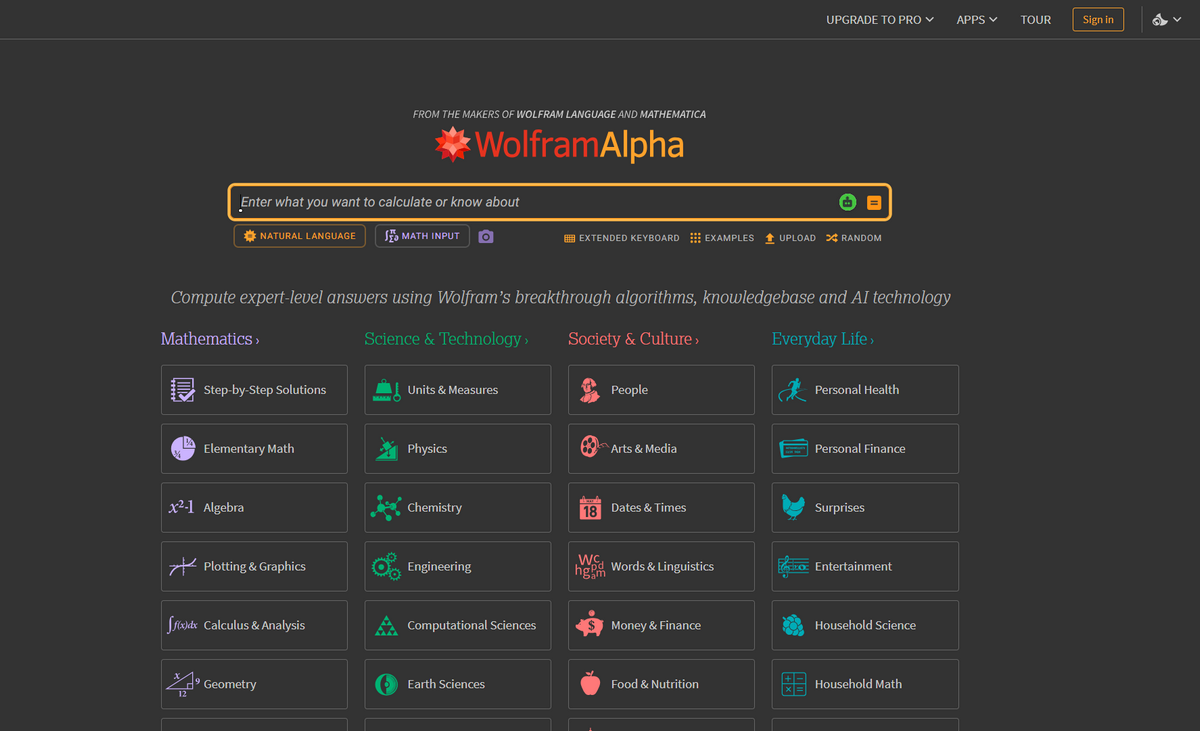
WolframAlpha isn’t a general search engine at all—it’s a “computational knowledge engine.” Instead of returning a list of links, it computes direct answers to math, science, statistics, engineering, and data queries using curated, structured data and its own computational engine.
For students, researchers, and anyone who needs a calculated answer rather than a webpage about the topic, it’s indispensable and genuinely has no true equivalent among the other engines on this list.
Features of WolframAlpha
- Directly computed answers rather than links to other websites
- Step-by-step solutions for math problems, from algebra to calculus
- Extensive curated data on science, geography, and statistics
- Unit conversion and dimensional analysis built in
- Chemical compound and equation lookups
- Financial and economic data computation (loans, interest, statistics)
- Astronomy and space data, including real-time celestial calculations
- Nutrition and health data computation for food queries
- API access for developers to integrate computational answers
- Widgets that can be embedded on external websites
Pros and Cons of WolframAlpha
Pros:
- Genuinely unique—no direct competitor offers the same computational depth
- Step-by-step math solutions are excellent for learning, not just answers
- Highly reliable, structured, curated data
- Useful API for developers building computational tools
Cons:
- Not useful for general web search, news, or shopping
- Free tier limits step-by-step solutions and some advanced features
- Learning curve for phrasing queries in a way it understands well
Best for: Students, researchers, and anyone needing a computed answer for math, science, or data queries.
Why we recommend it: It solves a completely different problem than the other 8 engines on this list and does it better than any general-purpose search engine ever could—it belongs in your toolkit specifically for that purpose.
Newer AI and Privacy Search Engines Worth Knowing in 2026
Beyond the 9 core engines above, a newer wave of AI-powered and privacy-first search engines has been gaining real traction and is increasingly showing up in “best search engine” and “Google alternatives” comparisons. They’re worth knowing even if they didn’t make the primary list:
- Brave Search: an independent, privacy-first index (not reliant on Google or Bing) with genuinely competitive results and no tracking
- Perplexity AI: an AI answer engine that synthesizes sourced, citation-backed answers instead of a list of links, popular for research tasks
- ChatGPT Search: OpenAI’s search integration inside ChatGPT, handling a growing share of queries as a conversational alternative to traditional search
- Startpage: Delivers Google’s actual search results with an added privacy layer that strips tracking
- Ecosia: A search engine that donates ad revenue to tree-planting projects, appealing to environmentally conscious users
- Kagi: a paid, ad-free search engine positioning itself as a premium, privacy-respecting alternative for power users
How to Choose the Right Search Engine for Your Needs
- General everyday search: Google or Bing
- Privacy-conscious search: DuckDuckGo or Brave Search
- Math, science, or data queries: WolframAlpha
- Chinese-language or China-market research: Baidu
- Russian or Eastern European regional content: Yandex
- AI-synthesized, sourced research answers: Perplexity AI or ChatGPT Search
Search Engine Comparison at a Glance
| Search Engine | Best For | Tracks User Data? | Global Market Share |
| General search, AI overviews | Yes | ~90% | |
| Bing | Windows/Edge users, Copilot | Yes | ~4-5% |
| Yahoo | News, Finance, Mail ecosystem | Yes | ~1-1.5% |
| Yandex | Russian/Eastern European content | Yes | Regional leader |
| Baidu | Chinese-language content | Yes | Regional leader |
| DuckDuckGo | Privacy | No | <1% |
| Ask.com | Question-based casual search | Yes | <0.5% |
| AOL Search | AOL ecosystem users | Yes | <0.5% |
| WolframAlpha | Computation, data queries | No | Niche |
Frequently Asked Questions (FAQs) on the list of search engines or Google Search Alternatives 2026
What is the most private search engine?
DuckDuckGo is the most widely used privacy-focused search engine—it doesn’t log your search history, store your IP address, or build an ad-targeting profile. Brave Search and Startpage are also strong private alternatives, with Brave running its own independent, non-tracking index rather than relying on another engine’s data.
Which search engine is best for SEO research?
Google remains essential for SEO research since it drives the large majority of organic traffic globally. Checking Bing is also worthwhile, since it powers a meaningful share of desktop traffic through Windows and Edge, and its data quietly feeds into Yahoo and DuckDuckGo’s results too.
What percentage of searches does Google handle?
Google handles roughly 90% of global search traffic as of 2026, according to recent market share tracking. Bing sits a distant second at around 4-5%, with Yahoo, DuckDuckGo, and other engines splitting the small remainder between them.
What is the best Google alternative for privacy?
DuckDuckGo and Brave Search are the two most recommended Google alternatives for privacy. DuckDuckGo is easier for casual daily use, while Brave Search runs its own fully independent index, appealing to users who want to avoid relying on Google or Bing’s data entirely.
Are there search engines that don’t use AI-generated answers?
DuckDuckGo and WolframAlpha rely far less on generative AI summaries than Google or Bing, focusing instead on direct source links or computed answers. Ask.com also leans on a simpler, non-AI question-and-answer format for most of its results.
What search engine is used most in China?
Baidu is the dominant search engine in mainland China, where Google’s search product has limited availability. It’s built specifically around Simplified Chinese content and Chinese content regulations, making it essential for anyone targeting Chinese-language audiences.
Is Bing worth using if I already use Google?
Yes—Bing’s Copilot integration offers a genuinely different conversational search experience, and since its index also powers Yahoo and DuckDuckGo’s results, using Bing directly can occasionally surface results you wouldn’t see through Google’s algorithm alone.
Conclusion: Which Search Engine Should You Actually Use?
There’s no single “best search engine” that fits everyone—there’s only the best search engine for what you’re trying to do right now. Google earns its dominant market share honestly: for general, everyday search across shopping, local business, and quick answers, nothing else matches its index size and speed. But treating Google as the only option means missing tools that solve specific problems better than a general-purpose engine ever could.
If privacy is your priority, DuckDuckGo or Brave Search remove tracking without asking you to sacrifice much result quality. If you’re targeting a regional market, Yandex or Baidu aren’t optional alternatives—they’re the primary channel your audience actually uses. And for anything computational, WolframAlpha does something no list of blue links can replicate.
The most practical approach most people land on in 2026 isn’t picking one search engine forever — it’s keeping two or three in rotation: a fast general default, a private option for everyday searches you’d rather not have tracked, and an AI-powered engine like Perplexity or ChatGPT Search open in another tab for research that benefits from a synthesized, sourced answer. Match the engine to the task, and you’ll get better results than sticking with any single default out of habit.
Recommended Readings