Losing important files can be stressful, especially when you accidentally delete documents, photos, videos, or work projects. Fortunately, the best free data recovery software can help you recover deleted files from Windows computers, USB flash drives, SD cards, and external hard drives.
However, not every data recovery tool is completely free. Some programs allow unlimited recovery, while others restrict the amount of data you can restore or require a paid license to save recovered files.
In this guide, we compare the best free data recovery software for Windows 11 and Windows 10, explain their limitations, and show you how to recover deleted files safely.
Quick answer: Recuva is a good starting point for beginners, Windows File Recovery is a free option from Microsoft, and PhotoRec is worth considering when you need to recover files from formatted or damaged file systems. Choose DMDE if you need more advanced recovery features and can work within its free-version limits.
Important: Stop using the affected drive as soon as you discover missing files. New data can overwrite deleted files and reduce your chances of recovery. Save recovered files to a different physical drive whenever possible.
Quick Comparison: Best Free Data Recovery Software
| Software | Best for | Free-version details | Ease of use |
|---|---|---|---|
| Recuva | Beginners and recently deleted files | Free edition available | Easy |
| Windows File Recovery | Native Windows recovery | Free command-line utility | Advanced |
| PhotoRec | Formatted drives and damaged file systems | Free and open source | Moderate |
| TestDisk | Lost partitions and certain deleted files | Free and open source | Advanced |
| DMDE Free Edition | Advanced file and partition recovery | Up to 4,000 files per recovery operation from the active panel | Advanced |
| EaseUS Data Recovery Wizard | Guided recovery for beginners | Limited free recovery; verify current allowance | Easy |
| Stellar Data Recovery | Guided scanning and file recovery | Free allowance and paid upgrades; verify current cap | Easy |
| Disk Drill | Guided recovery and drive scanning | Free Windows recovery allowance; verify current cap | Easy |
| R-Photo | Photo and video recovery | Free for non-commercial use, subject to its license | Moderate |
| Wise Data Recovery | Simple deleted-file recovery | Free edition available; check current limitations | Easy |
Free-version limits and product features can change. Check the official product pages before downloading or relying on a particular recovery allowance. A successful scan does not guarantee that a file can be restored intact.
1. Recuva
Best Free Data Recovery Software for Beginners
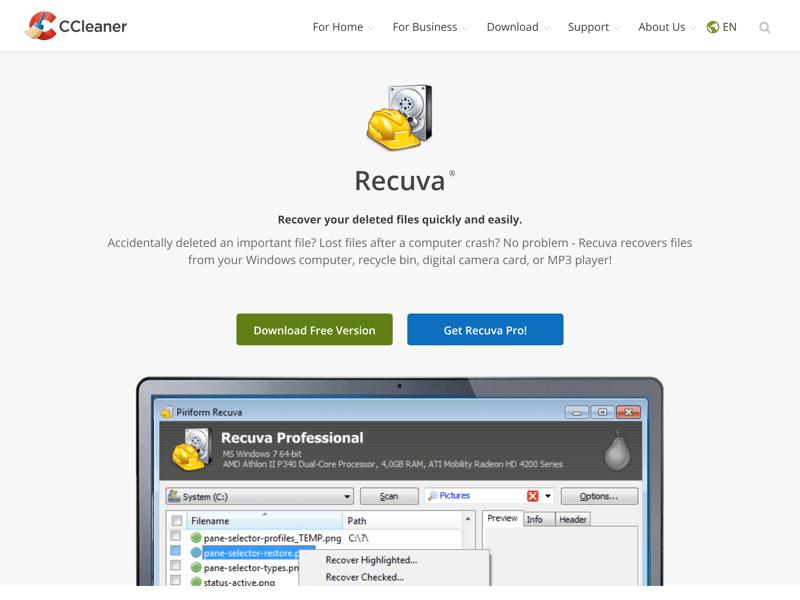
Recuva is a straightforward file recovery program from Piriform, a company associated with the CCleaner product family. It is a sensible first option if you have accidentally deleted files and want to try recovery without learning command-line tools.
It can help recover documents, pictures, videos, music, and other file types from supported storage devices.
Key features
- Recover deleted files from supported Windows storage devices.
- Scan for files that may still be recoverable.
- Use a deeper scan when a standard scan does not find the required files.
- Check whether discovered files appear recoverable before attempting restoration.
- Use a free edition for basic recovery tasks.
Free version and limitations
Recuva offers a free edition for basic file recovery. Its professional edition adds features such as virtual hard drive support and automatic updates.
Recovery is not guaranteed. Files may be damaged or unrecoverable if their storage space has already been overwritten, and SSD recovery can be affected by TRIM.
If you want a closer look at its features and free edition, read our Recuva review before starting the recovery process.
How to use Recuva
- Download Recuva from the official website.
- Install it on a different drive from the one containing your deleted files, if possible.
- Start the recovery wizard and choose the type of files you want to recover.
- Select the drive or location where the files were stored.
- Run the scan and review the results.
- Select the required files and recover them to a different drive.
Best for: Beginners who want a simple way to recover recently deleted files.
2. Windows File Recovery
Best Free Tool from Microsoft
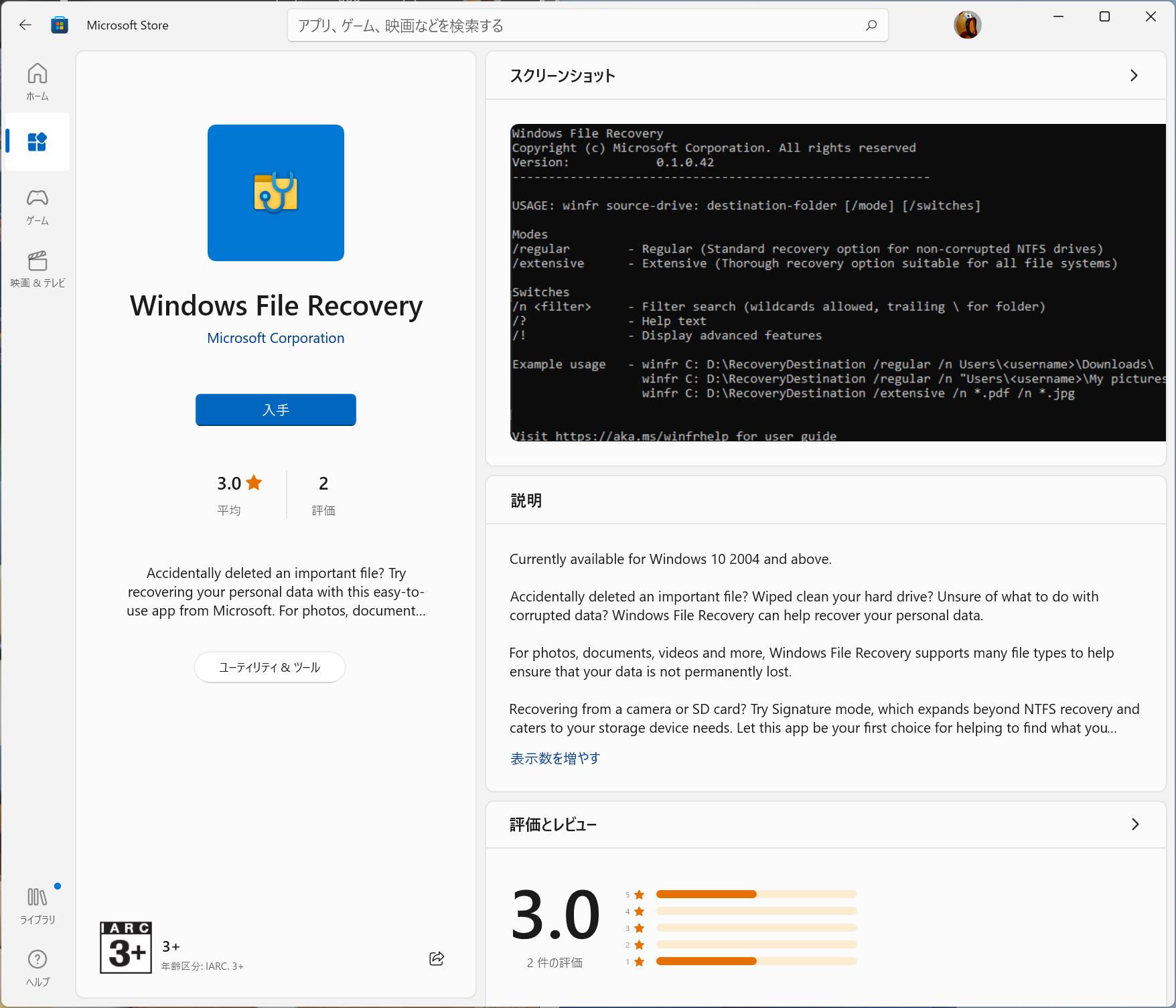
Windows File Recovery is Microsoft’s command-line utility for recovering deleted files that cannot be restored from the Recycle Bin. It supports compatible local storage devices, including internal drives, external drives, and USB devices.
Unlike many commercial recovery products, Windows File Recovery is available at no cost. Its main drawback is that it uses commands rather than a conventional graphical interface.
Key features
- Recover certain deleted files from supported local storage devices.
- Use Regular and Extensive recovery modes.
- Filter recovery attempts by file name, folder, or extension.
- Recover selected documents, images, and other supported file types.
- Use a Microsoft-provided utility rather than a third-party recovery application.
How to use Windows File Recovery
- Step 1: Install the application: Open the Microsoft Store and search for Windows File Recovery. Install the official application.
- Step 2: Connect a destination drive: Use another drive to store recovered files. For example, if the affected drive is C:, you could use E: as the destination, provided E: is a separate physical drive or otherwise safely isolated from the source data.
- Step 3: Open Windows File Recovery: Launch the application and allow it to run with the required permissions.
- Step 4: Enter a recovery command: For example, to search for PDF files on drive C: and
- recover them to drive E: use:
winfr C: E: /regular /n *.pdf. - For an extensive scan, an example command is:
winfr C: E: /extensive /n *.pdf. - These commands are examples, not a guarantee that every PDF can be restored. Follow the application’s current instructions for selecting the appropriate mode and filters.
- recover them to drive E: use:
- Step 5: Review the recovered files: Windows File Recovery creates a recovery folder on the destination drive. Open it and check whether the files can be read.
Free version and limitations
The utility is free, but it requires command-line input and may not recover every deleted file. Microsoft documents regular and extensive modes and advises users to minimize computer use after data loss.
Before disconnecting a working USB drive, follow the appropriate USB safe-removal procedure to reduce the risk of additional file-system problems.
Best for: Users who want a free Microsoft tool and are comfortable following command-line instructions.
3. PhotoRec
Best for Recovering Files from Formatted Drives
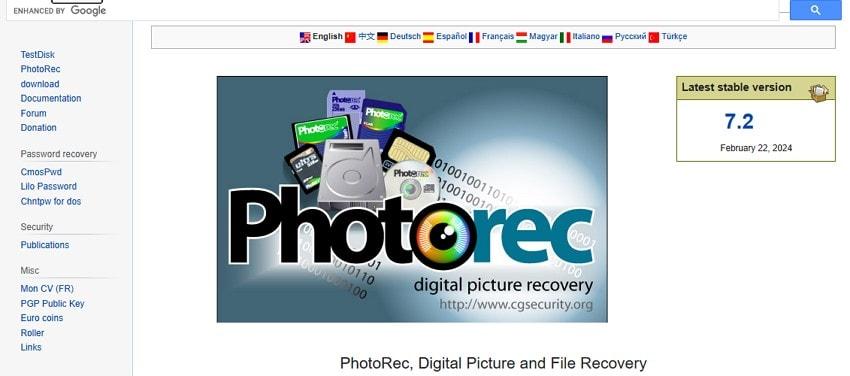
PhotoRec is a free, open-source data recovery utility developed as part of the TestDisk project. It is particularly useful when ordinary recovery methods fail, including some situations involving formatted or damaged file systems.
PhotoRec searches for recognizable file signatures instead of relying entirely on the file system’s directory information. This makes it useful in certain difficult recovery situations.
Key features
- Recover many types of documents, photos, videos, and archives.
- Work with various supported file systems and storage devices.
- Attempt recovery from some damaged or reformatted file systems.
- Run on Windows and several other operating systems.
- Use the companion QPhotoRec interface where available for a more graphical workflow.
Free version and limitations
PhotoRec is free and open source. However, its recovery method has an important drawback: recovered files may not retain their original names or folder structure.
You may need to inspect and sort the recovered files manually. Recovery results also depend on the condition of the storage device and whether the original data has been overwritten.
How to recover files using PhotoRec
- Download TestDisk and PhotoRec from the official CGSecurity website.
- Extract the downloaded files and launch PhotoRec or QPhotoRec.
- Select the storage device containing the missing files.
- Choose the relevant partition or scan area.
- Select the file types you want to recover when supported by the interface.
- Choose a destination on a different drive.
- Start the scan and review the recovered files.
Best for: Recovering photos, videos, and other files from formatted media or damaged file systems when simpler tools fail.
4. TestDisk
Best for Recovering Lost Partitions
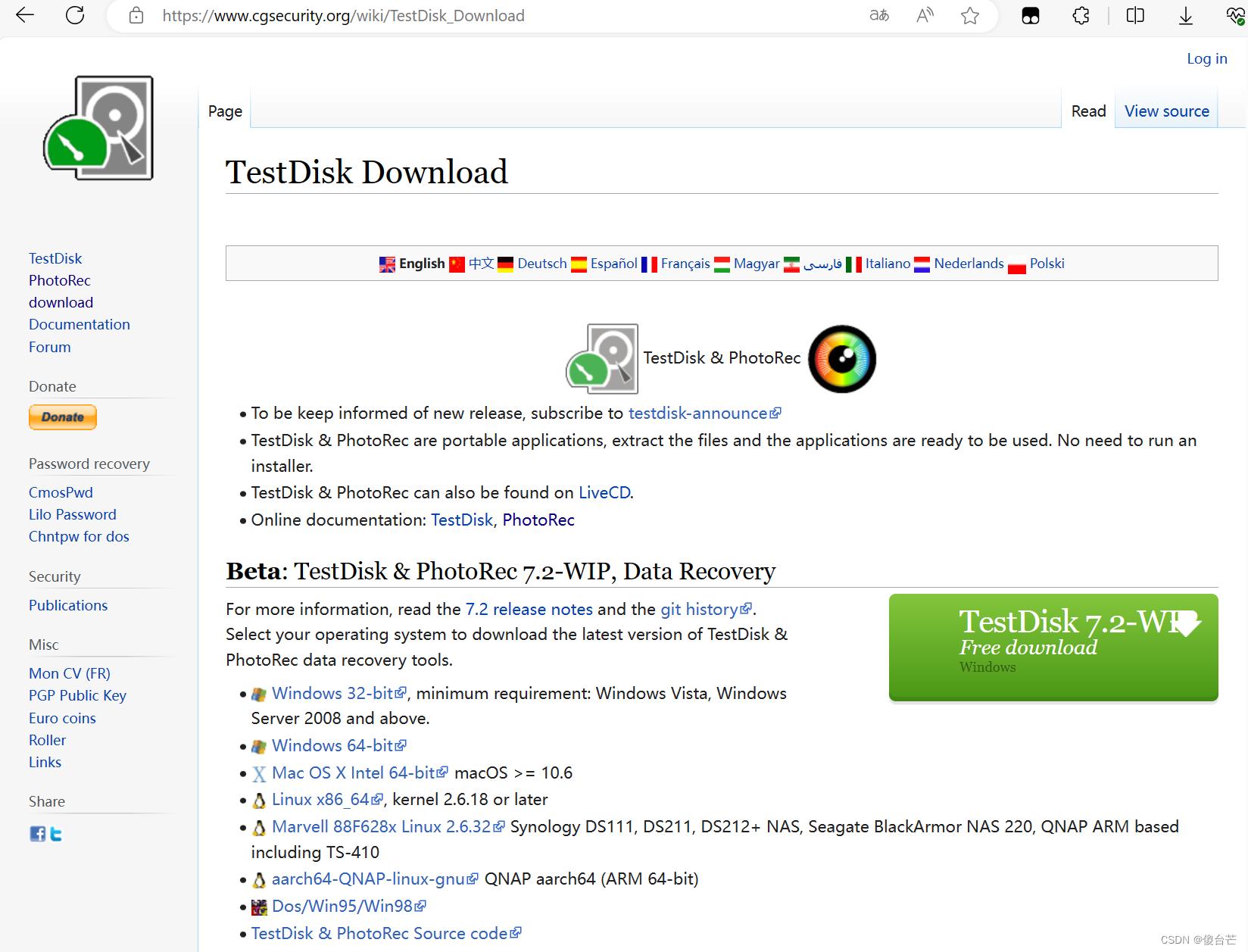
TestDisk is another free, open-source utility from the developers of PhotoRec. Its main purpose is different: it focuses on lost partitions, partition-table problems, and certain file-system issues.
For example, if a drive’s partition disappears or a storage device becomes inaccessible because of logical partition damage, TestDisk may help identify or restore partition information.
Key features
- Search for lost partitions.
- Help repair certain partition-table and boot-sector problems.
- Support a range of file systems.
- Recover certain deleted files from supported file systems.
- Work alongside PhotoRec for file recovery when necessary.
Free version and limitations
TestDisk is free and open source, but its text-based interface can be difficult for inexperienced users. Incorrect partition changes can make a drive harder to recover, so avoid writing changes to a damaged disk unless you understand the implications.
If the missing files are more important than restoring the drive’s normal operation, consider making a disk image first or consulting a recovery professional.
Best for: Advanced users dealing with lost partitions or certain logical storage problems.
5. DMDE Free Edition
Best for Advanced Recovery
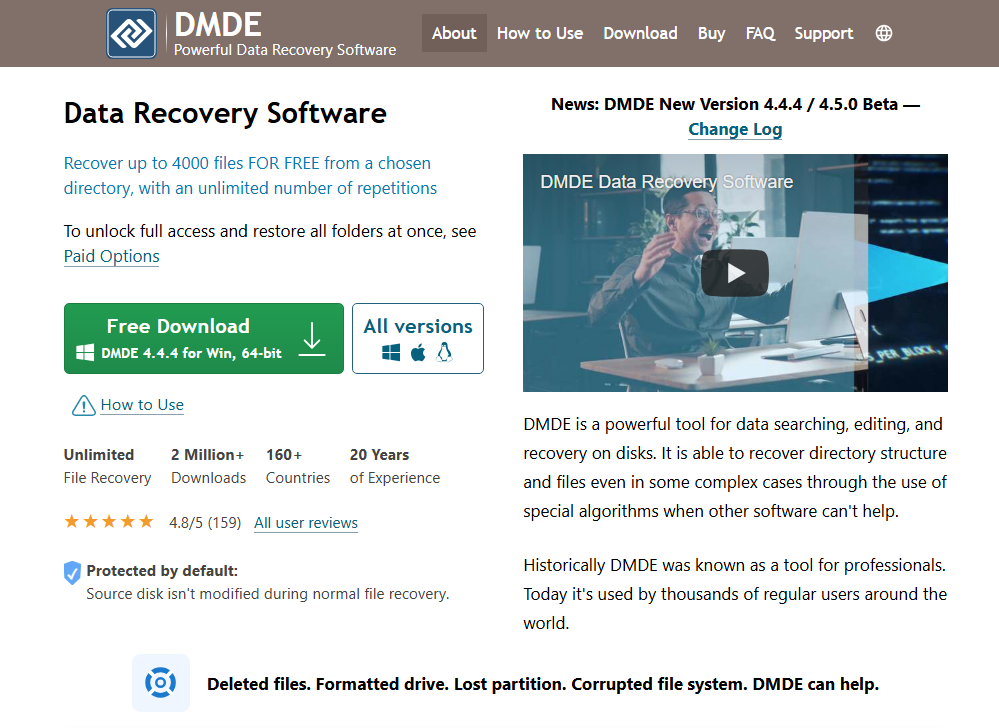
DMDE is a data recovery tool designed for users who need more control over disk scanning, file systems, and partition recovery.
It can be useful when simpler tools fail to locate files or when you need to inspect a drive’s directory structure.
Key features
- Scan storage devices for recoverable files and directories.
- Inspect file-system structures.
- Help locate lost partitions and volumes.
- Recover files from supported storage devices.
- Provide advanced disk analysis and recovery functions.
Free version and limitations
DMDE Free Edition includes basic recovery features, but it limits each recovery operation to up to 4,000 files from the active panel. It also restricts some directory-recovery workflows compared with paid editions.
The limitation is based on the recovery operation, not a simple universal gigabyte allowance. Check the official documentation for the current rules.
Best for: Users who need more advanced recovery controls and can work within the free edition’s file-count restrictions.
6. EaseUS Data Recovery Wizard
Best Guided Recovery Workflow
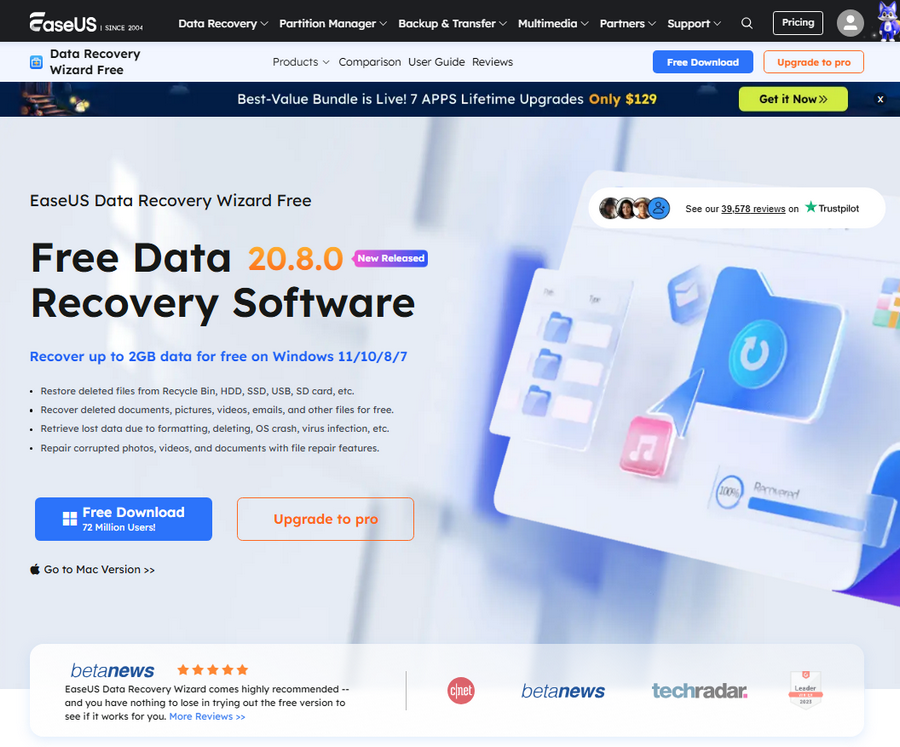
EaseUS Data Recovery Wizard is a commercial recovery product with a free version. Its guided interface is designed to help users scan drives, locate missing files, preview results, and attempt recovery without working directly with command-line instructions.
Key features
- Scan supported storage devices for missing files.
- Search for documents, photos, videos, and other file types.
- Filter and preview scan results where supported.
- Provide a guided workflow for common recovery scenarios.
- Offer paid plans for users who need more recovery capacity or additional features.
Free version and limitations
EaseUS has offered a limited free recovery allowance, with promotions that may increase the amount recoverable. Do not assume that every version includes unlimited recovery or that a particular promotion is still available.
Check the current free allowance on the official product page before scanning a large drive.
Before choosing a paid plan, read our EaseUS Data Recovery Wizard review to learn more about its features and recovery limitations.
Best for: Beginners who prefer a graphical recovery workflow and have a relatively small amount of data to restore.
7. Stellar Data Recovery
Best for a Guided Scanning Experience
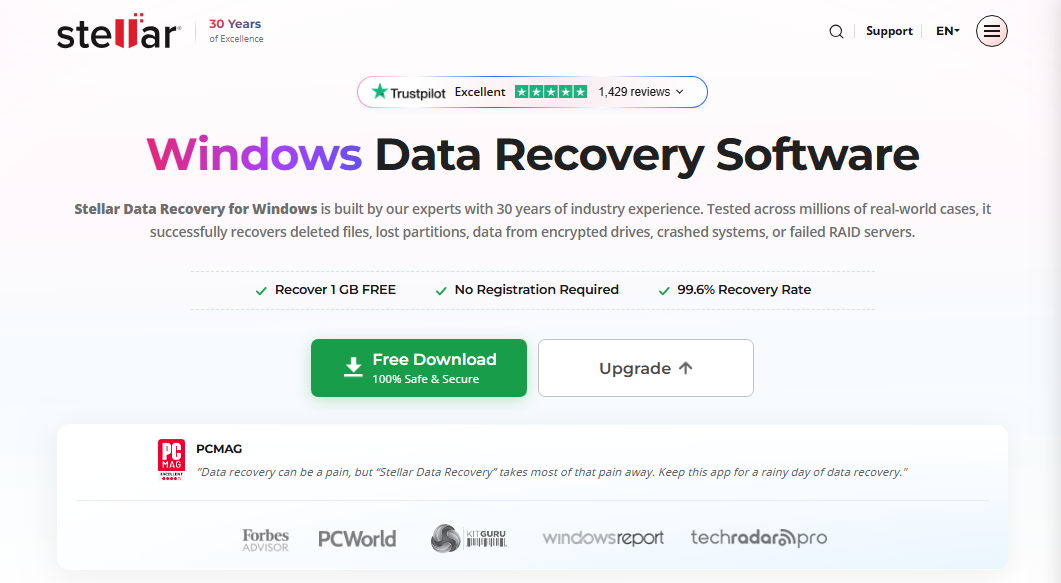
Stellar Data Recovery provides a graphical interface for scanning storage devices and attempting to recover missing files. It may suit users who prefer a step-by-step workflow rather than command-line tools.
Key features
- Scan supported storage devices for missing files.
- Search for documents, photos, videos, and other file types.
- Review scan results before attempting recovery.
- Offer different editions for personal and professional recovery needs.
- Provide additional features in paid plans, depending on the edition.
Free version and limitations
Stellar offers free and paid editions, but the amount of data recoverable for free depends on the current product terms. Verify the latest allowance and feature restrictions before starting a recovery job.
Best for: Users who want a guided recovery interface and need to evaluate whether their files are recoverable before deciding on a paid plan.
8. Disk Drill
Best for Guided Drive Scanning
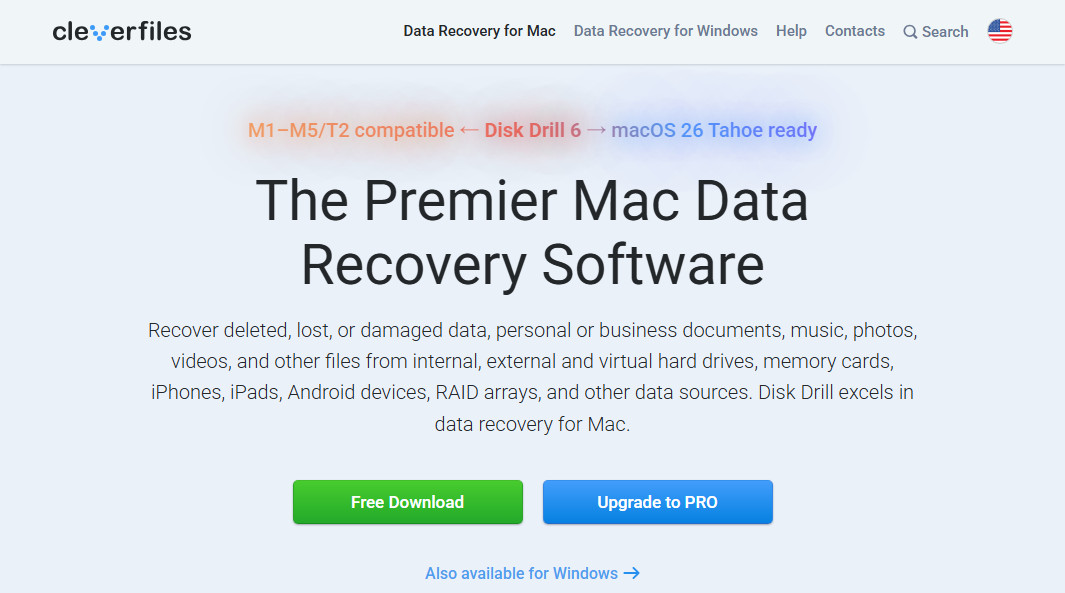
Disk Drill is a data recovery application with a graphical interface for scanning supported drives and reviewing recoverable files. It is designed for users who want to explore missing files without manually entering recovery commands.
Key features
- Scan supported storage devices for deleted or missing files.
- Search for common file types.
- Review and filter scan results.
- Support different storage-recovery scenarios, depending on the platform and edition.
- Offer paid upgrades for additional recovery capabilities.
Free version and limitations
Disk Drill’s free Windows recovery allowance and available features can differ by version. Verify the current terms before assuming you can restore an entire drive without paying.
Best for: Users who prefer a graphical interface and want to inspect scan results before committing to a paid tool.
9. R-Photo
Best Free Option for Photo and Video Recovery
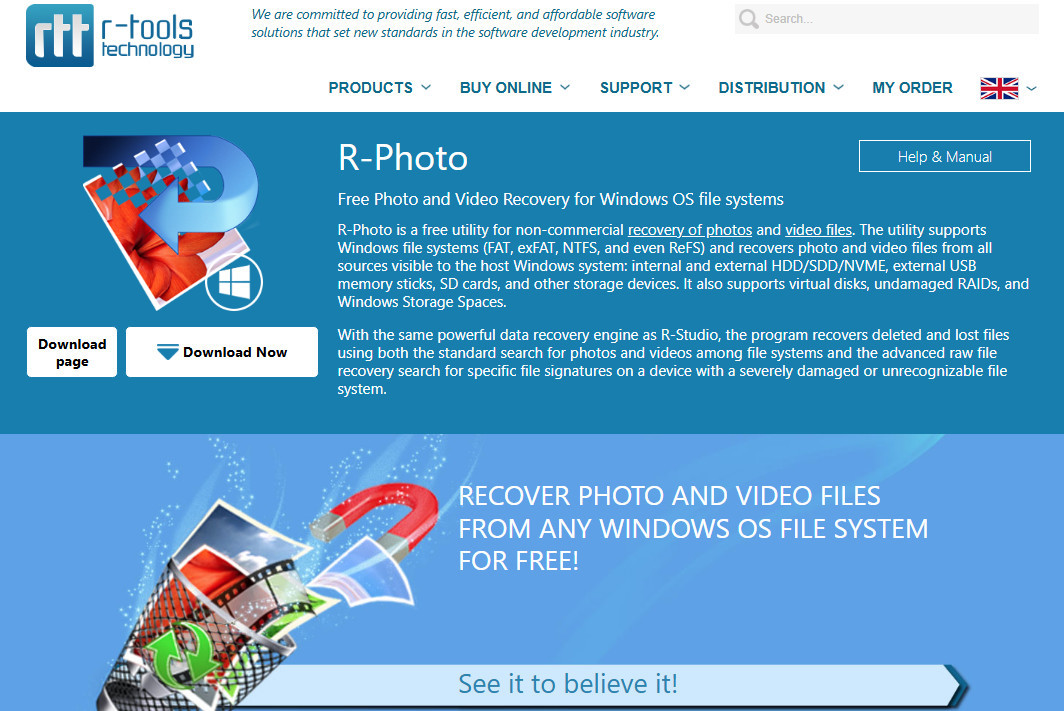
R-Photo is a Windows utility from R-TT designed for recovering photos and videos from supported storage devices. It may be useful when the main goal is to restore media files rather than general documents.
Key features
- Focus on photo and video recovery.
- Scan supported storage devices for lost media files.
- Support selected common file systems and storage scenarios.
- Provide a recovery workflow intended for Windows users.
Free version and limitations
R-Photo is offered free for non-commercial use under its applicable license terms. Read the current license and product documentation before using it in a business or commercial environment.
As with other recovery tools, results depend on whether the original data remains recoverable.
Best for: Personal users who mainly need to recover lost photos or videos.
10. Wise Data Recovery
Best for Simple File Recovery
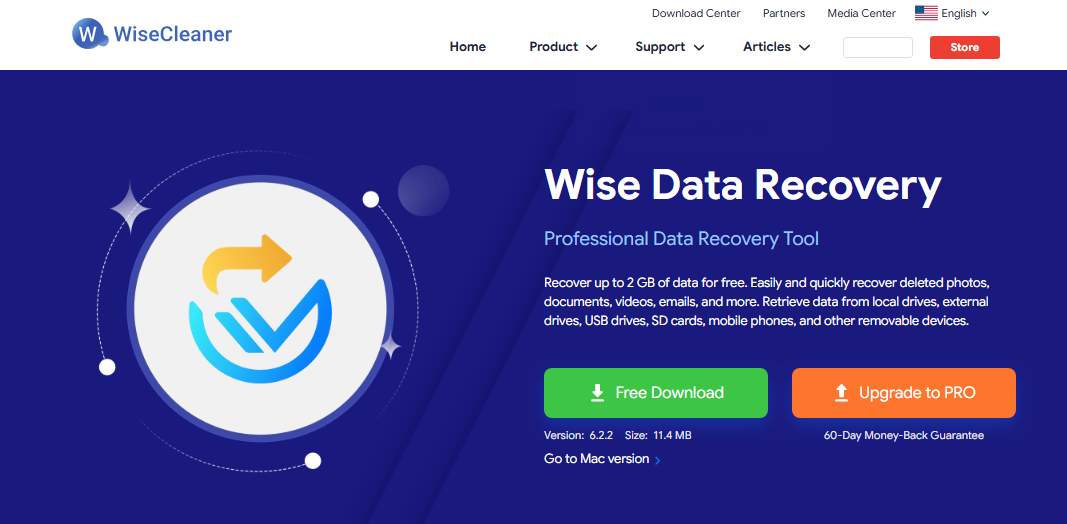
Wise Data Recovery is a lightweight recovery utility aimed at users who want a straightforward way to search for deleted files.
It may be suitable for basic recovery attempts after accidental deletion, especially when the storage device is still functioning normally.
Key features
- Scan supported storage devices for deleted files.
- Search for common document, image, and media formats.
- Review scan results before attempting recovery.
- Provide a relatively simple interface for basic recovery tasks.
Free version and limitations
Wise Data Recovery offers a free edition, but verify the current recovery allowance, supported devices, and feature restrictions on its official website. Do not treat the existence of a free download as proof that every recovery operation is unlimited.
Best for: Users who want to try a lightweight recovery utility for simple file-loss situations.
Which Free Data Recovery Software Should You Choose?
The best tool depends on what happened to your files and how comfortable you are with recovery software.
| Your situation | Recommended starting point | Why |
|---|---|---|
| Accidentally deleted a few files | Recuva | Straightforward recovery workflow |
| Want a free Microsoft utility | Windows File Recovery | Free command-line recovery tool |
| Need to recover files from a formatted drive | PhotoRec | Signature-based recovery can help with certain damaged or reformatted file systems |
| A partition has disappeared | TestDisk | Designed to locate lost partitions and address certain partition problems |
| Need advanced scanning | DMDE Free Edition | More detailed recovery controls with a defined free limit |
| Want a guided graphical workflow | EaseUS or Stellar | Designed for guided scanning and file selection |
| Mainly need photos or videos | R-Photo or PhotoRec | Media-recovery use cases |
No recovery tool is best in every situation. Start with the least risky method that fits your problem, and avoid making changes to the affected drive until you understand the recovery options.
How to Recover Deleted Files on Windows 11
Before downloading recovery software, follow these steps. They can prevent avoidable data loss and help you choose the right recovery method.
After securing your important files, follow our Windows 11 performance optimization tips to learn about improving your PC’s performance.
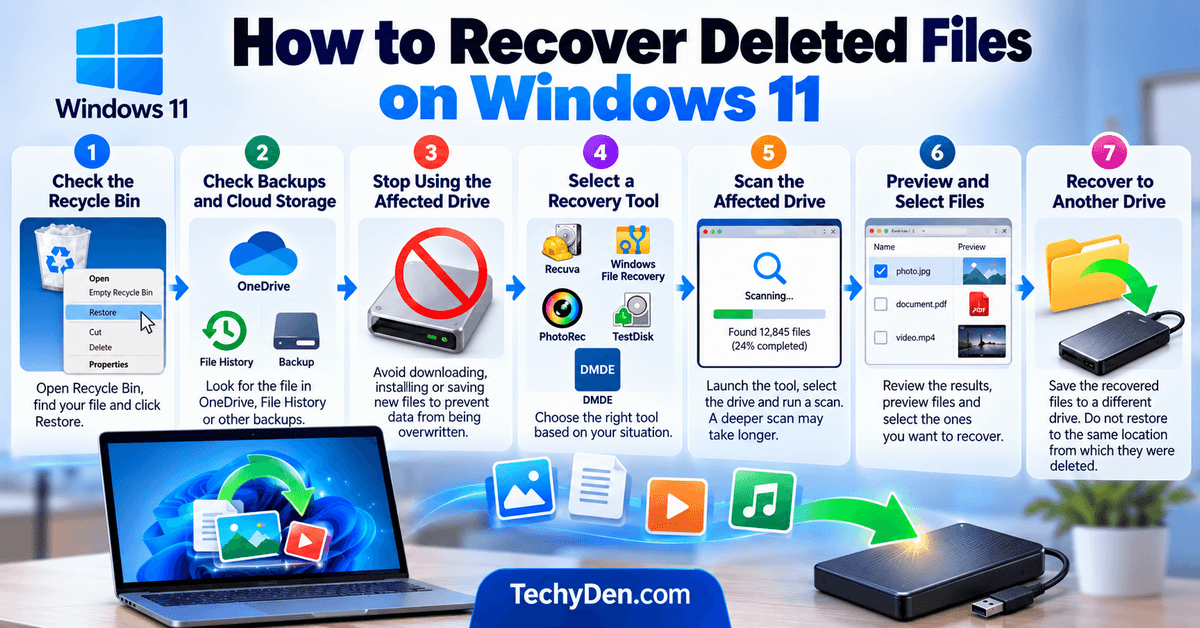
Step 1: Check the Recycle Bin
Open the Recycle Bin on your Windows desktop. If you find the missing file, right-click it and select Restore.
Windows will normally return the file to its original location.
If the Recycle Bin is empty, the file was permanently deleted, or the file was stored on a device that bypassed the Recycle Bin, continue with the next steps.
Step 2: Check Backups and Cloud Storage
Look for the file in any available backup or cloud-storage service. If you use OneDrive, check its recycle bin and version history where applicable.
Also check Windows File History or another backup solution if you previously enabled it.
Restoring from a valid backup is often safer than attempting raw disk recovery.
Step 3: Stop Using the Affected Drive
This is one of the most important recovery precautions.
When Windows deletes a file, the file system can mark the occupied space as available for reuse. The underlying data may remain until new data overwrites it.
Avoid downloading files, installing software, copying documents, or saving recovered data to the affected drive.
If the deleted files were on your system drive, use another computer or a suitable external environment when practical.
Step 4: Select a Recovery Tool
Choose software based on the situation:
- Try Recuva for straightforward accidental deletion.
- Try Windows File Recovery if you are comfortable with commands.
- Consider PhotoRec if ordinary recovery methods fail.
- Use TestDisk when the problem involves a lost partition.
- Consider DMDE if you need more advanced scanning and can work within its limitations.
Download software only from its official website or an official app store.
Step 5: Scan the Affected Drive
Launch the selected recovery tool and choose the drive or partition where the files were stored.
Run the recommended scan. A deeper scan may take longer, especially on a large hard drive or external storage device.
If the drive makes unusual mechanical noises, repeatedly disconnects, or is otherwise showing signs of physical failure, stop scanning and seek professional advice rather than repeatedly stressing the device.
Step 6: Preview and Select Recoverable Files
Review the results and select the files you need. Use available previews, filenames, file types, and directory information to identify the correct items.
A tool may list a file even when its contents are damaged. If possible, verify the recovered files by opening them.
Step 7: Recover Files to Another Drive
Select a different physical drive as the recovery destination. For example, recover files from an external drive to your computer’s internal drive, provided the internal drive is not the affected source.
Do not restore files to the same location from which they were deleted.
Once the files are recovered, open them and create a separate backup.
Can Free Data Recovery Software Recover Permanently Deleted Files?
Yes, sometimes. Permanently deleted files may still be recoverable when their underlying data has not been overwritten and the storage device remains readable.
However, recovery is not guaranteed.
Your chances depend on several factors:
- How much time has passed since deletion.
- Whether new data has overwritten the original file.
- The type and condition of the storage device.
- The file system and the recovery method used.
- Whether the file was fragmented or partially damaged.
A file disappearing from the Recycle Bin does not automatically mean that its data has been erased. Conversely, a successful scan does not guarantee that the file can be restored in usable condition.
Is Free Data Recovery Software Safe?
Free recovery software can be safe when obtained from a reputable developer and downloaded from an official source. Nevertheless, users should verify the installer and understand the permissions the application requires.
Follow these precautions:
- Download from the developer’s official website or an official store.
- Avoid cracked or modified recovery applications.
- Decline unrelated bundled software when possible.
- Keep the recovery destination separate from the affected drive.
- Do not disable security software merely because an installer requests it.
- Read the free license terms before using a product for business recovery.
If the missing files contain sensitive business, financial, or personal information, choose your recovery method carefully and avoid uploading private files to unknown online services.
Important Limitations of Data Recovery Software
Recovery tools work best when the storage device is accessible and the data has not been overwritten. Some situations require a different approach.
1. SSDs and TRIM
Solid-state drives can behave differently from traditional hard drives. When TRIM is enabled, the operating system may notify the SSD that deleted data blocks are no longer needed. The drive may then clear those blocks, making software recovery difficult or impossible.
For this reason, a scan that works on a traditional hard drive may produce different results on an SSD.
2. Formatted Drives
Quick formatting does not always overwrite every data block, so recovery may be possible in some circumstances. However, continued use of the formatted drive can overwrite recoverable information.
If the data is important, avoid writing new files to the device and consider making a sector-by-sector image before attempting advanced recovery.
3. Physically Damaged Drives
If a drive clicks, grinds, repeatedly disconnects, or cannot be detected reliably, software recovery may make the situation worse. Stop using the device and consider a professional data recovery service.
No free application can guarantee recovery from every physically damaged device.
Frequently Asked Questions on Free Data Recovery Software for Windows 11
What is the best completely free data recovery software?
Windows File Recovery, PhotoRec, and TestDisk are free utilities from established projects, but they serve different purposes. Recuva also offers a free edition for basic recovery. The best option depends on the type of data loss and your technical experience.
Is there data recovery software with no recovery limit?
Some free utilities do not advertise a fixed data-volume allowance, but they may still have other limitations. PhotoRec is free and open source, while Windows File Recovery is a free Microsoft utility. DMDE Free Edition limits each recovery operation to up to 4,000 files from the active panel. Check each tool’s current documentation before choosing one.
Can I recover deleted files in Windows 11 without software?
Yes. First check the Recycle Bin, available cloud-storage recycle bins, and any backups you have enabled. If those options do not contain the file, a recovery utility may be necessary.
Can free software recover files from a formatted hard drive?
Sometimes. Tools such as PhotoRec may recover files from certain reformatted or damaged file systems. Success depends on the format operation, file-system condition, and whether new data has overwritten the original files.
Can I recover deleted files from an SSD?
Possibly, but recovery can be harder than on a traditional hard drive. TRIM and subsequent drive activity may make deleted data unrecoverable. Stop using the SSD as soon as you notice the loss.
What is the best free software to recover photos?
Recuva is a straightforward option for simple photo recovery. PhotoRec and R-Photo are worth considering when you need to recover photos from memory cards or other supported storage devices. Always save recovered images to another drive.
Is Windows File Recovery really free?
Yes. Microsoft provides Windows File Recovery as a free command-line utility. It is designed for compatible local storage devices and does not support every recovery scenario, including cloud storage and network file shares.
Can I recover files from a USB flash drive?
Yes, if the USB drive is readable and the underlying file data remains recoverable. Stop saving files to the drive, connect it carefully, and scan it with a suitable recovery tool. If the device is physically damaged or repeatedly disconnects, seek professional help.
Can data recovery software restore corrupted files?
A recovery tool may retrieve a file whose contents are partially damaged, but recovering the file does not necessarily repair its contents. Some files may remain unreadable even after recovery.
Should I install recovery software on the same drive where files were deleted?
No, not if you can avoid it. Installing software or saving new files can overwrite the data you want to recover. Use a separate drive or another computer whenever practical, and save recovered files to a different destination.
Final Verdict: Which Free Data Recovery Software Is Best?
The best free data recovery software depends on your experience, the type of storage device, and how the files were lost.
For most beginners, Recuva is a sensible first choice for simple accidental deletions. If you prefer a Microsoft-provided tool, Windows File Recovery is a free alternative, although it requires command-line input.
For difficult recovery scenarios, PhotoRec is a useful free and open-source option. TestDisk is better suited to lost partitions, while DMDE Free Edition offers advanced recovery capabilities within its file-count restrictions.
Before choosing any tool, remember three rules: stop using the affected drive, download software from official sources, and recover files to a different drive.
If your computer also freezes during normal use, see our guide on how to fix freezing issues on Windows 11.
These precautions can improve your chances of success and help prevent additional data loss.