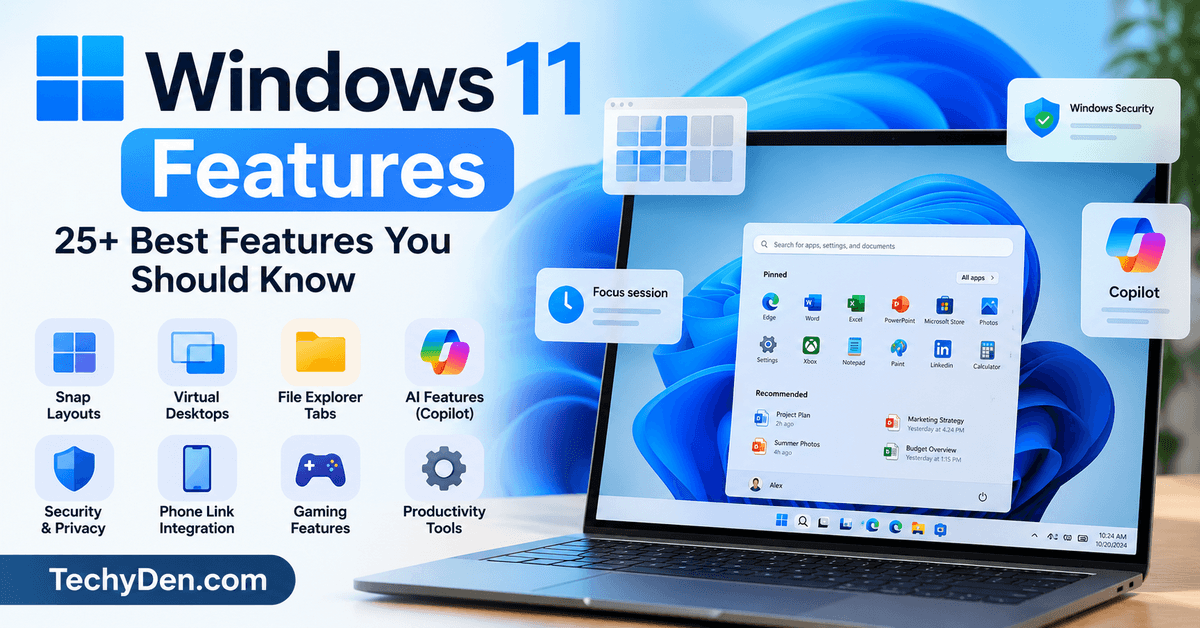
Windows 11 offers much more than a redesigned desktop. It includes productivity tools, advanced window management, built-in security, gaming technologies, accessibility options, cloud integration, and AI-powered experiences that can make everyday computing easier.
Whether you use a Windows laptop for work, study, gaming, or content creation, learning the best Windows 11 features can help you save time and get more from your PC.
Features such as Snap Layouts, virtual desktops, File Explorer tabs, clipboard history, and Focus sessions are especially useful for multitasking.
Microsoft also continues to refine Windows 11 through feature updates, making it important to understand which improvements are available on your device and which require specific hardware or software versions.
In this guide, we explore more than 25 useful Windows 11 features, explain how they work, and share practical tips to help you use them effectively.
What Are the Best Windows 11 Features?
The best Windows 11 features combine productivity, personalization, security, and convenience. Some are immediately available on compatible Windows 11 PCs, while others depend on your hardware, Windows edition, region, or installed updates.
Here are some of the most useful features to explore:
- Snap Layouts: Arrange multiple application windows on your screen.
- Virtual desktops: Create separate workspaces for different tasks.
- File Explorer tabs: Browse multiple folders in one window.
- Windows Security: Manage built-in antivirus and other protection features.
- Phone Link: Connect a supported smartphone to your PC.
- Clipboard history: Access previously copied text and images.
- Focus sessions: Reduce distractions while working.
- Voice typing: Enter text using your voice.
- Quick Settings: Access frequently used system controls.
- Storage Sense: Automatically clean up certain unnecessary files.
- Gaming features: Use technologies such as Auto HDR and DirectStorage on supported hardware.
- AI-powered tools: Access supported AI experiences, with some requiring a Copilot+ PC.
Let’s explore these Windows 11 features in detail.
1. Redesigned Start Menu and Taskbar
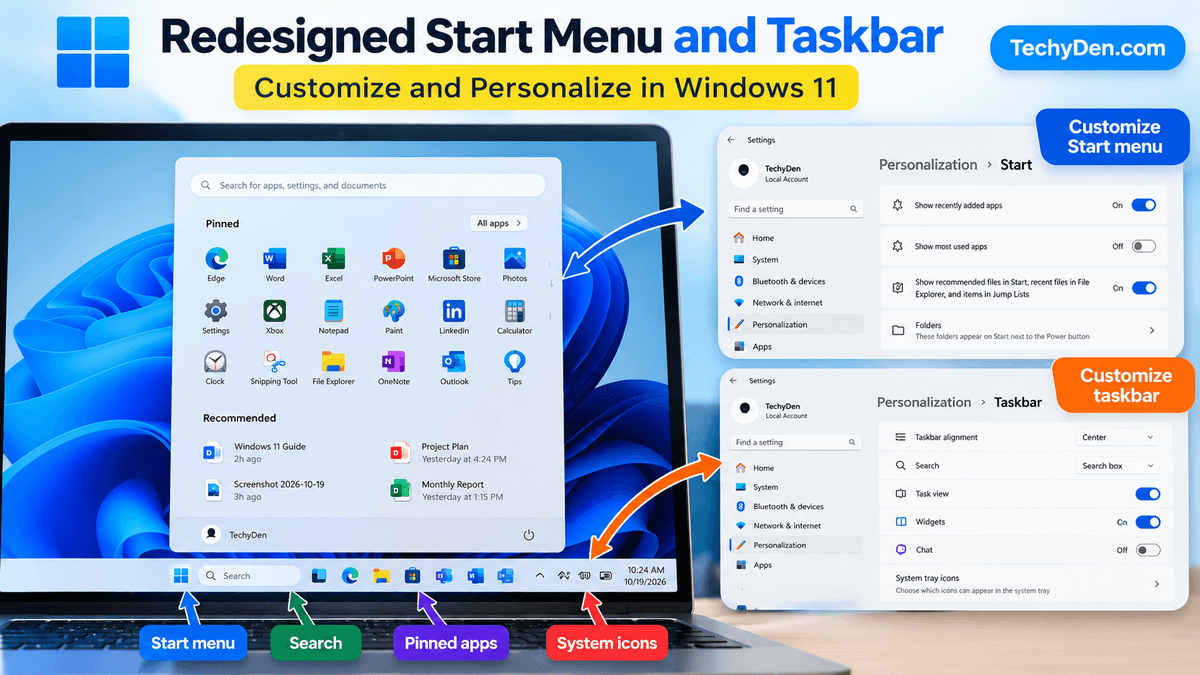
Windows 11 introduced a redesigned Start menu and taskbar with a cleaner appearance. The Start menu provides access to pinned applications, recommended items, and search, while the taskbar keeps frequently used applications within easy reach.
Customize the Start menu
You can pin your most-used applications to the Start menu so you can open them quickly. You can also organize pinned apps and adjust the available Start menu layout options.
To customize the Start menu:
- Open Settings.
- Select Personalization.
- Click Start.
- Adjust the available layout and content options.
You can also right-click an application in the Start menu to access supported pinning and management options.
Customize the taskbar
Windows 11 lets you control several taskbar settings, including alignment, search presentation, and which system icons appear.
Go to Settings > Personalization > Taskbar to explore the available options.
These Windows 11 customization features are useful if you prefer a minimal desktop or want frequently used applications close at hand.
Want to personalize the redesigned interface? Follow our step-by-step guide on customizing the Windows 11 Start menu to organize your favorite applications and adjust the available Start menu settings.
2. Snap Layouts and Snap Groups
Snap Layouts is one of the best Windows 11 productivity features. It helps you arrange multiple application windows without manually resizing each one.
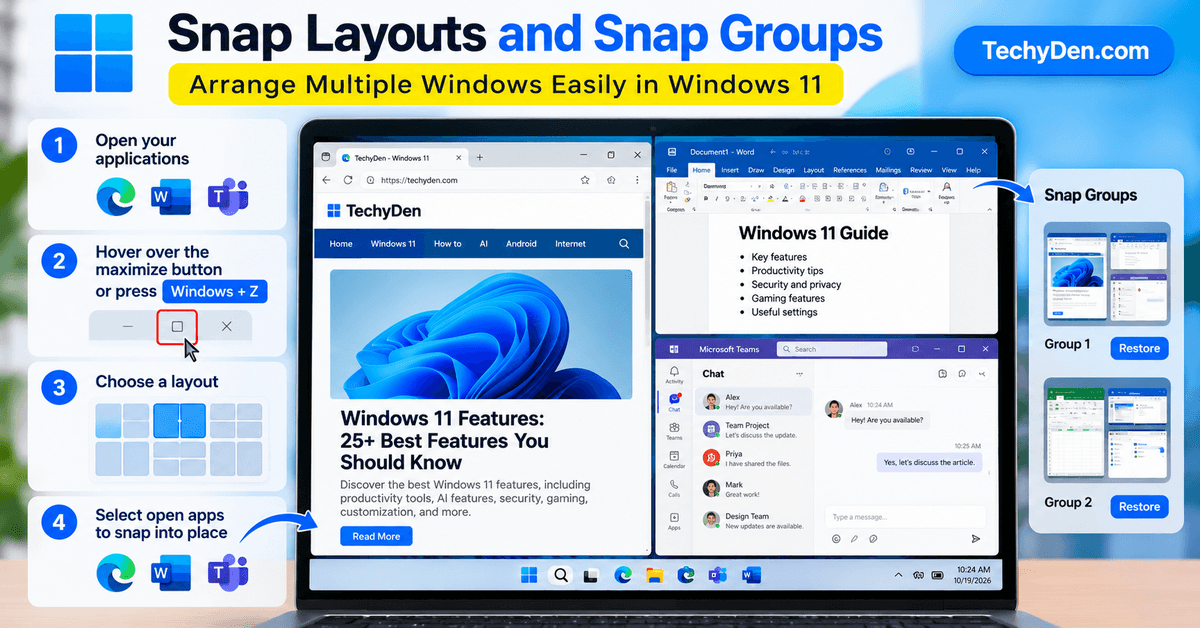
For example, you can keep a browser open on one side of the screen, a document on the other, and a messaging application in another section.
How to use Snap Layouts
- Open the applications you want to use.
- Hover over the maximize button in an application window, or use Windows + Z.
- Choose a layout.
- Select the open applications you want to place in the remaining sections.
Available layouts depend on screen size, resolution, and other display conditions.
Snap Groups can help you return to a previously arranged group of applications when the relevant arrangement is available.
Best for: Bloggers, students, researchers, office workers, and anyone who regularly compares information across multiple windows.
3. Virtual Desktops
Virtual desktops allow you to create separate desktop workspaces on the same computer. They are particularly useful when you want to separate work, personal activities, research, and entertainment.
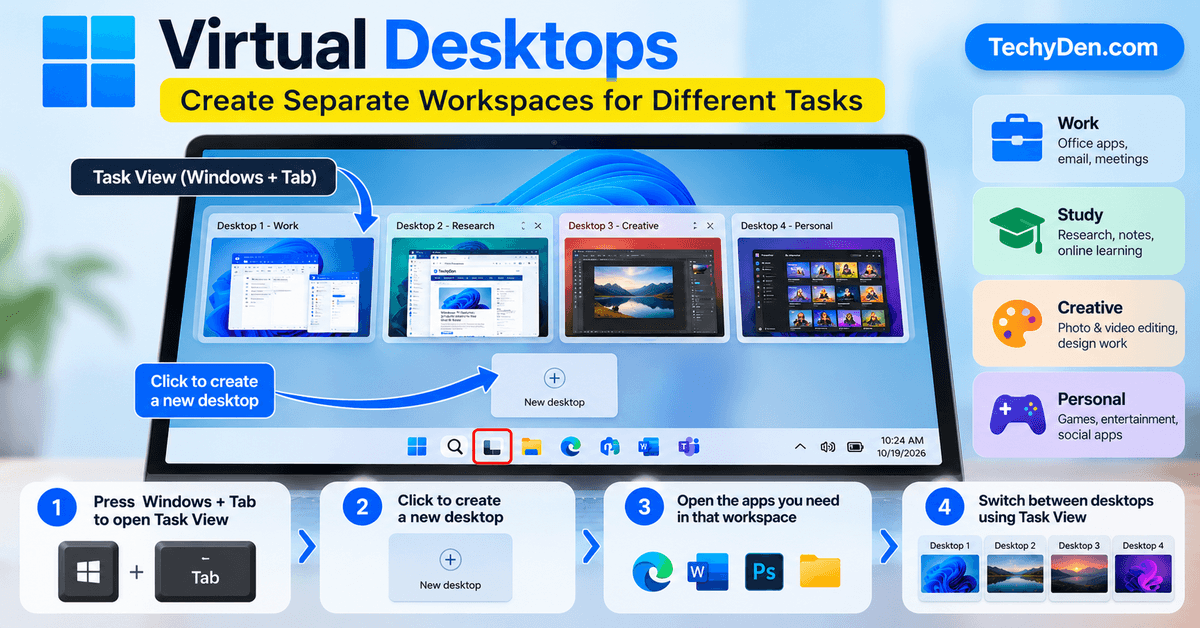
For example, a content creator could maintain one desktop for WordPress and research, another for image editing, and a third for personal applications.
How to create a virtual desktop
- Press Windows + Tab to open Task View.
- Select the option to create a new desktop.
- Open the applications you need in that workspace.
- Switch between desktops using Task View or the supported keyboard shortcuts.
You can also rename desktops and customize their backgrounds through the available desktop controls.
Virtual desktops do not create separate Windows installations or independent user accounts. They simply organize your workspace more effectively.
4. File Explorer Tabs and File Management
File Explorer is the built-in Windows file manager. Its tabbed interface makes it easier to browse multiple folders in a single window.
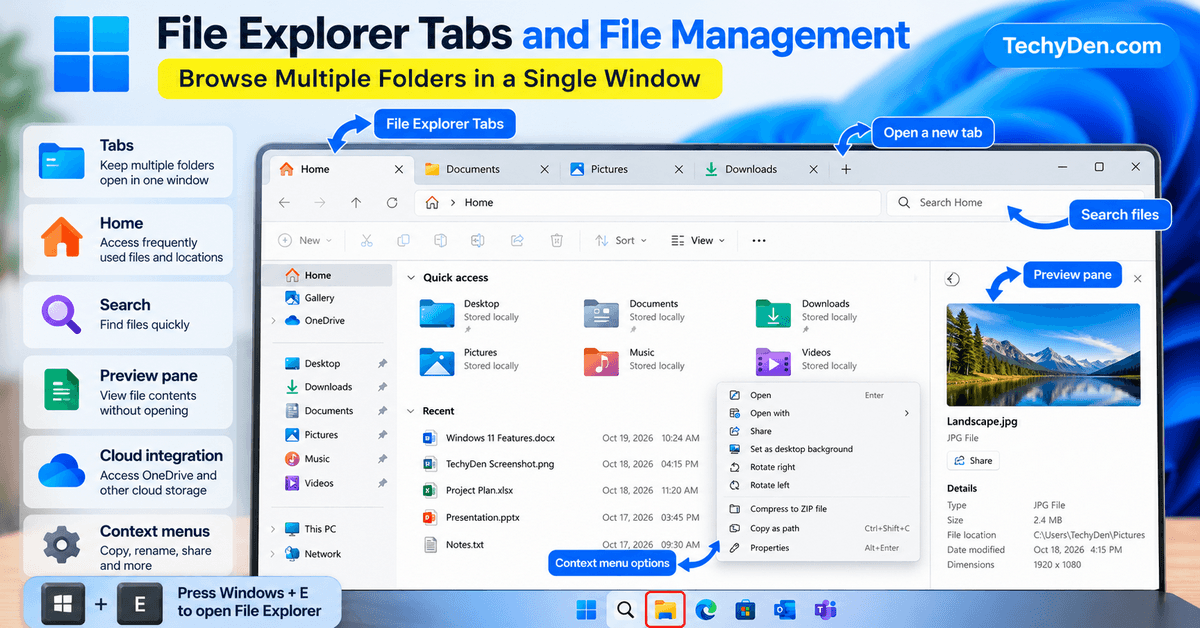
Instead of opening several separate File Explorer windows, you can use tabs to switch between folders.
Useful File Explorer features
- Tabs: Keep multiple folder locations open together.
- Home: Access frequently used files and locations.
- Search: Find files by name and other supported criteria.
- Preview pane: View supported file contents without opening the full application.
- Cloud integration: Access synced files from supported services.
- Context menus: Find file actions such as copying, renaming, sharing, and compressing.
To open File Explorer, press Windows + E.
For better organization, create folders for documents, downloads, images, videos, and project files. You can also use descriptive filenames to make searching easier.
If you frequently handle large files, explore our guide to free data recovery software to understand your recovery options when files are accidentally deleted or become inaccessible.
Windows 11 includes several features that make everyday computing easier. You can personalize more than the desktop and taskbar: our guide to customizing the Windows 11 right-click menu explains how to manage available context-menu commands and streamline common file-management tasks.
5. AI Features in Windows 11
AI is becoming an increasingly important part of the Windows experience. However, not every Windows 11 PC has access to the same AI tools.
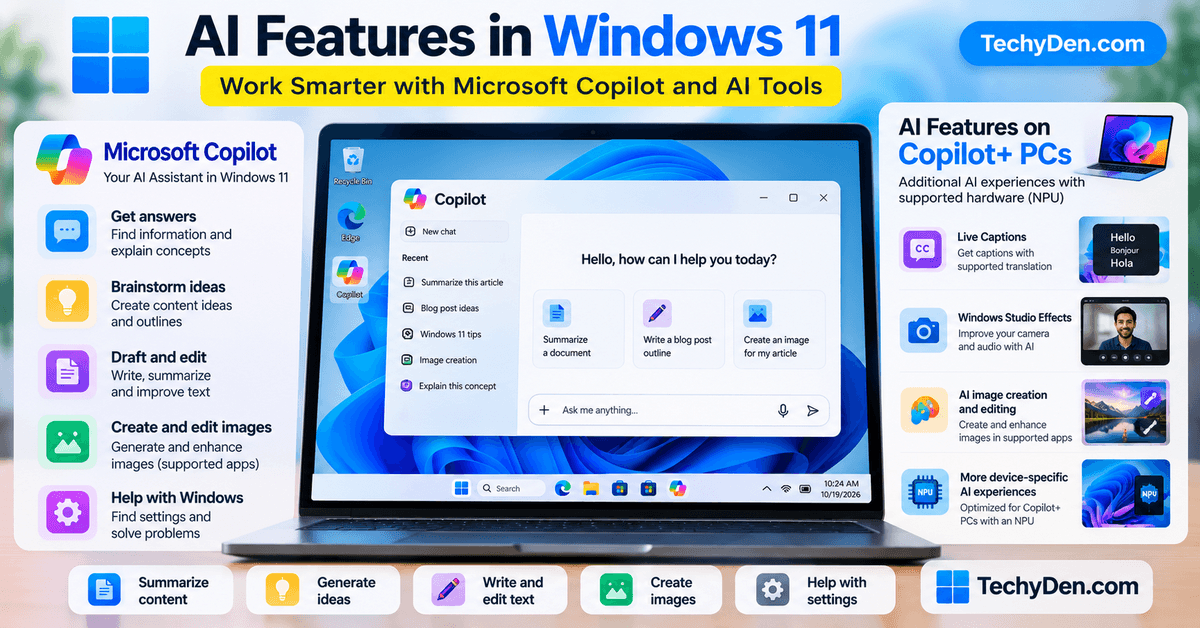
Depending on your device, software version, region, and account settings, you may be able to use Microsoft Copilot and other AI-assisted experiences for tasks such as summarizing information, generating content, editing images, or improving accessibility.
a. Microsoft Copilot
Copilot is Microsoft’s AI assistant, available through supported Microsoft experiences and applications. It can help with tasks such as brainstorming ideas, explaining concepts, drafting text, and answering questions.
For example, a blogger could use an AI assistant to brainstorm article topics or develop a first draft of a content outline. You should still verify facts and edit the output before publishing.
Access methods and available capabilities can change, so check Microsoft’s current product information rather than assuming every PC includes an identical built-in Copilot experience.
b. AI features on Copilot+ PCs
Copilot+ PCs are a category of Windows PCs designed around specific hardware requirements, including a sufficiently capable neural processing unit (NPU).
Depending on the device and supported software, eligible PCs can offer additional AI capabilities, such as:
- Live Captions with supported translation capabilities.
- Windows Studio Effects for compatible camera and audio enhancements.
- AI-assisted image creation or editing in supported applications.
- Additional device-specific AI experiences.
Some features require compatible hardware, supported languages, or additional software. Availability can also vary by region and Windows release.
For a broader look at AI tools that can help with content creation, see our guide to AI writing tools for bloggers.
6. Widgets and Personalized Information
Widgets provide a convenient way to view selected information, such as weather, news, calendar information, and other supported content.
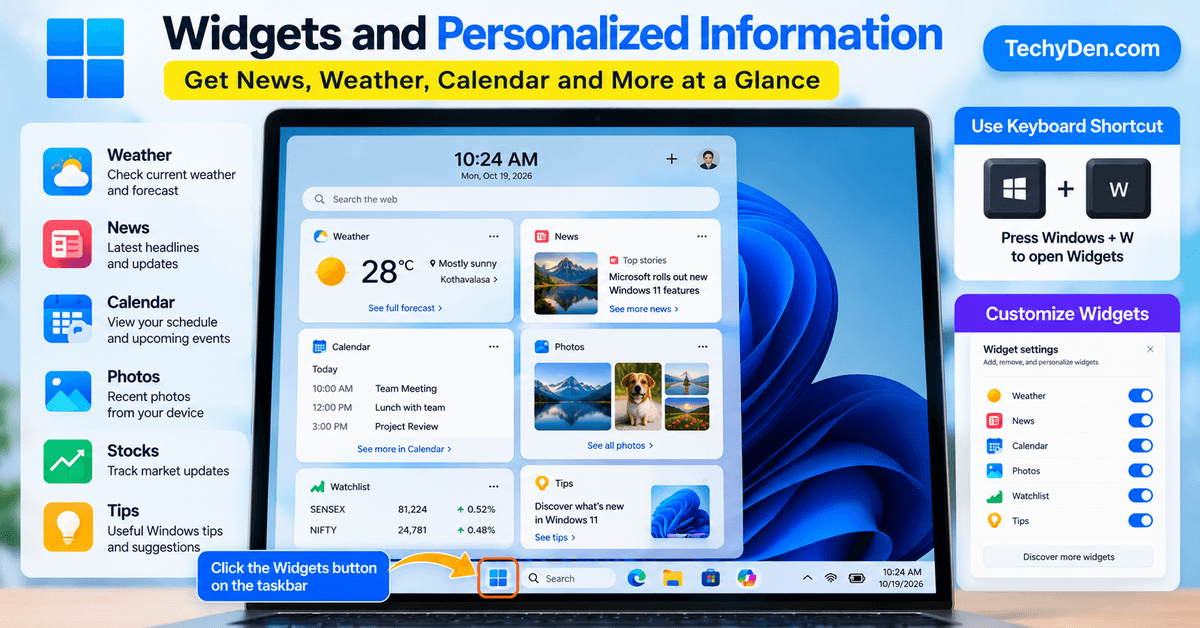
To access Widgets, use the Widgets button if it is enabled or the supported keyboard shortcut, Windows + W.
You can personalize the Widgets board by managing available widgets and their settings. The exact selection of widgets depends on Microsoft’s current offerings, your region, and installed applications.
Widgets can be useful when you want a quick overview of selected information without opening several applications. However, you may prefer to reduce or disable notifications and content that distract you from work.
7. Phone Link and Smartphone Integration
Phone Link connects a compatible smartphone to a Windows PC. Depending on the phone, operating system, permissions, and available features, it can provide access to selected notifications, messages, photos, calls, and other connected experiences.
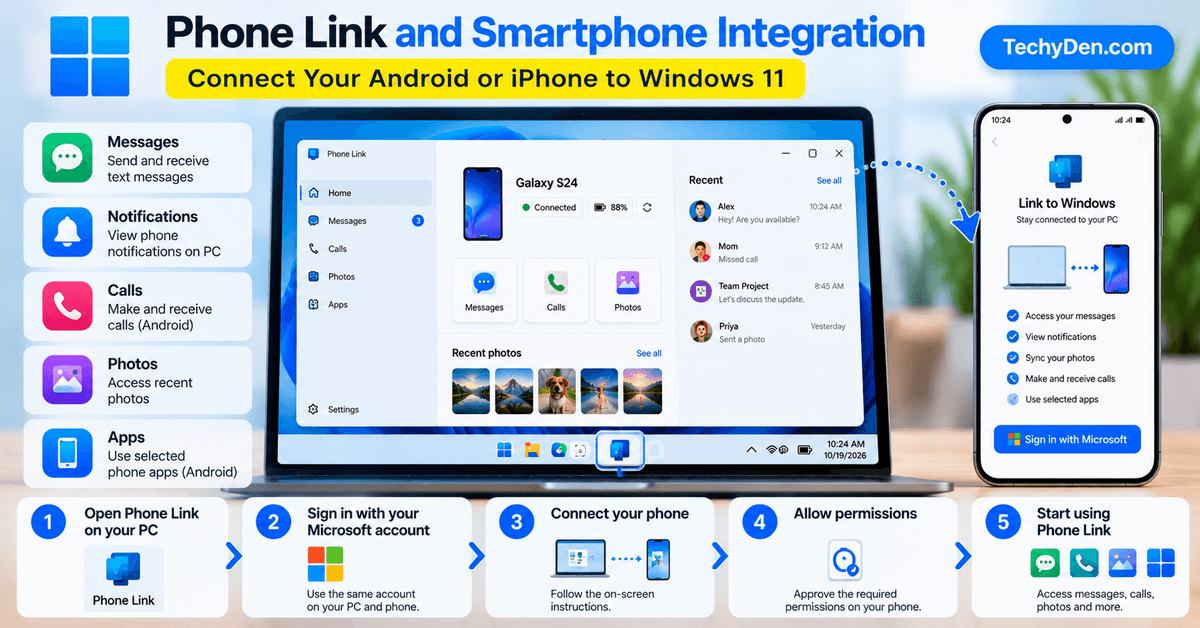
How to connect your phone
- Open Phone Link on your Windows PC.
- Follow the on-screen instructions.
- Open the corresponding linking application or instructions on your phone.
- Complete the pairing process.
- Approve the permissions required for the features you want to use.
Android devices generally offer a broader range of Phone Link capabilities than iPhones, although supported features continue to evolve.
Phone Link is useful if you want to check supported phone activity while working on your computer. Always review the permissions you grant and avoid linking a device you do not control.
8. Focus Sessions and Do Not Disturb
Focus tools help you reduce interruptions when you need to concentrate. Windows 11 provides settings for managing notifications, while Focus sessions can help you dedicate a period to a specific task.
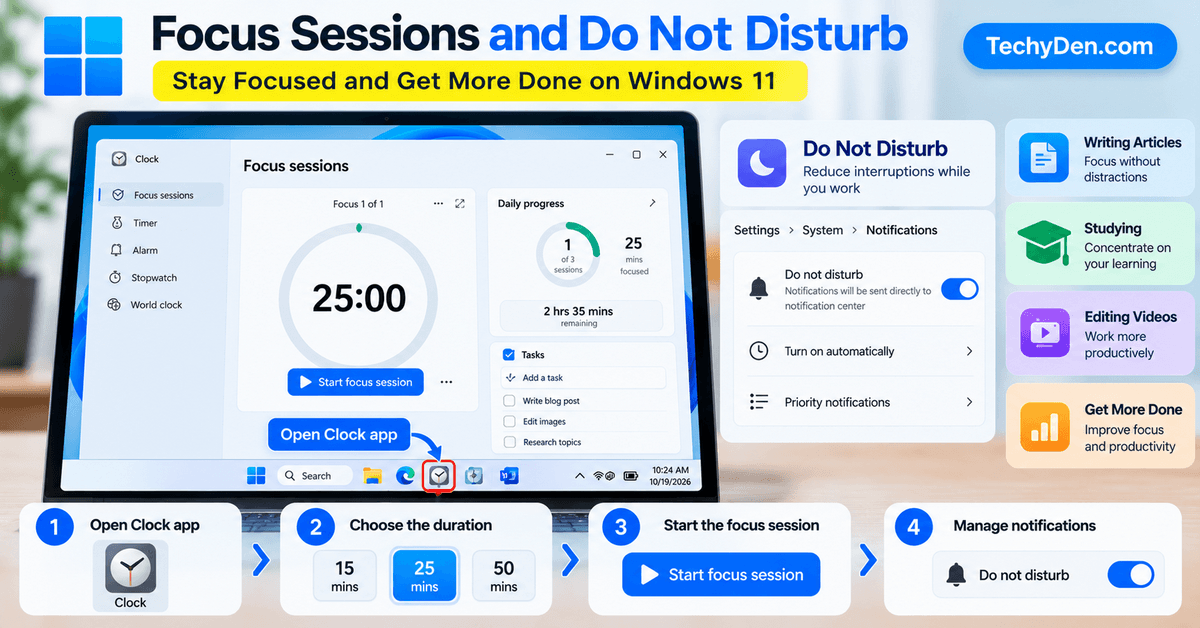
How to start a Focus session
- Open the Clock application or access Focus through the supported Windows interface.
- Choose the duration of your session.
- Start the session.
- Use the available settings to manage notifications and related distractions.
You can also configure notification behavior under Settings > System > Notifications.
Focus sessions are particularly useful when writing articles, studying, editing videos, or completing tasks that require sustained attention.
9. Windows Security and Privacy Features
Windows 11 includes built-in security tools that help protect your computer against malware, unauthorized access, and other threats.
- Microsoft Defender Antivirus: Microsoft Defender Antivirus provides real-time protection and security scanning. You can use it to check the security status of your computer and perform scans when necessary. Open Windows Security from the Start menu to review available protection settings.
- Firewall and network protection: Windows Firewall helps control network connections according to its rules and settings. It is an important part of your computer’s overall security. Avoid disabling the firewall simply to make an application work. Instead, investigate the specific connection problem and allow only trusted applications when appropriate.
- Windows Hello: Windows Hello supports compatible sign-in methods such as facial recognition, fingerprint recognition, and a PIN. The options available depend on your PC’s hardware and configuration. A compatible camera or fingerprint reader may be required for biometric sign-in.
- Device encryption and other protections: Some Windows 11 devices support device encryption or BitLocker, depending on the Windows edition and hardware. These features can help protect stored data if a device is lost or stolen. Smart App Control and other security features also have specific requirements and availability limitations.
- Manage app permissions: Go to Settings > Privacy & security to review available permissions, including those for your camera, microphone, location, and other resources.
For additional information, consult Microsoft’s official Windows 11 overview.
10. Windows 11 Gaming Features
Windows 11 includes technologies intended to improve the gaming experience on supported hardware.
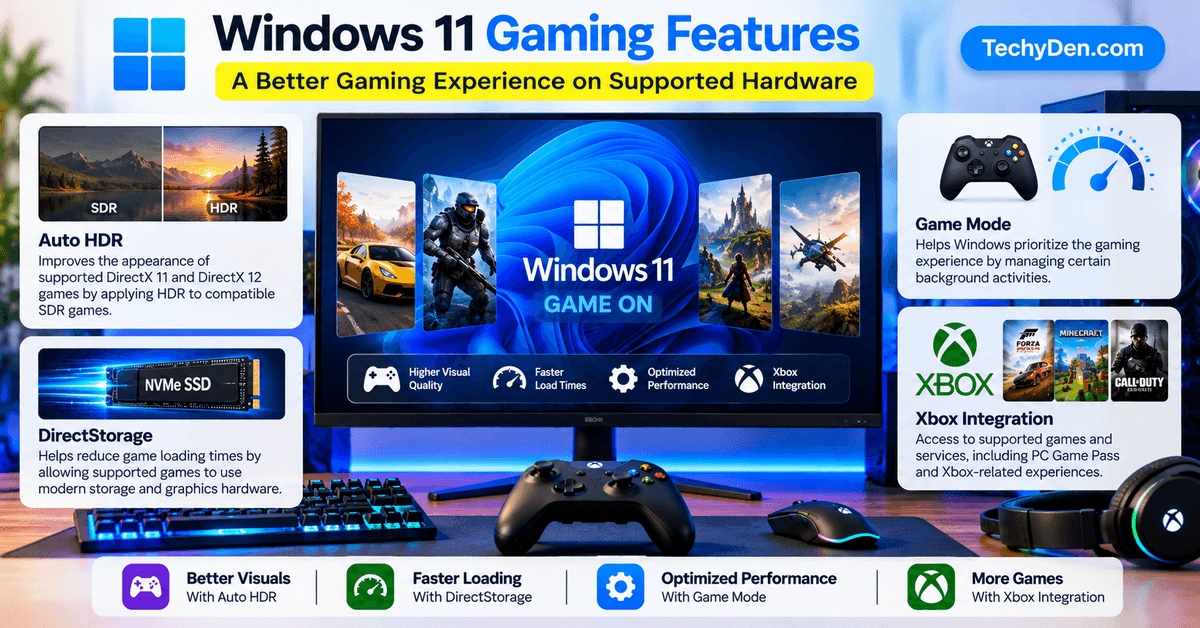
- Auto HDR: Auto HDR can improve the appearance of supported DirectX 11 and DirectX 12 games by applying an HDR presentation to compatible SDR games. A compatible HDR display and supported configuration are required.
- DirectStorage: DirectStorage is designed to improve game asset loading by allowing supported games to take advantage of modern storage and graphics hardware. The actual benefit depends on the game, hardware, drivers, and configuration.
- Game Mode: Game Mode helps Windows prioritize the gaming experience by managing certain background activities. Results vary depending on the PC and the games being played.
- Xbox integration: Windows supports Xbox-related gaming experiences, including access to supported games and services. Availability depends on the application, subscription, region, and device.
If gaming is a priority, make sure your graphics drivers are up to date and check each game’s system requirements before adjusting advanced settings.
11. Accessibility Features
Windows 11 includes accessibility tools for users who benefit from visual, hearing, mobility, or speech-related assistance.
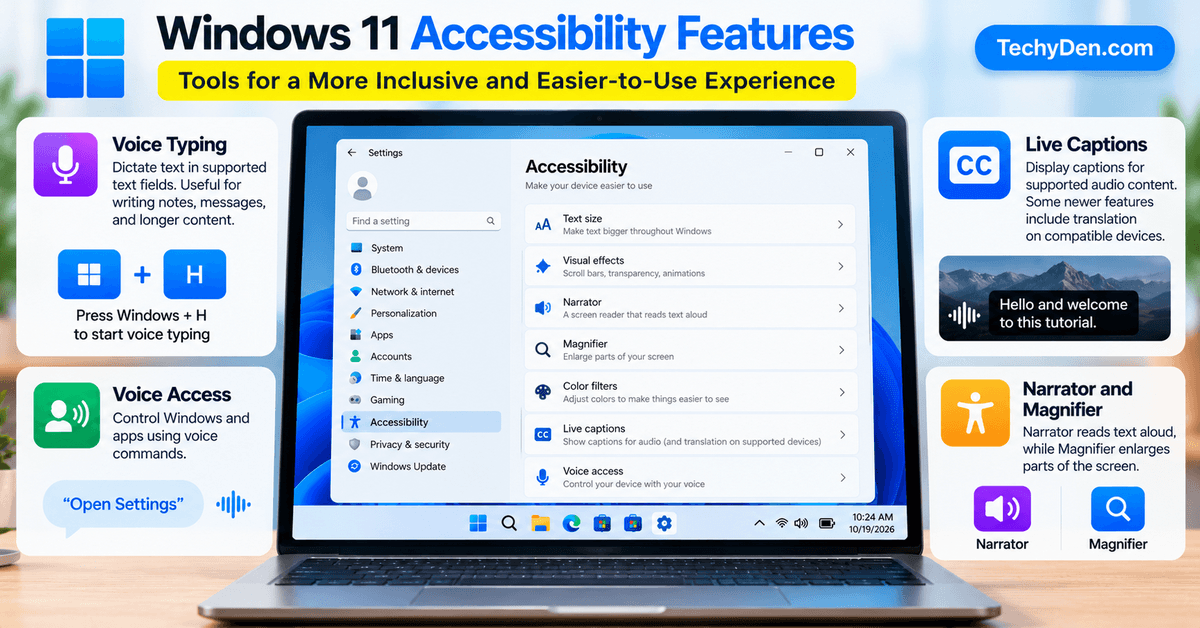
- Voice typing: Voice typing lets you dictate text in supported text fields. Press Windows + H to open the voice typing interface when supported. This can be helpful for drafting notes, writing messages, or entering text without typing every word manually.
- Voice access: Voice access allows users to control parts of Windows and interact with applications using voice commands. Availability and supported languages depend on the Windows version and configuration.
- Live Captions: Live Captions can display captions for supported audio content. Certain newer capabilities, including some translation features, require compatible hardware or software.
- Narrator and Magnifier: Narrator is a built-in screen reader, while Magnifier enlarges parts of the screen to make content easier to see. You can explore these and other tools through Settings > Accessibility.
For detailed guidance, see Microsoft’s Windows accessibility features guide.
12. Clipboard History and Useful Keyboard Shortcuts
Clipboard history is one of the most useful hidden features of Windows 11 for people who frequently copy and paste text, images, or other supported content.
Use clipboard history:
Press Windows + V to open clipboard history.
If it is not enabled, follow the prompt to turn it on. You can then access supported items you copied earlier, rather than being limited to only the most recent copied item.
Clipboard history has limits, and some items may not be retained. Be careful when copying passwords, personal information, or confidential work data.
Other useful Windows 11 keyboard shortcuts
| Keyboard shortcut | Function |
|---|---|
| Windows + E | Open File Explorer |
| Windows + I | Open Settings |
| Windows + Z | Open Snap Layouts |
| Windows + Tab | Open Task View |
| Windows + V | Open clipboard history |
| Windows + W | Open Widgets |
| Windows + H | Open voice typing |
| Windows + A | Open Quick Settings |
| Windows + N | Open notifications and calendar |
| Windows + L | Lock your PC |
| Windows + Shift + S | Capture a selected screen area |
| Windows + . | Open emoji and symbol picker |
Some shortcuts and their behavior may vary by application or Windows version.
Learning just a few of these Windows 11 tips and tricks can save time every day.
13. Quick Settings and Desktop Customization
Windows 11 makes frequently used controls accessible through Quick Settings. Depending on your PC, these controls can include Wi-Fi, Bluetooth, volume, brightness, battery saver, and other settings.
Press Windows + A to open Quick Settings.
You can also personalize the desktop to make it more comfortable to use.
Customize appearance
Go to Settings > Personalization to explore options such as:
- Themes and desktop backgrounds.
- Light and dark modes.
- Accent colors.
- Lock screen settings.
- Taskbar preferences.
- Available Start menu options.
Display settings let you adjust supported resolutions, scaling, refresh rates, and multiple-monitor configurations.
These Windows 11 customization features are especially useful for laptop users who regularly switch between built-in displays, external monitors, and different work environments.
14. Storage Sense, Backup, and Recovery
Windows 11 includes tools to help you manage storage and protect important files.

a. Storage Sense
Storage Sense can automatically remove certain unnecessary files, such as eligible temporary files, according to your configured settings.
To configure it:
- Open Settings.
- Select System > Storage.
- Open Storage Sense.
- Review the cleanup settings before enabling automatic actions.
Check the options carefully so that you understand which files may be removed.
b. Windows Backup
Windows Backup can help synchronize or back up supported settings and selected data through supported Microsoft services. The available features depend on your account, device, and configuration.
Backup and synchronization are not necessarily the same as a complete system image or an independent offline backup. Keep additional copies of important files when appropriate.
c. Recovery options
Windows 11 includes recovery tools for troubleshooting certain system problems. Depending on the issue, you may be able to use recovery settings, uninstall a problematic update, or reset your PC.
Before performing a reset or other major recovery operation, back up important files and review the consequences of the selected option.
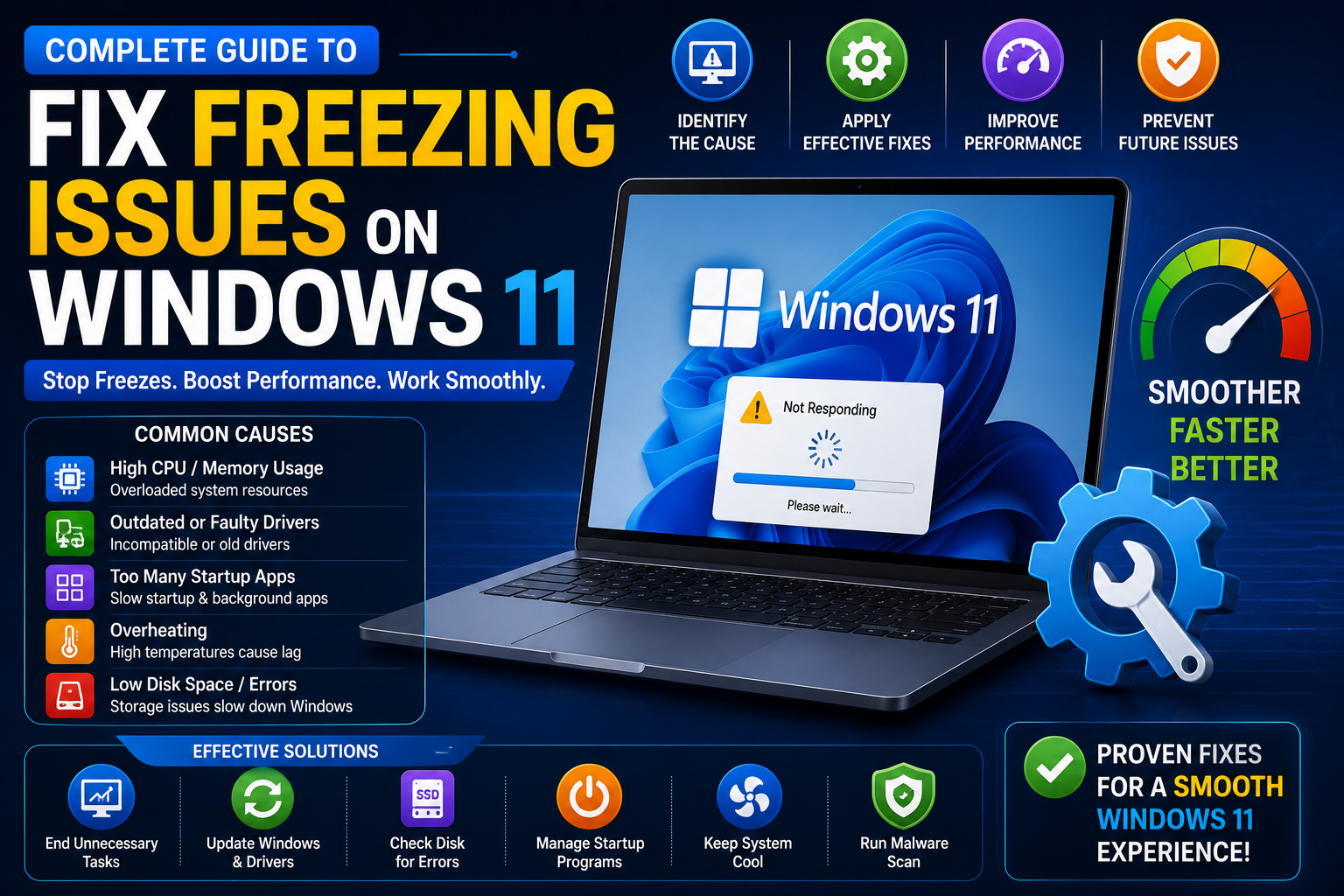
If your PC is running slowly, our guide to fixing Windows 11 slow performance can be linked here after replacing the placeholder with the verified article URL.
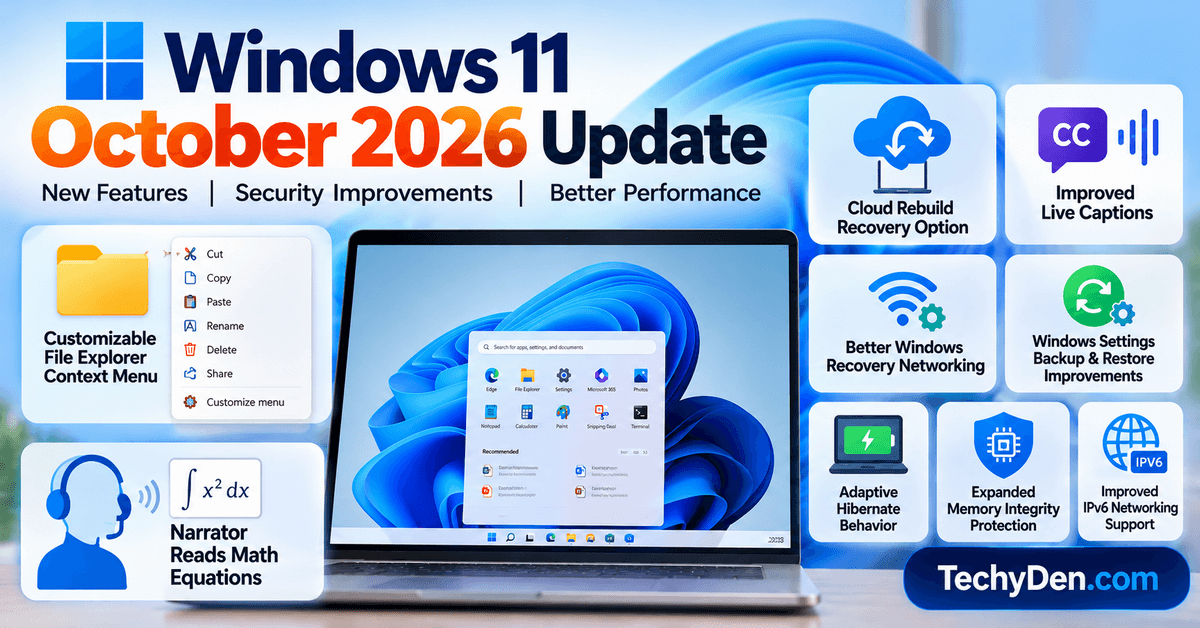
15. New and Improved Windows 11 Features in 2026
Microsoft continues to develop Windows 11 through cumulative updates, feature releases, and staged rollouts. As a result, the latest experience can differ between computers.
When evaluating Windows 11 features in 2026, pay particular attention to these areas:
- Performance and responsiveness: Microsoft has continued working on everyday responsiveness and the overall Windows experience. Actual performance depends on the installed update, hardware, drivers, storage, and running applications.
- File Explorer and Windows Search: File Explorer and Windows Search are important parts of the everyday Windows experience. Improvements may arrive through Windows updates or application updates, so check your installed version before assuming a particular enhancement is available.
- Photos and phone-to-PC experiences: Microsoft continues to develop connected experiences across Windows and mobile devices. Supported capabilities can vary by phone model, application version, permissions, and region.
- AI and hardware-dependent features: AI capabilities are evolving, particularly on Copilot+ PCs. Check the official requirements for each feature before buying new hardware or expecting an existing PC to support it.
How to check for Windows updates
- Open Settings.
- Select Windows Update.
- Click Check for updates.
- Review available updates and any relevant restart requirements.
For the latest announcements, follow the Windows Experience Blog. Use official release notes to distinguish generally available features from previews and staged rollouts.
Windows 11 Features vs. Windows 10: What’s Different?
Windows 11 builds on the familiar Windows desktop while introducing interface changes and newer capabilities. The exact comparison depends on the Windows 10 release, the Windows 11 version, and the hardware being used.
| Feature | Windows 11 | Windows 10 |
|---|---|---|
| Start menu and taskbar | Redesigned interface | Earlier interface design |
| Snap Layouts | Dedicated layout interface | Snap window management with fewer dedicated layout controls |
| File Explorer tabs | Supported in current releases | Not available as a standard built-in feature |
| Virtual desktops | Supported | Supported |
| Clipboard history | Supported | Supported |
| Windows Hello | Supported on compatible devices | Supported on compatible devices |
| Auto HDR | Supported on eligible configurations | Availability differs by configuration and support |
| AI experiences | Newer and hardware-dependent options | More limited and dependent on the application or service |
Windows 11 may be a better fit for users who want its newer interface and supported features, but compatibility should be checked before upgrading an older computer.
Also consider security and support requirements when deciding which operating system to use. Windows 10’s standard support ended on October 14, 2025, although certain extended security options may be available.
Which Windows 11 Features Should You Disable?
Not every feature needs to remain enabled for every user. You can customize Windows 11 to reduce distractions and unnecessary activity.
Consider reviewing the following:
- Unwanted notifications: Turn off notifications from applications you rarely use.
- Startup applications: Disable unnecessary applications that launch automatically.
- Widgets and personalized content: Reduce their use if you find them distracting.
- Background permissions: Review which applications are allowed to run background tasks where the relevant setting is available.
- Privacy permissions: Restrict camera, microphone, location, and other access when appropriate.
- Automatic cleanup settings: Review Storage Sense options before enabling them.
Avoid disabling security protections, Windows Update, or essential system services just to improve performance. Make changes one at a time and check the results.
Keeping your Windows experience organized can make common tasks more convenient. If unwanted application shortcuts clutter your file-management workflow, learn how to customize the Windows 11 right-click menu and manage supported application extensions.
Frequently Asked Questions About Windows 11 Features
What are the best features of Windows 11?
Some of the most useful features are Snap Layouts, virtual desktops, File Explorer tabs, clipboard history, Windows Security, Phone Link, Focus sessions, voice typing, and Quick Settings. AI tools and gaming enhancements can also be valuable on supported devices.
What are the new features in Windows 11 in 2026?
Windows 11 continues to receive improvements through updates, including changes to everyday usability and supported AI and connected-device experiences. Exact availability depends on the Windows release, hardware, region, and rollout status. Check Microsoft’s official announcements for confirmed details.
What are the hidden features of Windows 11?
Useful lesser-known features include clipboard history with Windows + V, Snap Layouts with Windows + Z, voice typing with Windows + H, Task View with Windows + Tab, and the emoji picker with Windows + ..
Does Windows 11 have AI features?
Yes. Windows 11 supports various AI experiences through Microsoft products and compatible applications. Some advanced experiences are exclusive to eligible Copilot+ PCs or require specific software, hardware, language, or regional support.
Is Windows 11 better than Windows 10?
Windows 11 offers a newer interface and features such as Snap Layouts and a tabbed File Explorer. Whether it is better for you depends on your workflow, hardware compatibility, application requirements, and preferences. Security support is also an important consideration.
How can I improve productivity in Windows 11?
Use Snap Layouts to arrange applications, virtual desktops to separate tasks, clipboard history to reuse copied content, Focus sessions to reduce distractions, and keyboard shortcuts to complete common actions faster.
Does Windows 11 have built-in security?
Yes. Windows 11 includes tools such as Microsoft Defender Antivirus, Windows Firewall, and supported sign-in and device-protection features. Available protections depend on hardware, edition, and configuration. Good security practices and regular updates remain essential.
Are all Windows 11 features available on every PC?
No. Some features require newer hardware, a particular Windows edition, compatible applications, an internet connection, a Microsoft account, or specific language and regional support. Certain features also roll out gradually.
Final Verdict
Windows 11 offers a wide range of features for improving productivity, organizing your desktop, managing files, protecting your computer, and enjoying supported games and AI experiences.
For most users, the best place to start is with Snap Layouts, virtual desktops, File Explorer tabs, clipboard history, Quick Settings, and Windows Security. These tools can make a noticeable difference without requiring additional software.
If you want to get more from your PC, explore these features one at a time and configure them around your needs. Keep Windows updated, check hardware requirements before relying on advanced capabilities, and use Microsoft’s official documentation to verify the latest changes.
For more practical guides, visit the TechyDen Windows 11 tutorials category.